Key Points
- As was reported by Ben Lynch in MyLondon, Hammersmith and Fulham Council is threatening to take away the wheelchair of a 17-year-old disabled girl owing to fire risks regulations.
- The girl, Ruby Jennings, has tibial torsion and autism and she has become completely dependent on the wheelchair after undergoing surgeries.
- The parents of the girl are Donna Jennings aged 47 years and Darren Jennings aged 48 who are living on the top floor of a flat in West London without any neighbors nearby.
- It was revealed that the council had suggested keeping the wheelchair inside the flat, packed up, but since the girl cannot stand and unpack it herself, it is not a feasible option for them.
West London (West London Times) October 24, 2026 – uk/local/fulham/hammersmith/">hammersmith-and-fulham/">Hammersmith and Fulham Council has faced fierce criticism after issuing a notice threatening to confiscate a disabled teenager’s wheelchair because it is allegedly stored in a communal area as a fire risk, leaving her family desperate for a sensible resolution.
Why Is Hammersmith Council Threatening a Disabled Girl’s Wheelchair?
As reported by Ben Lynch of MyLondon, Hammersmith and Fulham Council instructed a West London family to remove their disabled daughter’s wheelchair from an external walkway or risk having it taken away. The local authority flagged the item under fire safety regulations governing communal areas within council-managed residential buildings.
The teenage girl, 17-year-old Ruby Jennings, relies heavily on the mobility aid following severe health complications. As detailed by Ben Lynch of MyLondon, Ruby suffers from tibial torsion—a condition causing her tibia bone to twist and disrupting how her foot aligns with her knee. Following two major operations over the past two years, Ruby is entirely non-weight bearing and depends on the wheelchair for daily mobility.
Where Is the Wheelchair Stored and What Did the Family Say?
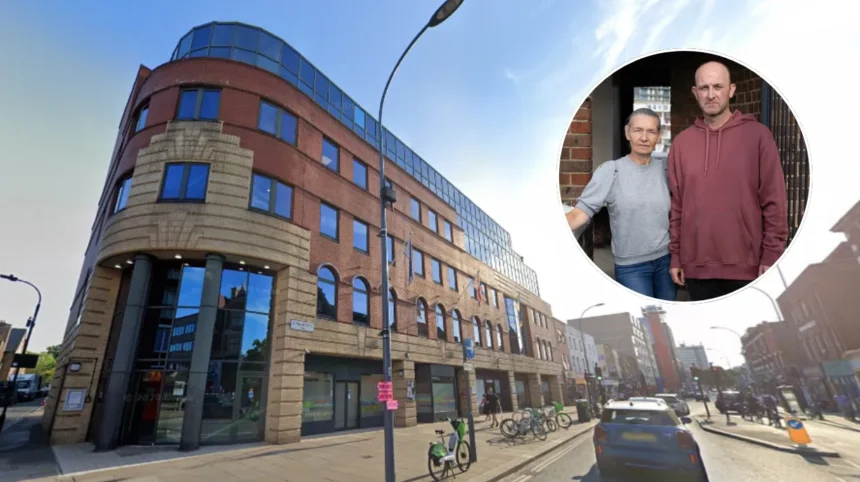
As reported by Ben Lynch of MyLondon, Donna Jennings (47) and her husband Darren Jennings (48) reside on the top floor of a block of flats in Hammersmith. The family noted that their flat has no immediate neighbours on that level, and the wheelchair is kept on an external walkway right outside their front door near a set of stairs due to a lack of indoor storage options.
Expressing her frustration over the council’s rigid approach, Donna Jennings stated to Ben Lynch of MyLondon:
“I absolutely get concerns around stuff in communal areas being a fire risk, but when you get something like this, you need to make reasonable adjustments and risk assess.”
Highlighting the impractical solutions offered by local housing officials, Donna Jennings further told MyLondon reporter Ben Lynch:
“Their proposal was to put it on the other side of the door and wrap it up. So I said, ‘how does she unwrap it if she can’t stand up?’”
How Has the Situation Affected Ruby Jennings?
As highlighted by Ben Lynch of MyLondon, the dispute has taken a severe psychological toll on Ruby, who is also autistic. Because autistic individuals often process information literally, the council’s warning notice caused immense distress.
Describing the emotional impact on her daughter, Donna Jennings stated to MyLondon journalist Ben Lynch: “People with autism are literal. So they see a sign saying they’re going to throw it away, and they believe it until we tell them otherwise.”
The Jennings family continues to appeal to Hammersmith and Fulham London Borough Council to exercise discretion, review individual circumstances, and implement reasonable adjustments that balance building safety with the essential independence of disabled residents.
Explore more Hammersmith and Fulham News:
Altheome Relocates to ARC West London Labs in Hammersmith 2026
Hammersmith Conservatives Walk Out After Finance Debate Rejection In Hammersmith 2026
Background of the Particular Development
The tension between strict fire safety enforcement in social housing blocks and the accessibility needs of disabled residents has grown increasingly pronounced across United Kingdom local authorities. Following regulatory tightening in building safety standards nationwide, housing providers have adopted zero-tolerance policies regarding items left in communal corridors, stairwells, and external walkways. However, disability rights advocates and local housing campaigners frequently point out that many older public housing blocks lack adequate indoor storage infrastructure for bulky medical equipment, such as wheelchairs, walking frames, and mobility scooters. This structural limitation often places vulnerable tenants in direct conflict with local council regulations.
How This Development Can Affect Disabled Residents and Local Authorities
This high-profile dispute risks setting a damaging precedent for how local authorities handle disability accommodations within social housing estates. For disabled residents and their families, rigid enforcement without proportionate risk assessments creates severe anxiety, physical barriers to independence, and fears of essential mobility aids being confiscated. Conversely, the case pressures Hammersmith and Fulham Council—and potentially other metropolitan borough councils—to adopt more flexible, case-by-case review frameworks, ensuring that statutory fire safety obligations are met without compromising the human rights, dignity, and mobility of vulnerable tenants.