Key Points
- Incident Overview: A fire broke out on the fourth floor of a nine-storey residential block on Headstone Road, Harrow, near Harrow Bus Station.
- Evacuation & Casualties: Approximately 42 residents were forced to evacuate the building, with one man receiving medical treatment at the scene from the London Ambulance Service.
- Cause of Fire: According to findings confirmed by the London Fire Brigade (LFB), the accidental blaze was caused by the unsafe use of incense sticks.
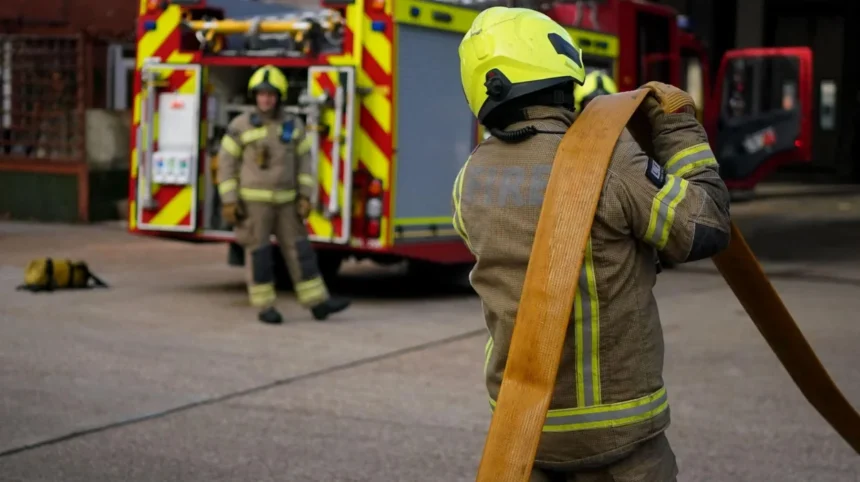
- Emergency Response: Four fire engines and around 25 firefighters from Harrow, Northolt, Wembley, and surrounding stations tackled the blaze, which was brought under control and extinguished by 7.47 am.
- Transport Disruption: College Road was temporarily closed during the morning emergency response, affecting nine local bus routes before fully reopening at approximately 9.00 am.
- Official Safety Warning: The LFB issued a safety reminder urging residents never to leave incense sticks or candles unattended and to always use secure, fire-resistant holders away from curtains.
Harrow, London (West London Times) November 12, 2026 — Around 42 residents were evacuated from a multi-storey residential block following an accidental fire sparked by incense sticks, emergency services have confirmed. The morning incident, which drew a rapid response from London firefighters, temporarily closed major local transport arteries and prompted a renewed public safety warning regarding household burning items across the capital.
How Did the Fire at the Harrow Block of Flats Unfold?
As reported by Chris Mitchell of uk/local/harrow/">Harrow Online, the emergency unfolded on Monday morning (9 November). The fire broke out inside a residential property situated on the fourth floor of a nine-storey building located on Headstone Road, in close proximity to the Harrow Bus Station.
The London Fire Brigade (LFB) received the first of 10 emergency calls regarding the hazard at 6.24 am. In response to the escalating emergency, four fire engines and approximately 25 firefighters were swiftly dispatched to the scene. Crews drawn from fire stations across Harrow, ealing/northolt/">Northolt, brent/wembley/">Wembley, and surrounding areas worked in coordination to tackle the flames.
According to official incident reports, part of the fourth-floor flat sustained material damage as a result of the blaze. Firefighters successfully brought the incident under control, having the fire completely extinguished by 7.47 am.
What Were the Immediate Impacts on Residents and Local Traffic?
The emergency response required the immediate evacuation of approximately 42 people from the nine-storey block of flats. Amid the smoke and emergency procedures, one man was assessed and treated at the scene by ambulance crews from the London Ambulance Service.
The operational footprint of the fire crews also generated significant local disruption. As previously reported by Chris Mitchell of Harrow Online, College Road was closed off to traffic while emergency services managed the scene. The road closure impacted a total of nine local bus routes, causing morning commuting delays for travellers in the town centre. Normal transport services and road access were restored when College Road reopened at approximately 9.00 am.
What Caused the Fire and What Did Fire Investigators Find?
Following detailed post-incident examinations, fire investigators determined the origin of the blaze. As reported by Chris Mitchell of Harrow Online, the London Fire Brigade confirmed that the fire was accidental.
Investigators concluded that the fire was believed to have been caused by the unsafe use of incense sticks within the fourth-floor property.
What Safety Warnings Have Been Issued by the London Fire Brigade?
In the wake of the Harrow incident, fire authorities have stepped up public awareness regarding everyday household fire hazards. As reported by Chris Mitchell of Harrow Online, an LFB spokesperson issued a direct warning regarding items commonly used for fragrance and ambiance:
As reported by Chris Mitchell of Harrow Online, the LFB spokesperson stated that:
“Incense sticks, candles and oil burners are one of the most common causes of fire within homes. It’s really important that you never leave these items unattended”.
Expanding on the safety guidance, the spokesperson added, as reported by Chris Mitchell of Harrow Online:
“Make sure you place incense sticks in a suitable, fire-resistant holder and keep them away from curtains and anything else that can easily catch fire. Remember to put them out entirely when you leave the room and especially before bed”.
Background of the Development
Residential fires originating from unmonitored or improperly secured fragrant burning items, such as incense sticks, candles, and oil burners, represent a persistent challenge for fire and rescue services across Greater London. The London Fire Brigade frequently records preventable domestic incidents where open flames or smouldering embers come into contact with combustible soft furnishings, including curtains, bedding, and carpets. High-density residential structures, such as the nine-storey block on Headstone Road near Harrow Bus Station, require coordinated multi-agency responses—involving fire engines, ambulance services, and local traffic management—to ensure safe evacuations and protect residents from smoke inhalation and structural hazards.
Prediction
This development serves as a critical wake-up call for local residents, tenants, and property managers across Harrow and the wider London boroughs. For local residents and renters, the incident highlights the hidden dangers of indoor burning practices, likely leading to heightened vigilance and adherence to fire safety guidelines regarding incense and candles.
For local housing associations, landlords, and building safety authorities, the event underscores the importance of fire-resistant interior standards and clear resident communication regarding escape routes and fire prevention in multi-storey blocks. Ultimately, this increased awareness can drive down preventable domestic fires, reducing emergency callouts and safeguarding communities across the borough.