Key Points
- Richmond upon Thames has been officially named Britain’s happiest place to live in 2026, according to Rightmove’s annual Happy at Home Index.
- This marks the south-west London borough’s second victory in the top spot within a three-year span, following a first-place ranking in 2023.
- The accolade comes with an immense financial barrier, as average asking prices for properties in the borough have climbed to £1,021,256 alongside monthly rents averaging £3,298.
- Survey respondents heavily praised the area for its exceptional access to nature, including Richmond Park and the Thames Path, combined with robust local community spirit and rapid transit links.
- Across the wider United Kingdom, four-fifths (81 per cent) of survey participants reported overall satisfaction with their local communities.
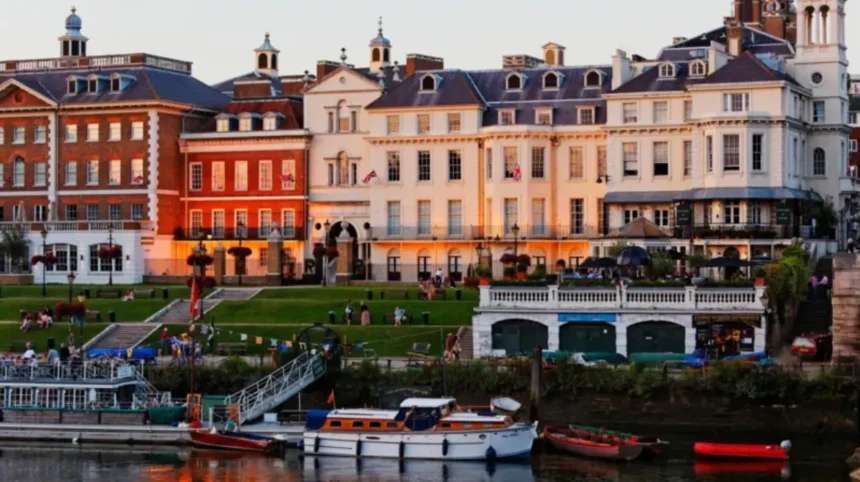
London (West London Times) November 12, 2026 — The south-west London borough of Richmond upon Thames has officially secured first place in Rightmove’s annual Happy at Home Index for 2026. Despite commanding an average property price exceeding the £1 million mark, residents across the leafy borough reported high levels of life satisfaction, cementing the area’s reputation as one of the nation’s most coveted residential hubs.
- Key Points
- Why Do Local Residents and Property Experts Rate Richmond So Highly?
- What Are the Financial Realities and Property Market Pressures in the Borough?
- How Do Other Regions Across Great Britain Compare in the 2026 Rankings?
- Background of the Particular Development
- Prediction on How This Development Can Affect Stakeholders
As reported by Olivia Bennett of London Streets, the annual index evaluates locations across Great Britain based on a wide array of community and lifestyle criteria, including access to green spaces, the quality of local services, community spirit, and residents’ overall sense of belonging. uk/local/richmond-upon-thames/richmond/">Richmond’s latest triumph marks its second victory in the top tier within a three-year span, following a first-place finish in 2023 and a runner-up position in 2025.
Why Do Local Residents and Property Experts Rate Richmond So Highly?
The study highlighted that local contentment in Richmond is heavily driven by its unique urban-rural equilibrium. As detailed by property expert Colleen Babcock of Rightmove and reported across local outlets, the borough offers residents the rare luxury of expansive open spaces—exemplified by Richmond Park and the scenic Thames Path—while maintaining immediate proximity to vibrant high streets, independent retailers, local cafés, and essential services.
Furthermore, transport connectivity plays an indispensable role in bolstering local morale. According to regional reporting, Richmond station provides seamless multi-modal transit options via National Rail, the London Overground, and the District line. This robust infrastructure enables convenient commuting routes into central London while allowing homeowners to retreat to a much quieter, residential borough at the end of the working day.
Local leadership also pointed to community cohesion as a cornerstone of the area’s enduring appeal. Commenting on the community spirit, the Mayor of Richmond upon Thames, Nancy Baldwin, stated that
“above all, it is our people and communities that make Richmond special”.
What Are the Financial Realities and Property Market Pressures in the Borough?
While residents express profound contentment with their surroundings, achieving this lifestyle requires immense financial investment. According to nationwide data compiled in the survey, the average asking price for a residential property in Richmond upon Thames currently stands at £1,021,256, while average monthly rental costs hover around £3,298.
Journalists noting the financial realities of the local property market emphasize that the borough remains largely inaccessible to first-time buyers or lower-income households. As highlighted by property correspondents, the hefty seven-figure price tag acts as a significant barrier to entry, ensuring that the privilege of residing in the nation’s happiest location is restricted primarily to affluent buyers or established homeowners.
How Do Other Regions Across Great Britain Compare in the 2026 Rankings?
Beyond the capital, the index spotlighted various communities nationwide that successfully balance local amenities with high resident contentment. Harrogate in Yorkshire and the Humber secured the second spot nationally, praised for its exceptional access to nature and high scores regarding personal expression. Cirencester in the South West claimed third place, followed by Monmouth in Wales.
Other regional leaders included Hove in the South East, Chorley in the North West, and Kirkcaldy in Scotland. Nationally, the survey demonstrated broad resilience, with approximately 81 per cent of all participants across Britain confirming satisfaction with their respective residential locations.
Background of the Particular Development
The Rightmove Happy at Home Index has run for over a decade, surveying tens of thousands of tenants and homeowners across Great Britain to evaluate what makes communities thrive. Over recent years, shifting post-pandemic lifestyle preferences have placed an immense premium on outdoor amenities, local high streets, and neighborhood safety.
While outer-urban and suburban areas historically dominated top positions due to relative affordability, affluent locations like Richmond upon Thames have consistently outperformed expectations by offering village-like community dynamics coupled with direct metropolitan access. The 2026 results arrive amidst fluctuating broader economic indicators within the UK housing market, highlighting a persistent divergence between hyper-desirable green-belt enclaves and wider national affordability trends.
Prediction on How This Development Can Affect Stakeholders
This development carries distinct implications across multiple stakeholder groups. For prospective homebuyers and younger demographics, Richmond’s continued dominance as the nation’s happiest area further underscores the deepening housing affordability crisis, signaling that elite quality of life remains tethered to exorbitant property values.
For local businesses, the sustained high morale and affluent demographic base guarantee steady local patronage, protecting independent retailers and hospitality venues against broader economic pressures. Meanwhile, for local policymakers and urban planners, maintaining this top-tier status will require balancing high resident satisfaction with ongoing pressures regarding local infrastructure capacity, housing density, and transport management around major transit arteries like Richmond station.