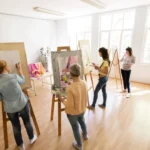


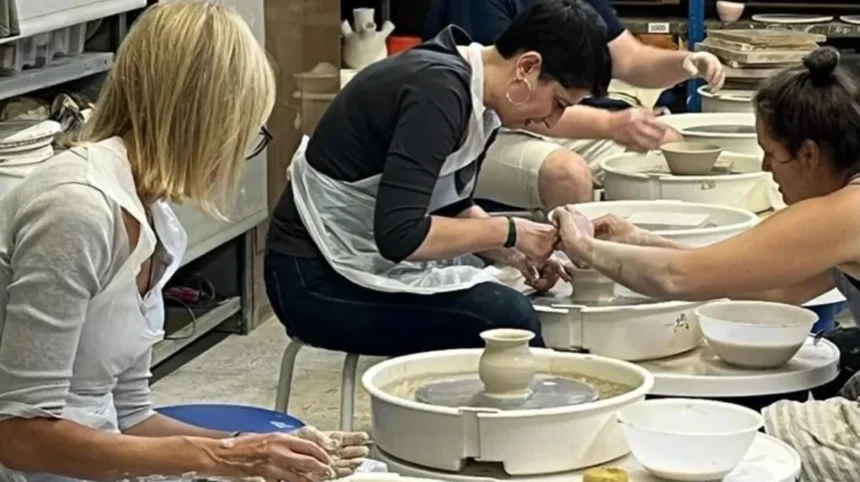
Pottery classes in West London provide structured instruction in ceramics, covering hand-building, wheel throwing, surface decoration, glazing and kiln firing. The area offers courses for complete beginners, developing makers and experienced ceramicists seeking regular studio access and specialist skills.
- What are pottery classes in West London?
- Why is West London a suitable place to learn pottery?
- What skills do beginners learn in pottery classes?
- How does wheel throwing work?
- What is hand-building in ceramics?
- What happens after a pottery class project is made?
- How long do pottery courses usually last?
- How should people choose a pottery class in West London?
- What equipment do pottery students use?
- What does pottery teach beyond practical craft skills?
- What historical traditions influence modern pottery classes?
- How does pottery contribute to West London’s creative communities?
- What should beginners know before attending their first pottery class?
- How is pottery likely to remain relevant in West London?
Ceramics is the practice of making objects from clay and permanently transforming them through firing at high temperatures. Pottery is a major branch of ceramics that includes functional and decorative objects such as bowls, cups, plates, vases and sculptural forms.
West London has a strong cultural and creative infrastructure. Its neighbourhoods contain independent studios, adult learning providers, arts organisations and shared workshops. Pottery classes serve residents, students, visitors and people seeking structured creative activity. Courses also introduce practical knowledge about materials, equipment and firing processes.
Learning pottery involves more than shaping wet clay. A finished ceramic object passes through several technical stages. Clay preparation is followed by forming, drying, an initial bisque firing, glazing and a final firing. Each stage affects the strength, appearance and function of the finished work.
This guide explains how pottery classes in West London work, what students learn, how to choose a course and what practical factors affect the learning experience.
What are pottery classes in West London?
Pottery classes in West London are structured ceramic workshops where participants learn to shape, dry, decorate and fire clay using professional equipment. Classes range from introductory sessions to multi-week courses and commonly teach hand-building, wheel throwing, glazing and fundamental ceramic processes.
A pottery class provides access to knowledge and equipment that are difficult to reproduce at home. Clay work requires suitable preparation areas, specialist tools and controlled drying conditions. Kilns also operate at temperatures that require trained supervision and appropriate safety procedures.
West London pottery courses generally use one of two teaching formats. Short workshops introduce a specific process within a single session or over a limited number of hours. Longer courses develop skills progressively through regular classes.
The subject is often divided into several practical disciplines. Hand-building includes techniques such as pinching, coiling and slab construction. Wheel throwing uses a rotating pottery wheel to form symmetrical vessels such as cylinders and bowls. Surface decoration includes examples such as carving, slip application and impressed patterns.
Students also learn the meaning of common ceramic terms. Clay body refers to the prepared clay material used to make an object. Slip is liquid clay used for joining or decorating. Glaze is a glass-forming coating applied to ceramic surfaces. A kiln is an insulated furnace used to fire ceramic work.
These definitions help beginners understand the complete production process rather than viewing pottery as a single shaping activity.
Why is West London a suitable place to learn pottery?
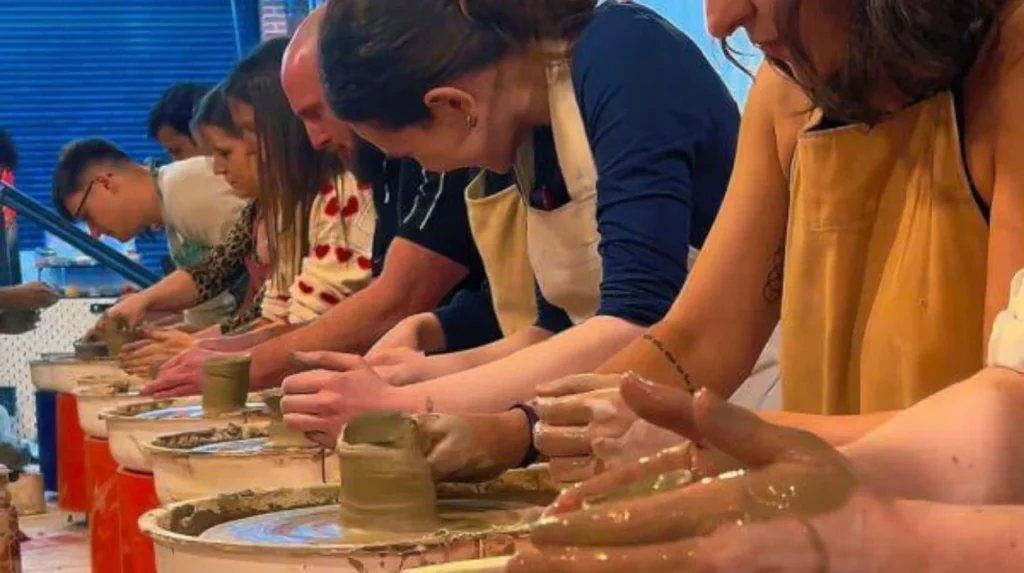
West London supports pottery learning through its established arts infrastructure, diverse neighbourhoods and access to independent studios and educational providers. The area’s creative communities support beginners and experienced makers, while transport connections make regular classes accessible from across Greater London.
West London covers a broad area rather than a single district. Depending on the definition used, it includes places such as uk/local/hammersmith-and-fulham/hammersmith/">Hammersmith, Fulham, Kensington, Chelsea, Ealing, hounslow/chiswick/">Chiswick, Acton and areas of the London Borough of Hounslow.
These locations contain different types of creative provision. Independent ceramic studios often focus on practical making. Adult education organisations provide structured courses. Community arts venues offer accessible workshops and local creative programmes.
The location of a pottery studio affects the overall learning experience. A nearby studio supports regular attendance, which is important because ceramic skills improve through repeated practice. A studio near a rail, Underground or bus connection also provides easier access for students travelling from other parts of London.
West London also sits within London’s wider creative economy. The capital contains museums, galleries, art schools and specialist suppliers that support public interest in visual arts and craft.
Historical collections add context to modern ceramic practice. London museums preserve objects made from earthenware, stoneware and porcelain. Earthenware is fired at relatively lower temperatures and remains porous unless glazed. Stoneware is fired to a denser, more vitrified state. Porcelain is a refined ceramic material traditionally valued for its whiteness, strength and translucency.
Modern classes connect these established traditions with contemporary making.
What skills do beginners learn in pottery classes?
Beginner pottery classes teach the essential processes needed to make simple ceramic objects safely and successfully. Students learn clay preparation, hand-building or wheel throwing, joining, drying, decoration, glazing and the basic stages of kiln firing under studio supervision.
Most beginner courses start with the physical properties of clay. Clay is plastic when it contains sufficient water, allowing it to be shaped. As water leaves the material during drying, the clay becomes more rigid and fragile.
Hand-building provides an accessible introduction because students work directly with the material. Pinch pots are formed by pressing and rotating a ball of clay. Coil construction builds walls by layering rolled lengths of clay. Slab construction uses flattened sheets to make forms with defined edges and surfaces.
These three techniques produce different examples of work. Pinching suits small bowls and organic forms. Coiling supports rounded vessels and sculptural structures. Slabs are commonly used for boxes, plates and architectural forms.
Students also learn how to join clay correctly. Two surfaces are normally roughened and treated with slip before being pressed together. This process creates a stronger connection between components.
Wheel throwing introduces a different set of movements. The clay is centred on a rotating wheel before the maker opens, pulls and shapes the form. Beginners commonly practise cylinders because this shape develops essential control.
A successful first course does not require students to produce identical objects. The primary objective is to understand the sequence of making and develop repeatable control over the material.
How does wheel throwing work?
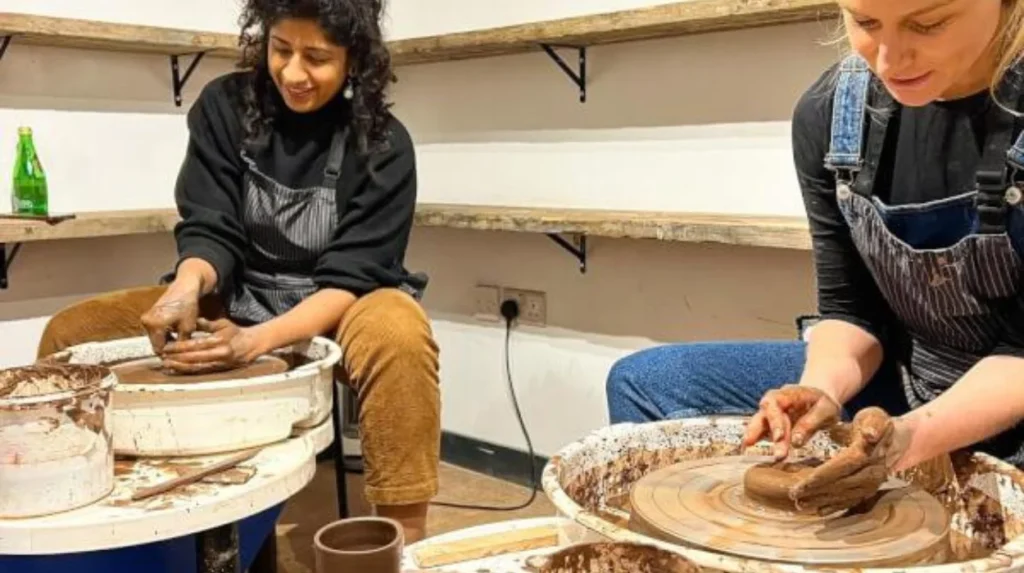
Wheel throwing forms ceramic vessels by rotating clay on a pottery wheel while the maker applies controlled pressure with both hands. The standard process includes preparing the clay, centring it, opening the form, pulling the walls and refining the final shape.
The pottery wheel has a rotating wheel head that supports the clay. Electric wheels use a motor and foot control to regulate speed. Some traditional wheels use manual or mechanical power.
Before throwing begins, the clay is prepared through wedging. Wedging is a controlled kneading process that improves consistency and prepares the clay for use. The prepared clay is then firmly attached to the wheel head.
Centring is the first major technical stage. The maker uses pressure to bring the rotating clay into a stable position. Poor centring makes later shaping difficult because the clay moves unevenly.
After centring, the maker opens the clay to create an internal space. The walls are then pulled upward and outward. Pulling refers to the controlled thinning and raising of the clay wall while the wheel rotates.
The final stage is shaping. A cylinder can become a cup, vase or other vessel depending on its proportions. Tools help refine the rim and remove excess water.
Thrown work must dry before firing. Some forms are also trimmed when the clay reaches a leather-hard state. Leather-hard clay has lost enough moisture to become firm while remaining workable.
Wheel throwing requires repetition. Beginners often make several attempts before producing a balanced form. Regular classes provide the time and equipment needed to repeat the process.
What is hand-building in ceramics?
Hand-building is a pottery process that creates forms without a rotating wheel. The main techniques are pinching, coiling and slab building, and each method gives makers direct control over shape, surface, thickness and decorative structure.
Hand-building is one of the oldest methods of making pottery. It remains central to contemporary ceramic education because it develops a direct understanding of clay.
Pinching starts with a compact piece of clay. The maker creates an opening and gradually presses the walls thinner. The technique produces small vessels and expressive sculptural forms.
Coiling uses long rolled pieces of clay. Coils are placed on top of each other and joined to build height. The maker then compresses, smooths or deliberately leaves the coils visible.
Slab building starts with an evenly rolled sheet of clay. The sheet is cut into shapes and assembled. Supporting moulds or templates help maintain the intended form while the clay dries.
Hand-building also supports surface experimentation. Makers can add texture using fabric, stamps and found objects. They can carve patterns into leather-hard clay or apply additional clay forms to create relief.
These techniques suit students who prefer slower construction and individual forms. They also provide a practical foundation for understanding shrinkage, structural support and wall thickness.
What happens after a pottery class project is made?
A ceramic project continues through drying, bisque firing, glazing and final firing after its initial construction. These stages permanently change the clay and require controlled handling, because uneven drying, unsuitable glazes and incorrect firing can damage the finished object.
Freshly made work is often described as greenware. Greenware is unfired clay that must dry thoroughly before entering a kiln.
Drying is a critical stage. Clay shrinks as water leaves the material. Thick and thin sections dry at different rates, creating stress. Studios manage this process by controlling airflow and protecting work when slower drying is required.
Once dry, the work is commonly bisque fired. Bisque firing is the first firing of the clay. It transforms the fragile dried object into a stronger ceramic form while leaving the surface suitable for glazing.
Glazing follows the bisque firing. A glaze contains materials that form a glass-like surface during firing. Glazes provide colour, texture and functional surfaces.
The glazed object then enters the kiln for a final firing. The temperature and firing schedule depend on the clay body and glaze system used by the studio.
Students should understand that firing schedules create a time gap between making and collecting finished work. Multi-week courses often include this process within the programme. One-off workshops sometimes include later collection after studio staff complete the firing stages.
How long do pottery courses usually last?
Pottery classes range from short introductory workshops to multi-week courses and long-term studio programmes. Course length determines how much time students have to practise, dry work, complete firings and develop technical control through repeated making.
A one-off workshop introduces a limited process. Participants often complete a simple hand-built object or receive an introduction to wheel throwing.
A multi-week beginner course provides a broader sequence. Early sessions focus on clay handling and basic construction. Later sessions introduce refinement, decoration and glazing.
Longer programmes support technical development because ceramics has a staged production cycle. A project made in one session must dry before its first firing. Glazing and final firing occur later.
The time between sessions also affects learning. Students can review previous work, identify technical problems and apply improvements to the next project.
Course descriptions should state the number of sessions, the duration of each session and whether open studio time is included. Open studio time is supervised or independent access outside the main teaching period, subject to the rules of the provider.
How should people choose a pottery class in West London?
The best pottery class matches a student’s experience level, learning goal, schedule, location and budget. Prospective students should compare teaching methods, class size, materials, firing arrangements, course duration and whether the programme provides access to professional ceramic equipment.
The first decision is the intended learning outcome. A complete beginner benefits from a course that teaches basic processes in sequence. A returning maker benefits from focused instruction or studio access.
Students should check whether the class concentrates on wheel throwing, hand-building or both. A course description should explain the practical content clearly.
Location matters for regular courses. Travel time affects attendance and the ability to arrive on time for scheduled sessions. Students should consider local Underground, rail and bus services when comparing studios across West London.
The cost structure also requires attention. Some courses include clay, glazing and firing in the advertised price. Others charge separately for materials or kiln use.
Class size affects access to equipment and instruction. A wheel-based class requires sufficient wheels for the number of participants. A smaller teaching group generally gives each student more time to receive practical feedback.
Beginners should also confirm the studio’s collection policy. Finished work occupies space and requires firing, so providers often set deadlines for collecting completed pieces.
What equipment do pottery students use?
Pottery students use specialist tools and equipment to prepare, form, decorate and fire clay. Common equipment includes pottery wheels, worktables, ribs, wire cutters, trimming tools, rolling pins, brushes, glazes and high-temperature kilns.
Most beginner classes provide the necessary equipment. Students generally do not need to purchase a pottery wheel or kiln before learning the basic process.
A wire cutter separates clay from a larger block and removes work from surfaces. A rib is a shaped tool used to smooth and compress clay. Trimming tools remove excess clay from leather-hard forms.
Other equipment serves specific processes. Rolling pins flatten clay for slab building. Brushes apply slip and glaze. Sponges control moisture and smooth surfaces.
A kiln is the most specialised piece of equipment. Ceramic kilns operate at high temperatures and require appropriate installation, maintenance and firing knowledge. This is one reason shared studios remain important for people learning pottery.
Studio equipment also supports a clean and organised workspace. Clay dust must be managed carefully. Ceramic studios use appropriate cleaning methods to reduce airborne dust from dry clay materials.
Students should follow the instructions provided by their class leader. Safe studio practice protects both participants and the working environment.
What does pottery teach beyond practical craft skills?
Pottery teaches material knowledge, process planning and technical problem-solving alongside practical making skills. Regular ceramic practice develops understanding of physical change, including moisture loss, shrinkage, heat transformation and the relationship between design, structure and function.
Ceramic work follows a sequence in which earlier decisions affect later stages. A poorly joined handle can separate during drying. Uneven walls can create problems as moisture leaves the clay. An unsuitable glaze can affect the finished surface.
This structure makes process knowledge important. Students learn to assess the condition of clay at different stages and select an appropriate action.
Pottery also connects functional design with practical use. A cup requires a stable base, suitable wall thickness and a comfortable handle. A bowl requires a balanced form and an appropriate surface finish.
The discipline therefore combines visual decisions with physical constraints. Students gain a clearer understanding of how objects move from raw materials to finished products.
What historical traditions influence modern pottery classes?
Modern pottery classes draw on thousands of years of ceramic history while using contemporary materials and equipment. Hand-building preserves early making methods, wheel throwing reflects long-established vessel production, and modern studios combine these traditions with electric kilns and contemporary glaze systems.
Pottery is among the world’s oldest forms of material culture. Archaeological evidence shows that communities produced fired clay vessels for storage, cooking and other daily uses across many regions of the world.
The pottery wheel transformed vessel production by enabling efficient formation of symmetrical shapes. Hand-building remained equally important for forms that required different structures or more individual shaping.
Britain also has a significant ceramic history. Industrial pottery production developed strongly in Staffordshire, where pottery manufacturers established major centres of ceramic production. The historical development of British ceramics influenced design, manufacturing and global trade.
Contemporary pottery classes use this historical foundation as technical knowledge rather than as a fixed style. Students can learn traditional methods while producing modern forms and surfaces.
Museums and public collections remain valuable educational resources. They demonstrate how ceramic materials have been used across different historical periods and cultural traditions.
How does pottery contribute to West London’s creative communities?
Pottery classes contribute to West London’s creative communities by providing shared spaces for learning, making and skills development. Studios bring together people with different levels of experience and support local creative activity through courses, workshops, exhibitions and ongoing studio practice.
A shared pottery studio provides resources that individual makers often cannot maintain alone. Kilns, wheels, glazing areas and storage require dedicated space and specialist management.
Classes also create a structured learning environment. Students work alongside other participants while receiving instruction from experienced ceramic practitioners.
The local impact extends beyond a single course. People who continue making often seek further classes, specialist workshops or studio membership. This creates demand for skilled teaching and dedicated creative spaces.
West London’s wider cultural environment supports this activity. Local galleries, museums and arts organisations provide opportunities to encounter visual culture and learn about different forms of artistic production.
Pottery classes therefore form part of a larger network of creative education. They connect practical skills with local cultural participation.
Explore More Area Guide
Craft Workshops in West London: Studios, Classes and Creative Activities
Photography in West London: Best Locations, Studios and Photography Guide
What should beginners know before attending their first pottery class?
Beginners should arrive prepared to learn a practical process that involves water, clay and repeated experimentation. Comfortable clothing, short or secured sleeves and realistic expectations about drying and firing help participants focus on learning the essential techniques.
Clay is a working material, and classes are practical rather than purely observational. Participants should wear clothing that allows comfortable movement and that can tolerate contact with clay.
Jewellery and loose clothing can interfere with wheel work. Long hair should be secured when working with rotating equipment.
Students should also understand that finished pottery takes time. A piece made during a class generally requires drying and firing before it becomes a completed ceramic object.
Not every piece survives every stage. Cracking, warping and glaze faults are recognised parts of ceramic learning. Instruction helps students identify the technical causes and improve later work.
Beginners benefit from focusing on a small number of core techniques. A well-made simple cylinder, bowl or slab-built form teaches more about process than attempting a highly complex object without the required technical foundation.
How is pottery likely to remain relevant in West London?
Pottery will remain relevant in West London because ceramic making combines practical education, creative participation and access to specialist shared facilities. Continued interest in hands-on skills supports demand for beginner instruction, advanced training and professionally equipped community studio spaces.
The value of pottery education rests on its direct engagement with physical materials. Clay responds to pressure, water, drying and heat according to identifiable material processes.
Digital technology does not replace the need for hands-on knowledge in traditional ceramic production. Makers still need to understand forming, drying, glazing and firing when producing physical ceramic objects.
At the same time, ceramic practice continues to develop. Contemporary studios use improved equipment, specialised materials and new approaches to design while maintaining the fundamental stages of clay production.
For West London residents and visitors, pottery classes offer a structured route into this established creative field. A suitable course provides instruction, equipment and a safe environment for learning.
The strongest starting point is a clear understanding of personal goals. Beginners should choose introductory instruction that explains the complete ceramic process. Developing makers should select courses that provide repeated practice and technical feedback.
Pottery rewards attention to process. From the first piece of prepared clay to the final kiln firing, each stage contributes to the finished object. Understanding that sequence helps students choose the right class and build durable ceramic skills.
What types of pottery classes are available in West London?
West London pottery classes include beginner courses, wheel-throwing lessons, hand-building workshops, glazing sessions and longer ceramics courses. Some studios also offer private lessons and open studio access for experienced makers.