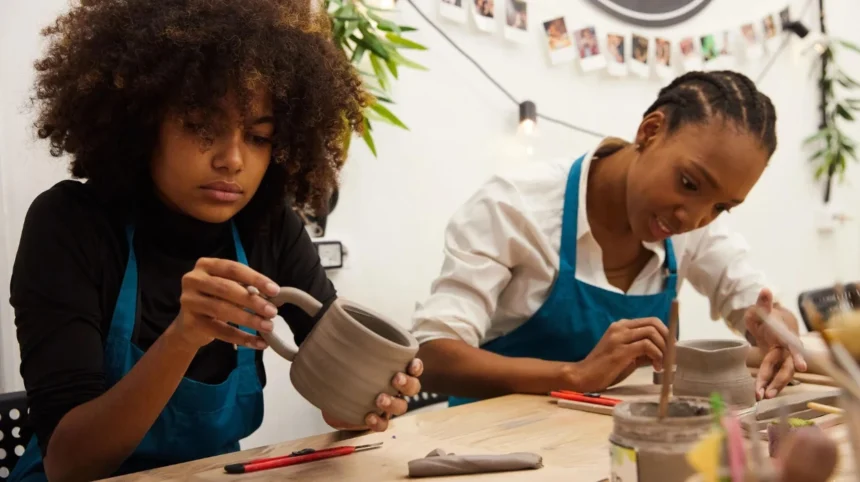
Craft workshops in West London provide practical opportunities for residents, tourists, families and creative beginners to learn traditional skills, explore contemporary art and produce handmade objects. These workshops cover activities such as pottery, ceramics, jewellery making, textile design, painting, candle making, printmaking and woodworking. They operate through independent studios, community arts centres, specialist creative businesses and educational organisations.
- What Are Craft Workshops and How Do They Work?
- Why Are Craft Workshops Popular in West London?
- How Does West London’s Cultural Diversity Influence Craft Activities?
- How Do Independent Studios Support Creative Learning?
- What Types of Craft Workshops Are Available in West London?
- 1. Pottery and Ceramics Workshops
- 2. Jewellery-Making Workshops
- 3. Textile, Sewing and Embroidery Workshops
- 4. Painting and Drawing Workshops
- 5. Printmaking Workshops
- 6. Woodworking and Furniture-Making Workshops
- 7. Candle Making and Decorative Craft Workshops
- Where Can You Find Craft Workshops in West London?
- 1. Shepherd’s Bush: The Artful Clayhouse
- 2. Hanwell: Hanwell Pottery
- 3. Park Royal: POW Workshops
- 4. Fulham: Pottery Café
- 5. Ickenham: Wick & Ceramic
- 6. West Drayton: Southlands Arts Centre
- How Do Craft Workshops Benefit Beginners and Experienced Makers?
- How Do Workshops Develop Practical Skills?
- How Do Craft Activities Support Wellbeing?
- How Do Group Workshops Improve Social Participation?
- How Much Do Craft Workshops Cost in West London?
- What Factors Influence Workshop Prices?
- Are Materials Included in the Booking Price?
- Are Free or Low-Cost Craft Workshops Available?
- How Can You Book a Craft Workshop in West London?
- What Should You Check Before Booking?
- Do You Need Previous Experience?
- Can You Book Private Craft Workshops?
- Are Craft Workshops Suitable for Families and Children?
- How Do Craft Workshops Support Local Artists and West London’s Creative Economy?
- What Is the Economic Importance of the UK Craft Sector?
- How Do Workshops Help Independent Artists?
- How Do Community Arts Centres Preserve Traditional Skills?
- How Have Craft Workshops Evolved in West London?
- How Can You Choose the Right Craft Workshop in West London?
- Which Workshop Is Best for Beginners?
- Which Workshop Is Best for Developing Professional Skills?
- Which Workshop Is Best for Social Activities?
- Which Workshop Is Best for Creative Gift Experiences?
- What Is the Future of Craft Workshops in West London?
West London has a diverse creative environment shaped by its historic markets, independent businesses, cultural institutions and multicultural communities. Areas such as uk/local/ealing/">Ealing, fulham/hammersmith/">Hammersmith, hounslow/chiswick/">Chiswick, Acton, Shepherd’s Bush, Notting Hill, Kensington and Fulham provide access to different forms of creative learning. Participants attend workshops for personal development, social activities, professional training and recreational experiences.
Craft workshops also support the wider creative economy. They connect traditional making techniques with contemporary design, encourage practical learning and provide opportunities for local artists to share their expertise. Understanding the different workshop formats, locations, costs, materials and booking arrangements helps participants choose suitable creative activities across West London.
What Are Craft Workshops and How Do They Work?
Craft workshops are organised practical learning sessions where participants develop creative skills by making objects using specific materials and techniques. They combine demonstrations, guided instruction and independent practice. Examples include pottery classes, jewellery-making sessions, textile workshops and traditional woodworking activities.
A craft workshop normally focuses on one particular creative discipline. An instructor introduces the materials, explains the equipment and demonstrates the techniques required to complete a project. Participants then follow the process under supervision.
Unlike conventional classroom lessons, craft workshops place greater emphasis on practical participation. Students handle materials, operate appropriate tools and develop their skills through direct experience. A beginner pottery session, for example, introduces clay preparation, shaping, surface decoration and basic finishing.
What Is the Difference Between a Craft Workshop and an Art Class?
An art class generally concentrates on artistic expression through activities such as drawing, painting and illustration. A craft workshop focuses on producing functional or decorative objects through specific making techniques.
The distinction is not absolute. Ceramics, printmaking and textile design combine artistic creativity with technical craftsmanship. Many West London studios offer programmes that include both approaches.
Who Can Attend Craft Workshops?
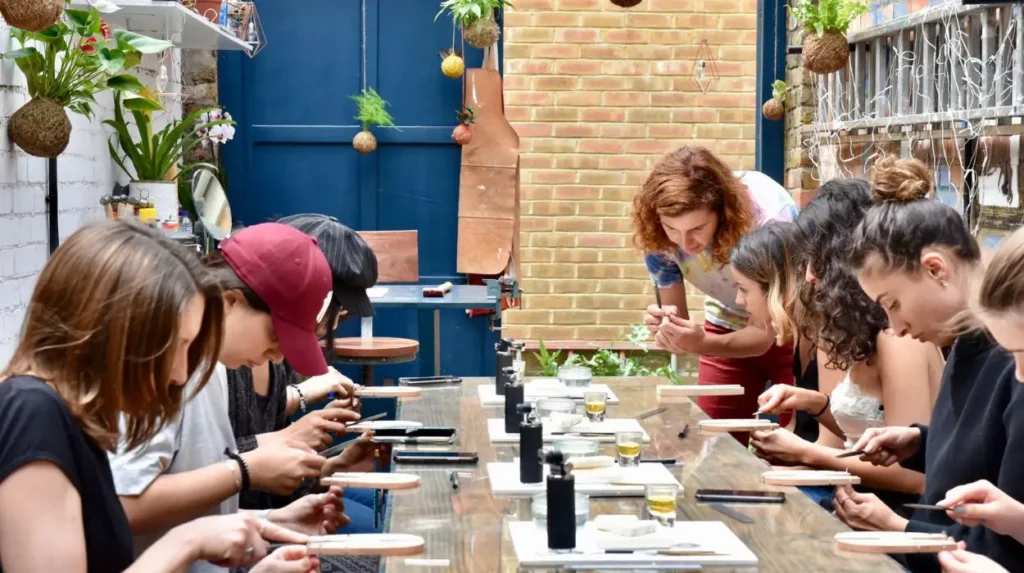
Craft workshops serve different age groups and experience levels. Common participants include:
- Beginners learning a creative activity for the first time, such as hand-building pottery.
- Families participating in shared activities, such as clay modelling.
- Adults seeking recreational experiences, such as jewellery design.
- Students developing practical skills, such as screen printing.
- Professional makers improving specialist techniques, such as wood carving.
- Tourists exploring local creative activities, such as traditional British crafts.
Most introductory workshops require no previous experience. Advanced sessions normally require participants to understand basic techniques and equipment.
Why Are Craft Workshops Popular in West London?
Craft workshops are popular in West London because the area combines independent creative businesses, established cultural institutions, accessible transport and diverse communities. These conditions support practical learning, independent studios and recreational activities. Examples include pottery classes in Chiswick, creative sessions in Ealing and art activities in Hammersmith.
West London has a varied cultural and economic landscape. Its neighbourhoods include residential communities, commercial centres, historic high streets and established arts venues.
The area’s creative activities appeal to people seeking experiences beyond conventional entertainment. Participants learn practical skills while creating personal items, gifts and decorative products.
How Does West London’s Cultural Diversity Influence Craft Activities?
West London has communities with different cultural backgrounds and artistic traditions. This diversity contributes to interest in textile design, embroidery, ceramics, decorative arts and traditional handmade products.
Craft activities also provide opportunities to explore techniques associated with different cultures. Examples include Indian block printing, Japanese-inspired pottery decoration, African textile patterns and traditional embroidery.
These activities introduce participants to the materials, cultural influences and production methods associated with different craft traditions.
How Do Independent Studios Support Creative Learning?
Independent studios provide specialist equipment and dedicated working environments. Pottery studios require kilns and clay preparation areas, while jewellery workshops need workbenches, hand tools and appropriate safety equipment.
Independent makers also introduce participants to professional production processes. They explain material selection, product design, finishing and the practical challenges of creating handmade objects.
What Types of Craft Workshops Are Available in West London?
West London offers several categories of craft workshops, including ceramics, jewellery making, textile arts, painting, printmaking, woodworking and decorative crafts. Each category develops different practical skills. Examples include wheel-thrown pottery, silver ring making, embroidery, screen printing and handmade candle production.
The available activities vary by studio, instructor, equipment and course schedule. Some workshops provide single-session experiences, while others operate as structured courses.
1. Pottery and Ceramics Workshops
Pottery workshops teach participants how to transform clay into functional and decorative objects. Activities include hand-building, wheel throwing, surface decoration and glazing.
Hand-building uses techniques such as pinching, coiling and slab construction. Wheel throwing involves shaping clay on a rotating pottery wheel.
A typical beginner workshop covers:
- Preparing and wedging clay.
- Centring clay on a pottery wheel.
- Forming bowls, cups or small vessels.
- Applying surface textures and decorative patterns.
- Understanding drying, firing and glazing.
Ceramic objects normally require kiln firing before they become durable finished products. Participants should check whether firing and collection costs are included in the booking price.
2. Jewellery-Making Workshops
Jewellery-making workshops introduce participants to metalworking and decorative design. Common projects include rings, pendants, earrings and bracelets.
Silver jewellery classes often teach basic silversmithing. Participants learn how to measure metal, shape components, file edges, solder connections and polish finished pieces.
Other sessions use beads, wire, gemstones and polymer clay. These workshops generally require less specialist equipment than traditional silversmithing.
Jewellery-making attracts beginners interested in creating personalised accessories and understanding small-scale product design.
3. Textile, Sewing and Embroidery Workshops
Textile workshops teach participants how to work with fabrics, threads and decorative materials. Activities include sewing, embroidery, fabric printing, weaving and garment alteration.
Beginners learn to use needles, threads, scissors and sewing machines. More advanced classes introduce pattern construction, garment finishing and specialist embroidery techniques.
Fabric printing workshops demonstrate how to transfer decorative designs onto textiles. Block printing uses carved printing blocks, while screen printing transfers ink through a prepared mesh screen.
These sessions provide practical skills for clothing repairs, home decoration and handmade textile products.
4. Painting and Drawing Workshops
Painting and drawing workshops develop visual observation, composition and colour application. Participants work with materials such as watercolours, acrylic paints, charcoal and pencils.
Some studios organise themed sessions covering landscapes, portraits, still-life arrangements and abstract art.
Beginner workshops explain basic drawing techniques and colour relationships. Advanced classes focus on composition, perspective, tonal values and individual artistic methods.
5. Printmaking Workshops
Printmaking involves transferring an image from a prepared surface onto paper, fabric or another material.
Common techniques include lino printing, screen printing, etching and relief printing. Lino printing uses a carved linoleum surface to produce repeatable images.
Screen printing uses a mesh screen and stencil to transfer ink onto a surface. It is widely used for posters, illustrations, clothing and decorative products.
Participants learn design preparation, ink application, printing pressure and material handling.
6. Woodworking and Furniture-Making Workshops
Woodworking workshops introduce participants to the tools and processes used to shape and assemble timber.
Activities include wood carving, basic joinery, furniture restoration and small-object construction. Participants learn measuring, cutting, sanding, drilling and finishing.
Some introductory workshops focus on simple projects such as wooden shelves, serving boards and decorative objects.
These sessions require proper safety instruction because woodworking equipment includes sharp tools and powered machinery.
7. Candle Making and Decorative Craft Workshops
Decorative craft workshops include candle making, soap crafting, wreath design, floral arrangements and seasonal decorations.
Candle-making classes introduce wax preparation, fragrance selection, wick positioning and pouring techniques. Soap-making workshops cover ingredient selection, moulding and curing processes.
These activities are particularly suitable for participants interested in personalised home accessories and handmade gifts.
Where Can You Find Craft Workshops in West London?
Craft workshops operate across several West London neighbourhoods, including Shepherd’s Bush, Fulham, Ealing, Hanwell, Park Royal and Ickenham. Independent pottery studios, makerspaces and community arts centres provide different learning opportunities. Examples include The Artful Clayhouse, Hanwell Pottery and POW Workshops.
The best location depends on the activity, transport connections and level of instruction required. The following venues provide useful starting points for exploring West London’s creative workshop scene.
1. Shepherd’s Bush: The Artful Clayhouse
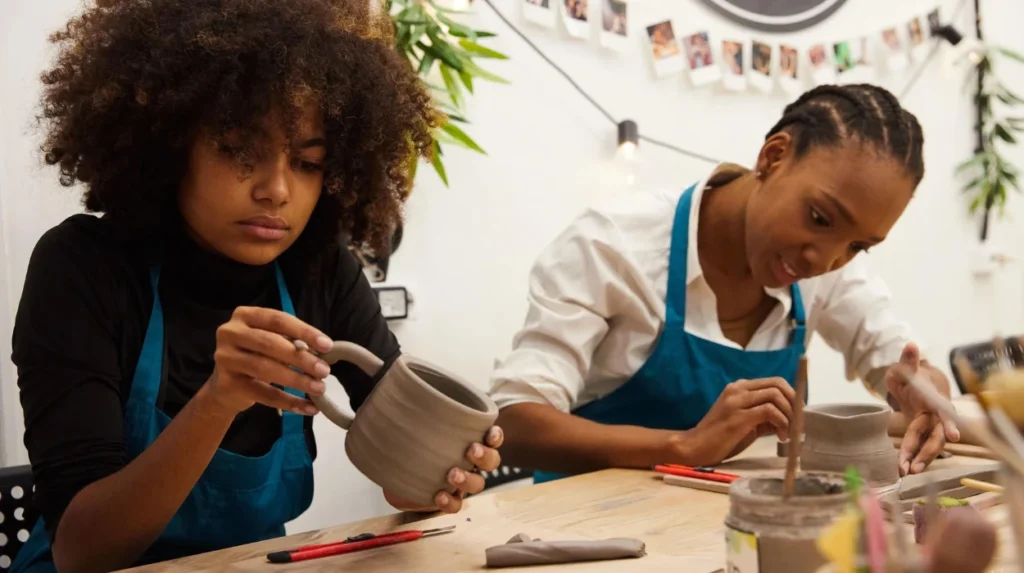
This specialist pottery studio offers wheel throwing, hand-building, glazing and firing facilities. Its programme serves beginners and experienced ceramic makers. The studio also offers private tuition, memberships and corporate events.
The studio provides dedicated spaces for different stages of ceramic production, making it relevant to participants interested in developing pottery skills beyond a single introductory session. Pottery studio in Shepherd’s Bush, London
2. Hanwell: Hanwell Pottery
Hanwell Pottery operates from Hanwell Community Centre. It provides adult pottery classes and ongoing opportunities to practise ceramic techniques in a community setting.
Hanwell Community Centre, Westcott Cres, London W7 1PD, United Kingdom
The studio is suitable for adults interested in developing pottery skills through regular sessions rather than attending only occasional creative events.
3. Park Royal: POW Workshops
POW Workshops is a makerspace and practical training facility specialising in woodworking, tool skills and furniture-related projects.
Its activities suit participants who want to learn practical construction techniques, use specialist tools and produce functional wooden objects.
4. Fulham: Pottery Café
Pottery Café provides pottery-painting experiences where visitors decorate ready-made ceramic objects. The studio offers a beginner-friendly format for individuals, families and groups.
This venue suits visitors who prefer ceramic decoration without learning the full pottery-making process.
5. Ickenham: Wick & Ceramic
This pottery studio offers ceramic painting, clay workshops, wheel throwing and candle-making activities.
53 Swakeleys Rd, Ickenham, Uxbridge UB10 8DG, United Kingdom
Its combination of pottery and decorative activities provides different entry points for people exploring creative hobbies.
6. West Drayton: Southlands Arts Centre
Southlands Arts Centre supports local creative activities through community groups, exhibitions, workshops and scheduled arts events.
Its programme includes activities such as lino printing, drawing, weaving and creative workshops. The centre provides an example of how community arts organisations support practical learning outside commercial studios. Southlands Arts Centre
Workshop schedules, prices and availability change. Visitors should confirm the current programme directly with each venue before travelling.
How Do Craft Workshops Benefit Beginners and Experienced Makers?
Craft workshops develop practical abilities through guided instruction, repeated practice and material experimentation. Beginners gain introductory skills, while experienced makers improve technical accuracy and creative production. Examples include learning clay preparation, refining jewellery soldering, improving embroidery and developing advanced woodworking techniques.
Creative learning involves more than producing a finished object. Participants understand how materials behave, how tools operate and how individual production stages affect the final result.
How Do Workshops Develop Practical Skills?
A structured workshop breaks a complicated activity into manageable stages.
For example, a jewellery-making session introduces metal selection before participants begin cutting, shaping and joining components. A pottery session introduces clay preparation before wheel throwing.
This learning structure helps participants understand the relationship between individual techniques and the finished product.
How Do Craft Activities Support Wellbeing?
Craft activities provide opportunities for concentration, creative expression and social interaction.
A 2024 peer-reviewed study published in the journal Frontiers in Public Health examined data from 7,182 adults in England. It found that participation in creative arts and crafting significantly predicted higher life satisfaction, happiness and a stronger sense that life was worthwhile. PubMed Central (PMC)
These findings support the importance of accessible creative activities. They do not establish that every workshop produces the same health outcomes.
How Do Group Workshops Improve Social Participation?
Group workshops create opportunities for participants to learn alongside other people. Examples include family pottery sessions, adult jewellery classes and corporate woodworking activities.
Participants exchange ideas, observe different techniques and receive guidance from instructors. Community workshops also connect local residents with artists and independent makers.
How Much Do Craft Workshops Cost in West London?
Craft workshop prices depend on the activity, duration, instructor expertise, equipment and materials included. Introductory sessions generally cost less than specialist courses. Examples include pottery painting, beginner wheel throwing, silver jewellery making and multi-session woodworking programmes.
There is no single standard price across West London. Each studio establishes its own fees according to operating costs and workshop requirements.
What Factors Influence Workshop Prices?
The principal pricing factors include:
- Materials: Silver, specialist clay, timber and premium fabrics affect production costs.
- Equipment: Pottery wheels, kilns and woodworking machinery require maintenance.
- Instruction: Private tuition generally costs more than shared group sessions.
- Duration: Full-day and multi-week courses require more instructor time.
- Finished products: Some workshops include glazing, firing, polishing or finishing.
Are Materials Included in the Booking Price?
Some workshops include all materials and equipment. Others charge separately for selected materials or finished products.
Pottery painting studios commonly charge a studio fee alongside the price of the ceramic item. Traditional pottery classes sometimes include clay, glazing and firing within the course fee.
Participants should check the full price before booking. Additional charges for kiln firing, materials, postage and collection affect the overall cost.
Are Free or Low-Cost Craft Workshops Available?
Community centres, libraries, charitable organisations and local arts programmes sometimes organise affordable creative sessions.
Examples include community drawing classes, seasonal decoration activities and introductory textile workshops.
Local authorities and arts organisations also publish information about funded cultural programmes. Availability depends on the organisation’s budget, location and scheduled activities.
How Can You Book a Craft Workshop in West London?
Booking a craft workshop normally involves selecting an activity, checking available dates, reviewing the session requirements and paying the relevant fee. Participants should confirm age restrictions, materials, accessibility and cancellation policies. Examples include booking pottery classes, jewellery sessions and private group workshops online.
Most independent studios publish workshop descriptions and booking information through their official websites.
What Should You Check Before Booking?
Review the following information before confirming a session:
- Workshop level: Confirm whether the session accepts complete beginners or requires previous experience.
- Duration: Check whether the activity lasts one hour, two hours or a full day.
- Materials: Establish whether the studio provides tools and materials.
- Finished products: Confirm whether you can take your work home immediately.
- Collection arrangements: Check the collection period for objects requiring kiln firing.
- Cancellation policy: Review the rules for changing or cancelling a reservation.
- Accessibility: Confirm step-free access, seating and facilities where required.
Do You Need Previous Experience?
Most introductory craft workshops accept beginners. Instructors explain the process and demonstrate the basic techniques before participants start working.
Advanced classes have different requirements. For example, an improvers pottery course generally expects participants to understand basic wheel throwing.
Can You Book Private Craft Workshops?
Many studios offer private bookings for birthdays, family celebrations and corporate events.
Private sessions provide a dedicated instructor and a planned group activity. Common examples include pottery painting parties, jewellery-making events and team woodworking projects.
Group organisers should confirm minimum participant numbers, age restrictions, private-room availability and total costs.
Are Craft Workshops Suitable for Families and Children?
Family craft workshops provide supervised creative activities for adults and children. Suitable sessions include pottery painting, clay modelling, drawing, textile decoration and seasonal crafts. Age requirements depend on materials, equipment and supervision arrangements. Parents should confirm the studio’s minimum age and safeguarding policies before booking.
Family workshops encourage shared participation and introduce children to different materials and creative processes.
Which Craft Activities Are Suitable for Children?
Children’s workshops commonly focus on accessible activities such as:
- Clay modelling, including small animals and decorative shapes.
- Pottery painting, including mugs, plates and ornaments.
- Paper crafts, including greeting cards and paper decorations.
- Textile activities, including simple stitching and fabric decoration.
- Drawing and painting, including watercolour and illustration.
Activities involving sharp tools, hot wax or specialist machinery require additional supervision and age restrictions.
What Should Parents Consider?
Parents should check whether the workshop provides child-sized equipment, protective clothing and appropriate supervision.
Some studios require an accompanying adult for younger participants. Others operate separate children’s sessions with dedicated instructors.
Parents should also consider session length. Shorter activities suit younger children who require more frequent breaks.
How Do Craft Workshops Support Local Artists and West London’s Creative Economy?
Craft workshops contribute to local creative economies by providing income for independent makers, instructors, studios and material suppliers. They also create opportunities for skill development and community engagement. Examples include pottery teaching, jewellery instruction, woodworking courses and artist-led community programmes.
The craft sector forms part of the UK’s wider creative industries. Its contribution includes the production, design and sale of handmade objects alongside educational and participatory experiences.
What Is the Economic Importance of the UK Craft Sector?
The House of Lords Library reported that the UK’s craft sector contributed approximately £400 million in gross value added in 2023, based on the narrow official statistical measure. It also explained that this figure understates the sector’s wider contribution because official classifications do not capture every craft-related activity. House of Lords Library
Independent workshops form part of this wider economic environment. They generate revenue through teaching, studio memberships, equipment access and creative events.
How Do Workshops Help Independent Artists?
Workshops allow artists to diversify their income beyond selling finished products.
A ceramic artist, for example, can generate revenue through pottery sales, beginner courses, private tuition and studio memberships.
This approach also introduces potential customers to handmade production. Participants experience the time, materials and technical knowledge required to produce finished objects.
How Do Community Arts Centres Preserve Traditional Skills?
Community arts centres provide spaces where artists and residents share practical knowledge.
Activities such as embroidery, weaving, printmaking and woodworking preserve techniques through demonstration and participation.
These programmes also introduce traditional methods to younger generations and connect established makers with new learners.
How Have Craft Workshops Evolved in West London?
Craft workshops have developed from traditional apprenticeship and community-based making into organised creative learning experiences. Modern studios combine established techniques with contemporary equipment and accessible teaching. Examples include traditional pottery, digital fabrication, modern jewellery design and contemporary textile printing.
Historically, craft skills developed through apprenticeships, family businesses, specialist workshops and manufacturing industries. London supported numerous trades, including metalworking, furniture production, printing, tailoring and ceramics.
West London developed through a mixture of residential growth, manufacturing, commercial activity and artistic communities. Traditional making skills remain relevant through independent studios and community arts organisations.
Modern craft education extends these traditions by offering short introductory sessions alongside professional development courses.
How Has Technology Changed Craft Workshops?
Technology has introduced additional production methods and equipment.
Modern creative studios use digital design software, laser cutting, computer-aided manufacturing and specialist printing equipment. These technologies complement traditional techniques rather than replacing them entirely.
For example, a woodworking workshop can combine digital measurements with traditional joinery. A jewellery maker can use computer-aided design to prepare a product before completing its finishing by hand.
Why Are Traditional Craft Skills Still Relevant?
Traditional skills remain important because they support material knowledge, repair, independent production and specialist craftsmanship.
Techniques such as hand stitching, wood carving, wheel throwing and metal soldering provide practical foundations for contemporary design.
Workshops make these skills accessible to people who do not follow formal creative education programmes.
Explore More Area Guide
Photography in West London: Best Locations, Studios and Photography Guide
Creative Studios in West London: Artists, Photography and Film Spaces
How Can You Choose the Right Craft Workshop in West London?
Choosing a suitable craft workshop requires comparing the activity, experience level, location, instructor, price and expected outcome. Participants should identify their learning objectives before booking. Examples include choosing pottery for ceramic skills, jewellery making for metalworking and printmaking for surface design.
The most appropriate workshop depends on what participants want to learn and produce.
Which Workshop Is Best for Beginners?
Beginners should select introductory sessions with clear demonstrations and supervised practical work.
Pottery painting and basic clay modelling provide accessible introductions to ceramics. Simple sewing and embroidery sessions introduce textile skills without requiring advanced equipment knowledge.
Which Workshop Is Best for Developing Professional Skills?
Participants seeking advanced skills should choose structured courses with experienced instructors and appropriate equipment.
Examples include multi-week wheel-throwing courses, silversmithing programmes and furniture-making training.
These sessions provide more opportunities for repeated practice and technical development.
Which Workshop Is Best for Social Activities?
Pottery painting, candle making and group jewellery sessions provide accessible activities for friends, couples and families.
Private bookings also suit birthdays, celebrations and corporate team-building events.
Which Workshop Is Best for Creative Gift Experiences?
Gift vouchers provide an alternative to purchasing finished products.
Suitable experiences include pottery classes, silver ring-making sessions, rug tufting and textile workshops. Participants should check voucher expiry dates, booking restrictions and available activities before purchasing.
What Is the Future of Craft Workshops in West London?
The future of craft workshops in West London involves greater integration of traditional craftsmanship, contemporary design, community participation and sustainable production. Independent studios and arts organisations support this development through practical education. Examples include repair workshops, recycled-material crafts and digital fabrication training.
Interest in practical creative experiences connects with wider developments in education, independent production and sustainable consumption.
Will Sustainable Craft Activities Become More Important?
Sustainable making focuses on reducing waste and extending the useful life of materials and products.
Workshops can introduce sustainable practices through clothing repairs, furniture restoration, recycled-paper crafts and material reuse.
These activities help participants understand product lifecycles and responsible material selection.
How Will Community Workshops Influence Future Learning?
Community-based creative programmes provide accessible alternatives to formal education.
Libraries, local arts centres and independent studios can offer short courses for residents with different levels of experience.
Partnerships between artists, educational organisations and community groups also support creative participation.
What Role Will Digital Craft Techniques Play?
Digital fabrication is expanding the range of activities available in modern makerspaces.
Laser cutting, 3D printing and digital design introduce new production methods. Participants can combine these techniques with traditional finishing and assembly skills.
This creates opportunities for people interested in product development, design and practical technology.
Craft workshops in West London provide opportunities to learn practical skills, explore artistic traditions and participate in community activities. From pottery and jewellery making to woodworking, embroidery and printmaking, the area offers different creative experiences for beginners and experienced makers.
Shepherd’s Bush, Fulham, Hanwell, Park Royal, Ealing and Ickenham provide useful starting points for discovering independent studios and creative organisations.
These workshops also contribute to local cultural activity by supporting independent artists, encouraging traditional craftsmanship and creating opportunities for social participation.
Choosing the right workshop involves checking the activity, instructor, price, location and course requirements. With a wide range of creative disciplines available, West London remains an important setting for practical artistic learning and contemporary craft experiences.
What are the best craft workshops in West London?
West London offers pottery, jewellery making, woodworking, textile design, painting and printmaking workshops. The Artful Clayhouse, Hanwell Pottery, POW Workshops and Southlands Arts Centre are useful places to explore creative activities.