


Key Points
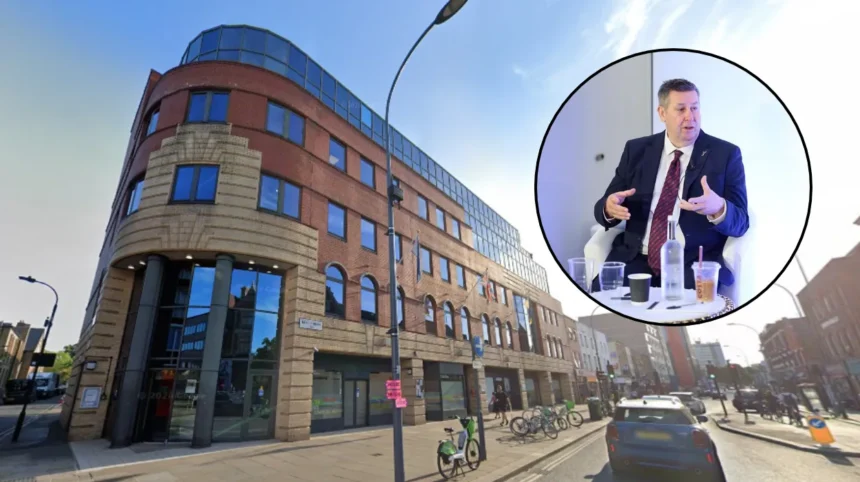
- As reported by Kumail Jaffer of MyLondon, Councillor Stephen Cowan, the Labour leader of Hammersmith and Fulham Council and chair of the cross-party London Councils group, has strongly criticised the government’s “fair funding” reforms.
- Speaking during a fringe event at the Labour Party Conference, Cllr Cowan stated that taking money from London councils to redistribute across the country is not a viable solution to the municipal funding crisis.
- Under the government policy, Hammersmith and Fulham’s central funding is projected to plummet from £150.5 million in 2025/26 to £72.4 million over the next four years, creating an estimated £160 million budget gap.
- Alongside Hammersmith and Fulham, other affluent boroughs including Westminster, Kensington and Chelsea, Wandsworth, and the City of London have been granted permission to hike council tax by more than five per cent next year.
- Westminster City Council announced on Tuesday, October 20, 2026, that it will slash 520 jobs due to a mounting funding shortfall.
- The London Assembly previously passed a unanimous motion urging Mayor Sir Sadiq Khan to lobby the government to reconsider the Fair Funding Review proposals and reverse planned cuts.
- Kensington and Chelsea, Westminster, and Wandsworth have formally written to ministers demanding a rethink of the new formula, with the City of London Corporation also weighing an appeal.
- In defence of the policy, a spokesperson for the Ministry of Housing, Communities and Local Government stated that the government is fixing an outdated funding system to direct resources where need is greatest while protecting councils through the transition.
London, MyLondon ( West London Time) October 21, 2026 – Local government tensions have intensified as uk/local/fulham/hammersmith/">hammersmith-and-fulham/">Hammersmith and Fulham Council Leader Stephen Cowan publicly condemned the government’s Fair Funding Review reforms, warning that redirecting vital resources away from the capital will trigger severe budgetary strain and service cuts across London boroughs.
- Key Points
- Why Are London Council Leaders Opposing the Fair Funding Review Reforms?
- How Will Funding Cuts Impact Hammersmith and Fulham and Other Boroughs?
- What Action Are London Leaders and the Mayor Taking?
- How Has the Government Responded to the Criticism?
- Background of the Particular Development
- Prediction
As reported by Kumail Jaffer of MyLondon, the debate surrounding local authority financing has escalated significantly following warnings from cross-party municipal leaders. Writing on October 21, 2026, the local democracy reporter detailed how the government’s ongoing efforts to overhaul local government finance have drawn fierce resistance from capital leaders, regardless of their political affiliation.
Why Are London Council Leaders Opposing the Fair Funding Review Reforms?
As reported by Kumail Jaffer of MyLondon, Councillor Stephen Cowan voiced his strong opposition to the national funding redistribution model during a fringe event hosted by London Councils at the Labour Party Conference last month. While acknowledging the immense fiscal challenges inherited by the national administration, Cllr Cowan maintained that the core mechanism of the reform is fundamentally flawed.
As reported by Kumail Jaffer of MyLondon, Cllr Cowan stated that:
“I am extremely sympathetic to the situation the government’s in – I don’t think a government’s inherited a worse position. I’m sympathetic to it, but I simply don’t think the solution is fair funding.”
He further elaborated, as reported by Kumail Jaffer of MyLondon:
“It doesn’t raise that much money, and you’re taking a lot of money off some councils to give a little bit to others. So I don’t think that’s the solution in the end.”
Cllr Cowan highlighted that his own authority has already enacted a stringent financial efficiency programme designed to secure maximum value for money for local taxpayers. Despite these internal savings, the borough faces an escalating fiscal squeeze.
How Will Funding Cuts Impact Hammersmith and Fulham and Other Boroughs?
As reported by Kumail Jaffer of MyLondon, the financial impact on local authorities within the capital is projected to be severe. Hammersmith and Fulham Council has warned that its direct share of central government funding will experience a dramatic reduction, falling from £150.5 million in the 2025/26 financial period to just £72.4 million over the subsequent four years. This reduction leaves the local authority confronting an estimated budget deficit of £160 million.
Because of this reduced government settlement, several major London authorities—including Hammersmith and Fulham, Westminster, Kensington and Chelsea, Wandsworth, and the City of London—have been granted special permission to increase council tax by more than five per cent next year. Normally, 4.99 per cent serves as the absolute maximum percentage increase local authorities can implement without triggering a local referendum or requiring special government authorisation.
The immediate real-world consequences of these shortfalls are already materialising across the capital. As reported by Kumail Jaffer of MyLondon, Westminster City Council announced on Tuesday, October 20, 2026, that it must cut 520 jobs from its municipal workforce due to its projected funding shortfall.
What Action Are London Leaders and the Mayor Taking?
Resistance to the funding formula is widespread across the capital’s local government landscape. Last year, the London Assembly unanimously passed a formal motion calling on Mayor Sir Sadiq Khan to urgently lobby central government to reconsider the Fair Funding Review proposals. The assembly urged the Mayor to reverse planned funding reductions to London boroughs and ensure the city receives a proportional share of resources to satisfy local resident needs.
While Mayor Sadiq Khan did not immediately respond directly to the motion at the time, he stated last November, as noted in reports: “I want to reassure Londoners that I will continue to work closely with London Councils and others to make the case for London getting a fairer funding deal as part of this process.”
In addition to municipal lobbying, institutional pushback is growing. Kensington and Chelsea, Westminster, and Wandsworth councils have already dispatched formal letters to government ministers urging a comprehensive review of the new calculation formula. Furthermore, the City of London Corporation has confirmed it is actively considering an official appeal against the funding allocations.
Explore more Hammersmith and Fulham News:
Hammersmith and Fulham Literacy Campaign Launches Books for Pupils, 2026
Plans Submitted to Demolish Old Oak Pub in West Kensington 2026
How Has the Government Responded to the Criticism?
In defence of the ongoing municipal finance overhaul, central government officials have emphasised their commitment to supporting local public services nationwide while addressing historical funding imbalances.
As reported by Kumail Jaffer of MyLondon, a spokesperson for the Ministry of Housing, Communities and Local Government stated: “Local authorities decide the level of council tax they wish to set, but we are clear that in doing so they should put taxpayers first.”
The spokesperson added, as reported by Kumail Jaffer of MyLondon: “We’ve made over £78bn available for council finances next year, with the majority of money un-ringfenced so local leaders can decide how best to spend on their local priorities. And we’re fixing an outdated funding system so funding goes where need is greatest, while protecting councils through the transition and ensuring no area faces a cliff edge.”
Background of the Particular Development
The Fair Funding Review represents a long-standing government initiative designed to update and recalibrate the formula used to allocate central government grants to local authorities across England. For years, critics have argued that the previous funding distribution mechanism relied on outdated data from past decades, failing to accurately reflect modern demographic shifts, localized deprivation indexes, and varying population growth rates.
Historically, formulas tended to favor urban centers or suburban areas based on legacy metrics. The recent reforms seek to redirect greater financial support toward regions deemed to have higher relative socio-economic needs. However, because the national funding pot is finite, redistributing revenue toward deprived regions outside the capital inevitably requires pulling resources away from other authorities—disproportionately impacting high-cost urban environments like London, where dense populations, specialized statutory service demands, and unique commercial property markets create intense operational expenditure pressures.
Prediction
This ongoing fiscal dispute is expected to generate significant financial and political ramifications for London taxpayers and local governance structures. If the Ministry of Housing, Communities and Local Government refuses to alter its funding formula, London residents across affected boroughs should anticipate above-inflation council tax hikes exceeding the standard threshold, alongside potential reductions in non-statutory local services such as community centers, youth provisions, and environmental maintenance.
For local council leadership and municipal workers, the persistent budget gaps threaten further workforce restructuring and job losses—mirroring the 520 job cuts announced by Westminster City Council. Ultimately, this friction may force a broader structural debate regarding how metropolitan governance is financed in England, raising questions about whether affluent capital boroughs can sustainably subsidize national municipal funding shortfalls without compromising core local service delivery.