Key Points
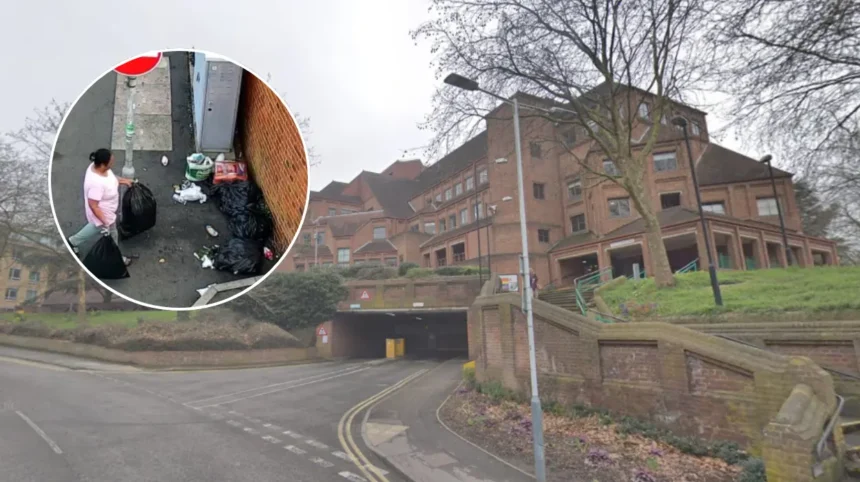
- Hillingdon Council in London has introduced a new initiative publishing CCTV footage online in a bid to catch fly-tippers.
- Local authorities are ramping up enforcement strategies to tackle illegal dumping and waste crimes across public and private land.
- The local council emphasizes community cooperation, urging residents to report waste offences and assist enforcement teams in identifying culprits.
- Fixed Penalty Notices (FPNs) of up to £1,000 and court prosecutions, including high-value fines and vehicle crushing schemes, form part of the ongoing crackdown.
uk/local/hillingdon/">Hillingdon (West London Times) October 13, 2026 – Hillingdon Council has launched a new digital initiative to combat fly-tipping by publishing CCTV footage online to help identify and catch illegal dumpers. The local authority is urging residents to assist enforcement teams by recognizing individuals or vehicles involved and reporting offences through official channels. Perpetrators face strict penalties, including Fixed Penalty Notices of up to £1,000, court prosecutions, and vehicle seizure or crushing. This strategy aims to leverage digital transparency and community vigilance to tackle environmental waste crime across the borough.
- Key Points
- How is Hillingdon Council tackling the rise of fly-tipping through online CCTV publication?
- What measures are being taken against identified offenders?
- How can local residents participate in the crackdown?
- Background of the Particular Development
- Prediction: How This Development Affects Local Residents and Businesses
How is Hillingdon Council tackling the rise of fly-tipping through online CCTV publication?
London, UK — Hillingdon Council has adopted an aggressive digital strategy to combat local waste crime by publishing CCTV footage online to help identify and catch fly-tippers. As reported by The Independent, the local authority has turned to public crowdsourcing of information by sharing recordings of illegal dumping incidents directly onto digital platforms.
The initiative marks an escalation in measures deployed by the west London local authority to address persistent environmental blight. Officials noted that traditional enforcement methods often struggle to capture culprits red-handed without community assistance. By making footage accessible online, the council hopes that local residents will recognise vehicles, individuals, or specific details associated with the offences.
What measures are being taken against identified offenders?
Local authorities across the United Kingdom maintain strict statutory powers to penalise waste offenders. Under current guidelines applied by Hillingdon Council, perpetrators caught dumping waste illegally face severe financial and legal penalties. Offenders can be issued with substantial Fixed Penalty Notices (FPNs) of up to £1,000 or face direct prosecution through the magistrates’ or crown courts.
Court convictions can result in heavy fines, mandatory community service, or custodial sentences depending on the scale and hazardous nature of the dumped materials. Furthermore, local enforcement teams have expanded their tactical operations, which include seizing and crushing vehicles utilized in illicit waste transportation to deter repeat offenders.
How can local residents participate in the crackdown?
The local authority continues to stress that community vigilance remains a vital pillar in keeping neighborhoods clean and safe. Residents who witness environmental offenses or possess relevant photographic evidence are encouraged to submit reports through official channels, such as the council’s online reporting tools or mobile applications like Love Clean Streets.
Authorities have reminded property owners and local businesses that waste management is a legal responsibility. Failing to ensure that commercial or domestic waste is transferred to authorized carriers can also result in legal liability if the rubbish is subsequently traced to an illegal dump site.
Explore more Hilingdon news:
Hillingdon Council Approves Lifts for Eastcote Underground Station Eastcote 2026
Police Appeal for Missing Teenager Abir in Hillingdon 2026
Background of the Particular Development
The escalation of enforcement tactics by Hillingdon Council follows years of mounting pressure from local residents, community groups, and local businesses regarding persistent environmental degradation. Fly-tipping has long been recognized as a nationwide challenge across urban and suburban centers in the United Kingdom, leading central government bodies and local authorities to continuously review anti-social behavior legislation. Over recent years, local councils have been granted expanded powers, including higher on-the-spot fine thresholds and simplified asset seizure protocols—such as vehicle crushing—to combat illegal dumping syndicates and opportunistic dumpers alike. The shift toward utilizing online CCTV publishing reflects a broader trend of local governments leveraging digital transparency and community engagement to bridge gaps in traditional surveillance coverage.
Prediction: How This Development Affects Local Residents and Businesses
The implementation of targeted digital surveillance and public CCTV appeals is expected to significantly alter local dynamics for residents and business owners within the borough. In the short term, increased public visibility of enforcement actions will likely raise community awareness regarding waste disposal accountability, potentially deterring casual fly-tippers who assume anonymity. For local residents, active council initiatives may lead to cleaner neighborhood environments, reduced accumulation of bulky waste in public rights-of-way, and quicker response times to reported eyesores. However, legitimate commercial entities and residents must also exercise heightened diligence regarding their waste transfer documentation to avoid inadvertent compliance liabilities. Over time, sustained public-private cooperation could foster a more stringent deterrence framework, reassuring communities that environmental crimes face tangible consequences.