

Key Points
- A London Ambulance Service (LAS) vehicle was caught up in a serious road traffic collision late on 8 October 2026.
- Emergency responders were dispatched to the junction of Great West Road and Sutton Lane in Hounslow at 10.24 pm.
- Deployed response teams included standard ambulance crews, an incident response officer, and specialist Hazardous Area Response Team (HART) paramedics.
- One individual received medical attention on scene before being transported to a hospital, whilst two additional individuals evaluated by medical staff declined further treatment.
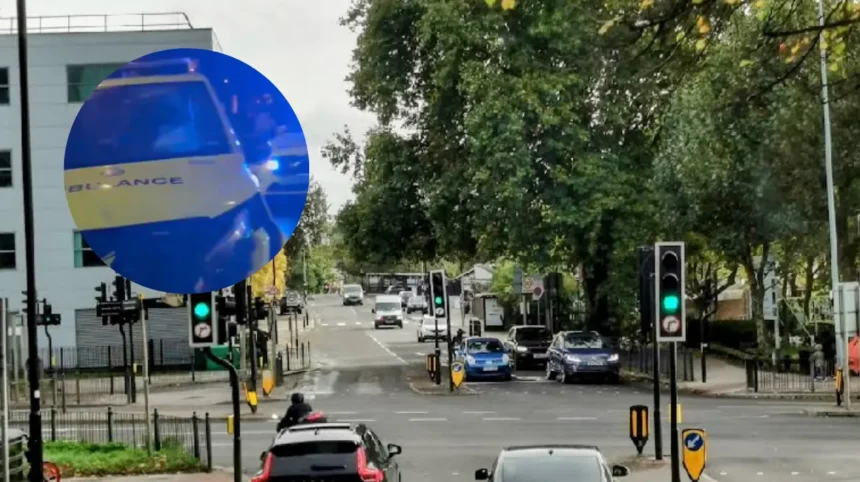
- Video footage captured multiple emergency response vehicles, including Metropolitan Police cars, surrounding the collision site with emergency lights activated.
uk/local/hounslow/">Hounslow (West London Times) October 9, 2026 – A London Ambulance Service vehicle has been involved in a serious late-night road traffic collision along a major arterial route in west London, prompting a substantial multi-agency response from emergency services.
- Key Points
- What Time Did Emergency Response Teams Arrive At The Hounslow Junction?
- Which Emergency Services Attended The Scene On The Great West Road?
- How Many Casualties Required Medical Treatment Following The Collision?
- What Did Visual Accounts And Footage Reveal About The Scene?
- Background Of The Particular Development
- Prediction: How This Development Can Affect Emergency Operations And Local Commuters
What Time Did Emergency Response Teams Arrive At The Hounslow Junction?
Emergency services were alerted to the incident at precisely 10.24 pm on Thursday, 8 October, following reports of a vehicular collision at the busy junction of Sutton Lane and the Great West Road (A4) in Hounslow. Response units were dispatched immediately to secure the road layout and assess the condition of all individuals involved in the impact.
Which Emergency Services Attended The Scene On The Great West Road?
As reported by Samuel Turner of This Is Local London, the London Ambulance Service mobilised an extensive array of specialized emergency assets to the incident location. The deployment included standard ambulance crews, an incident response officer, and specialist paramedics from the Hazardous Area Response Team (HART), who are trained to operate within dangerous or challenging physical environments. Multiple Metropolitan Police vehicles also attended the location to secure the perimeter and direct local traffic around the crash site.
How Many Casualties Required Medical Treatment Following The Collision?
According to an official statement provided by a spokesperson for the London Ambulance Service to Samuel Turner of This Is Local London:
“We sent resources to the scene, including ambulance crews, an incident response officer and paramedics from our hazardous area response team (HART). We treated a patient at the scene before taking them to hospital. Two other patients declined further treatment.”
The exact extent of the injuries sustained by the hospitalised patient has not been made public, nor has the identity or job title of the individual taken to medical facilities.
What Did Visual Accounts And Footage Reveal About The Scene?
As reported by Samuel Turner of This Is Local London, visual footage recorded at the location and shared on social media by London & UK Street News depicted a substantial emergency service presence across the Great West Road corridor. Video captures showed multiple police vehicles and ambulance units maintaining a protective cordon around the incident site, with blue emergency warning lights flashing as officers and paramedics managed the primary crash zone.
Explore More Local West London News
The Earl of Lonsdale Pub Reported Over Roof Parties West London 2026
Ealing’s new hate crime strategy aims to rebuild trust and encourage reporting
Background Of The Particular Development
The Great West Road (A4) in Hounslow is a primary dual-carriageway arterial route connecting West London directly to Heathrow Airport and the M4 motorway corridor. The junction intersecting with Sutton Lane is widely recognised as a high-volume traffic intersection, accommodating heavy flows of passenger vehicles, freight transport, and emergency services vehicles operating across the Borough of Hounslow.
Road traffic collisions involving emergency vehicles present distinct operational challenges for metropolitan services. Emergency service drivers operating under blue-light emergency conditions are granted specific legal exemptions under UK traffic regulations, including the ability to pass red traffic signals and exceed posted speed limits when safe to do so.
However, junctions along major trunk roads like the Great West Road present heightened risks due to varied traffic speeds, sightlines, and complex signal sequences, particularly during night-time hours when visibility conditions change.
Prediction: How This Development Can Affect Emergency Operations And Local Commuters
The incident along the Great West Road is likely to have immediate and medium-term impacts across two main groups: local road users and London Ambulance Service operational teams.
For the London Ambulance Service and the Metropolitan Police Service, collisions involving active emergency response vehicles trigger mandatory internal investigations and, where appropriate, review by oversight bodies. In the immediate term, the temporarily reduced fleet availability and the withdrawal of specialist personnel from active duty to assist with collision reporting can temporarily strain local sector deployments in West London.
Furthermore, the findings from collision investigations at major intersections frequently inform refreshed driver training modules, route risk assessments, and emergency vehicle light and siren operational protocols across London’s emergency services.
For residents and commuters utilizing the A4 Great West Road and surrounding residential streets in Hounslow, incidents of this nature often lead to temporary lane closures, structural road inspections, and traffic diversions.
Given the strategic importance of the A4 as a key route toward Heathrow Airport, serious collisions at the Sutton Lane junction highlight local community discussions regarding junction layout safety, signal timing efficiency, and speed monitoring controls along major urban trunk roads. Local highways authorities may evaluate recent incident data at this intersection to determine whether additional civil engineering interventions or traffic-calming measures are required to improve safety for both standard road traffic and blue-light responders.