

Key Points
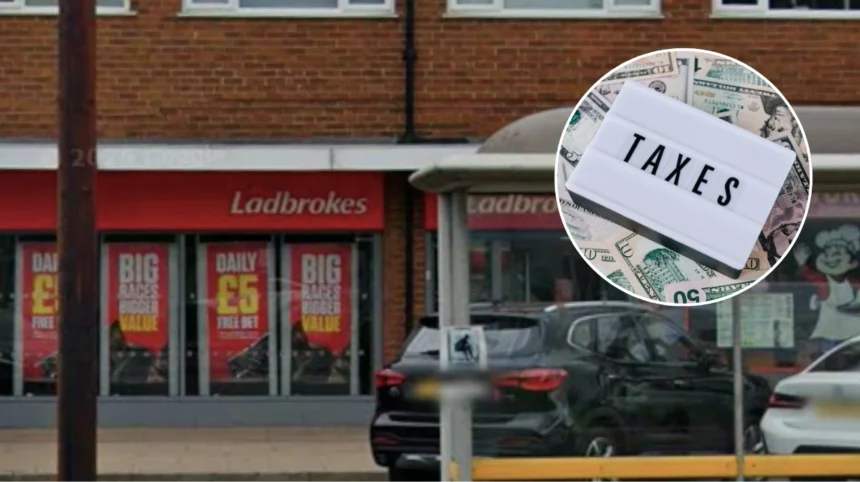
- Hub Community Role: Manager Jake Stevenson of the Ladbrokes branch in Handforth, near Manchester, says that gambling establishments are an important “third space,” offering people valuable human contact and feeling of community.
- Tax Hike Rumors: Rumors are circulating about possible Treasury contemplations of even more gambling tax hikes during the upcoming Autumn Budget—such as raising Machine Games Duty (MGD)—that could pose serious risks to the industry according to industry modeling.
- Economic Effects: EY modeling carried out for the Betting and Gaming Council shows that increasing the standard MGD rate from the current 20% up to 40% may result in up to 1,470 betting shop closings and 15,900 job losses across the country.
- Personal and Social Importance: Mr. Stevenson and his 90-year-old regular Harry Town discuss how important the establishment is in providing people with a comfortable and friendly environment, bringing forward their examples when the branch provided help to the customer suffering from dementia.
- Industry-Wide Issues: Entain announced its plans to cut around 400 customer care positions after 500 layoffs made earlier, warning that more taxes would cause even more shop closures and job losses.
Handforth (West London Times) September 29, 2026 — As reported by the uk/local/harrow/">Harrow Times, a local branch manager in the North West has spoken out about the essential social role high street betting shops play within their communities, just as the sector faces mounting financial pressure from potential government tax hikes.
How Do High Street Betting Shops Function as Community Spaces?
Operating in an environment of growing economic uncertainty, branch managers and patrons alike are drawing attention to the non-gambling social benefits provided by these establishments. As detailed by the Harrow Times, Jake Stevenson, manager of the Ladbrokes branch in Handforth near Manchester, pointed out that his site acts as a crucial “third space” where isolated individuals can secure valuable human contact.
Stevenson reflected on his career progression within the company, stating as reported by the Harrow Times:
“I started off here in Handforth as a customer service manager. Then I spent about four or five years working through a variety of different shops all the way into the centre of Manchester, and then back out again where I now manage here, where I started. We’ve realised how important these shops are to a lot of people. They come into the shop and potentially don’t have conversations with anybody else for the rest of the day.”
Expanding on the daily atmosphere inside the shop, Stevenson added, as noted by the Harrow Times:
“As much as it’s about placing a bet, it’s about talking to friends. I like to be friends with some of the people who come into the shop and we have a good chat. What’s the team going to do today? Who’s going to score some goals? We try to build a real sense of community. And for some customers, especially those lacking many safe spaces, these shops really are a core part of their lives.”
Highlighting a specific instance of the venue’s pastoral value, Stevenson shared an account with the Harrow Times concerning a regular customer:
“One of our regular customers over the years was a massive horse racing fan. He was a really regular customer, in every single day betting on the horses, but unfortunately he started to struggle with dementia. In the last 12 months of his life, he was starting to lose his sense of who he was and where he was. This shop particularly was a safe space for him because he’d been visiting it for so long that he felt at home here. His wife knew that that was also a safe space for him, so she could go and do her own thing and she knew that we would be here and help him through those later months.”
Echoing these sentiments, 90-year-old regular customer Harry Town told the Harrow Times:
“The staff are great – they really make you welcome. I have a cuppa. It’s like a community round a table.”
What Financial Pressures Are Threatening the Betting Sector?
The debate over the social utility of bookmakers unfolds against a backdrop of acute financial strain across the gambling and betting industry. According to reporting by the Harrow Times, there is widespread speculation that the Treasury is weighing further gambling tax increases in the upcoming Autumn Budget, with particular focus directed toward raising Machine Games Duty (MGD)—a levy applied to gaming machines located inside betting shops.
Industry modelling commissioned by the Betting and Gaming Council and compiled by EY suggests that doubling the standard MGD rate to 40% could exert a devastating toll on the high street, potentially triggering up to 1,470 shop closures and 15,900 job losses across the United Kingdom.
These national concerns carry particular historical resonance in the North West. As observed by the Harrow Times, Greater Manchester Mayor Andy Burnham previously championed the cause of betting shop workers during pandemic-era restrictions, publicly describing individuals working in bookies as being among those “too often forgotten by those in power”.
Parent companies are already feeling the pinch of escalating operational costs and regulatory burdens. The Harrow Times reported that Entain announced plans to cut roughly 400 customer care roles, following an earlier reduction of 500 positions earlier in the year. Amidst these cutbacks, Entain Chief executive Stella David has issued warnings that additional tax burdens risk accelerating job losses and forcing the permanent closure of numerous high street branches.
Explore more Harrow News:
North Harrow Teenagers Raise Funds for Venezuela Aid in North Harrow 2026
Pinner Cheese and Wine Night Raises Funds in Harrow 2026
Background of the Particular Development
The current friction between high street bookmakers and fiscal policymakers stems from a long-running debate regarding the taxation of the gambling sector versus its economic and social footprint. Over recent years, traditional betting shops—long a fixture of British high streets—have faced structural declines driven by the migration of punters to online gambling platforms, alongside rising business rates, energy bills, and regulatory compliance costs.
Proposals to alter Machine Games Duty have periodically resurfaced as governments look for revenue streams, putting pressure on operators who rely on gaming machine income to subsidise the overheads of physical, staffed retail units. Concurrently, operators have sought to rebrand high street shops not merely as transactional venues, but as localized community fixtures providing social refuge for older or isolated demographics, thereby framing proposed tax increases as a direct threat to community cohesion.
How This Development Can Affect the Particular Audience
If the Treasury proceeds with significant increases to Machine Games Duty and further tax rises in the forthcoming budget, the impact on high street betting shop employees, regular patrons, and local communities in areas like Handforth and the wider North West could be profound. For regular customers—particularly elderly or socially isolated individuals who rely on these venues for daily human interaction, routine, and a familiar safe space—the closure of local branches would remove one of their few remaining accessible community hubs.
For betting shop workers, the escalation of tax pressures threatens widespread redundancies, compounding job insecurity across a retail sector already shrinking under corporate restructuring and digital shifts. Ultimately, smaller local branches operating on tight margins would be the most vulnerable, accelerating the decline of traditional high street retail spaces.