


West London is a major startup location because it combines universities, research facilities, investment networks, transport infrastructure, specialist workspaces and large business markets. uk/local/hammersmith-and-fulham/white-city/">White City, Hammersmith, North Acton, Park Royal, Ealing, Brent and Hayes form connected innovation communities across the subregion.
- Which industries are most important for startups in West London?
- Where are the main startup hubs in West London?
- How does Imperial College London support startups in West London?
- How do startups in West London get funding and business support?
- How do startups become established companies in West London?
- What examples show how the West London startup ecosystem works?
- How will West London’s startup ecosystem develop in the future?
West London has developed a distinctive business environment around technology, science, creative industries, life sciences, digital services, food innovation and advanced manufacturing. The area also benefits from Heathrow Airport, major employment centres and access to central London.
West London Business describes the subregion as a £70 billion-plus economy and highlights its highly educated workforce, universities, Heathrow connectivity and established business base as important factors for investment and business growth.
The startup ecosystem is particularly concentrated around White City and the wider WestTech London innovation network. Imperial College London identifies White City Innovation District and the Old Oak Innovation Cluster in North Acton as two major innovation locations in West London.
West London is not a single startup district. It is a connected economic area containing different business environments. White City has a strong science and deep-tech profile. Hammersmith supports technology, healthcare and professional businesses. North Acton and Park Royal provide space for technology, manufacturing and creative enterprises. Hayes benefits from its proximity to Heathrow and established industrial and commercial activity.
The scale of the local economy also creates potential customers for new businesses. Startups can operate close to large companies, universities, hospitals, research institutions, transport hubs and international markets.
This combination gives West London a different economic profile from a purely central-London startup district. The area contains both knowledge-intensive businesses and practical commercial infrastructure.
Which industries are most important for startups in West London?
Startups in West London operate across technology, artificial intelligence, life sciences, healthcare, climate technology, creative industries, food innovation, advanced manufacturing and digital services. White City has particular strength in research-intensive ventures linked to science, medicine and engineering.
Technology is a major part of the West London startup economy. Digital companies benefit from access to skilled workers, corporate customers, flexible offices and London’s wider technology ecosystem.
Artificial intelligence is an increasingly important area around White City. Imperial College London operates specialist entrepreneurial programmes supporting AI ventures and research commercialisation.
Life sciences and biotechnology also have a strong presence. Imperial’s White City Campus provides laboratories, specialist equipment, research expertise and incubation facilities for science-based companies. The nearby Hammersmith Hospital and Imperial’s Hammersmith Campus strengthen the local healthcare and medical research environment.
MedTech refers to medical technology used to prevent, diagnose, monitor or treat health conditions. West London’s research environment supports businesses developing medical technologies because startups can work close to academic researchers, clinicians and specialist facilities.
Climate technology is another important area. Climate-tech startups develop products and services addressing emissions, energy, buildings, transport, waste or environmental resilience. Imperial supports climate entrepreneurship through programmes including Undaunted.
Advanced manufacturing provides another part of the ecosystem. Startups developing physical products require prototyping, testing, production and demonstration facilities. Imperial’s West London innovation infrastructure includes facilities designed for pilot manufacturing and product development.
Creative and media businesses also form part of the West London economy. The wider area has long contained established media, entertainment and technology companies. This creates opportunities for new businesses operating in digital content, production technology, marketing and creative services.
Food innovation represents another specialist area. West London Business identifies food among the sectors supported by the area’s incubator and accelerator network.
The diversity of these sectors means the West London startup economy is not dependent on one technology. Research-led companies operate alongside software businesses, creative enterprises, food businesses and companies developing physical products.
Where are the main startup hubs in West London?
The main startup hubs include White City, Hammersmith, North Acton, Park Royal and Hayes. White City is the strongest research-led cluster, while Old Oak and North Acton are developing around innovation, regeneration, advanced manufacturing and major transport investment.
White City is the most clearly defined startup and innovation district in West London. Imperial College London established the White City Innovation District with Hammersmith & Fulham Council in 2017.
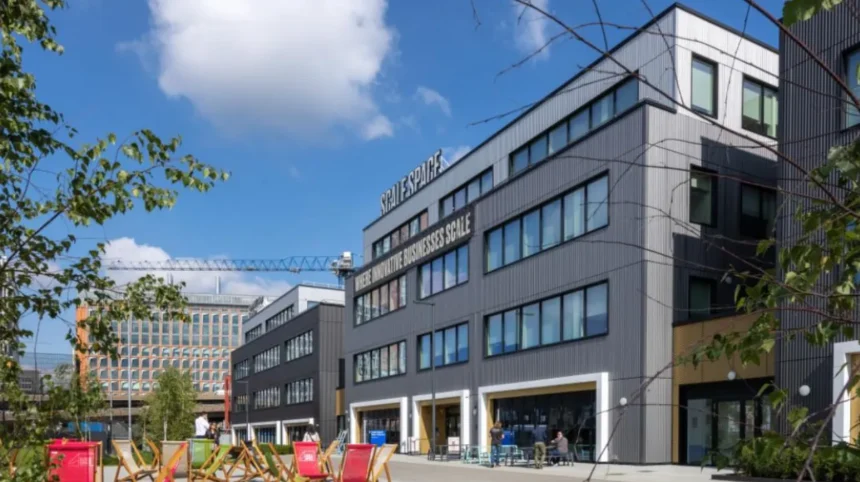
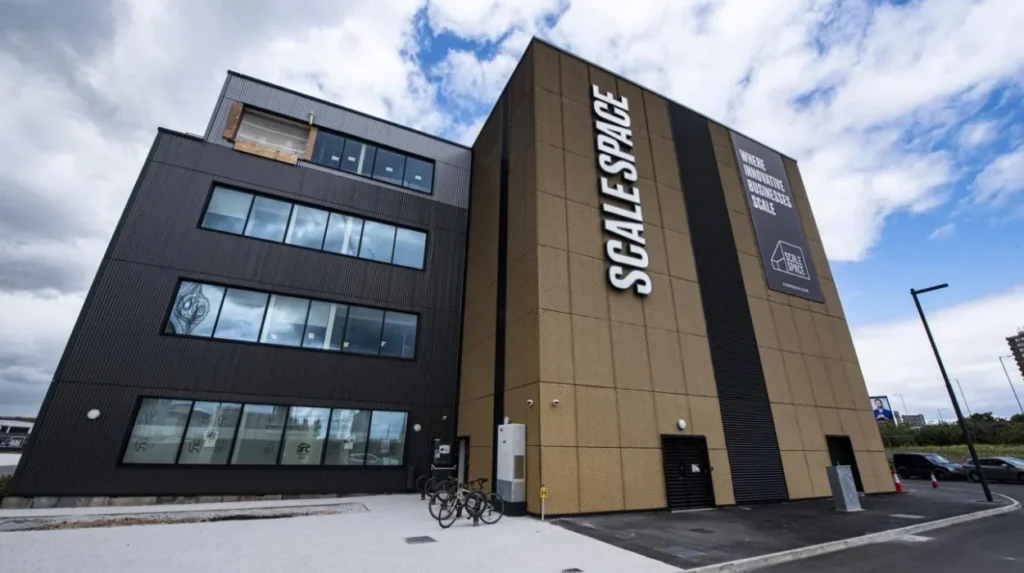
The White City Campus contains the Imperial White City Incubator, I-HUB, Scale Space and the Advanced Hackspace. These facilities provide different types of support for companies at different development stages.
The Imperial White City Incubator focuses on early-stage science and deep-tech businesses. It provides fitted laboratories, offices, meeting areas, shared equipment and business support.
I-HUB provides space for companies commercialising scientific research. It connects businesses with Imperial researchers, specialist equipment and technical expertise.
Scale Space focuses on innovative businesses and scaleups. A scaleup is a company that has moved beyond its earliest stage and is achieving sustained high growth.
North Acton forms another important part of the emerging West London innovation geography. Imperial identifies its Old Oak Innovation Cluster as a major business and innovation district connected with the regeneration of Old Oak.
The Old Oak area is part of the Old Oak and Park Royal Opportunity Area. The development area covers 650 hectares across parts of Brent, Ealing and Hammersmith & Fulham.
Park Royal provides a different type of business environment. It has a long-established industrial and commercial role, providing premises for manufacturing, logistics, food businesses, creative companies and other enterprises.
Hayes provides another important commercial location. Its position near Heathrow Airport gives companies access to international travel and logistics networks.
Hammersmith has a strong concentration of corporate, professional, technology and healthcare-related activity. Its position between central London and the western suburbs gives startups access to a large labour and customer market.
These hubs are complementary rather than identical. A laboratory startup requires different infrastructure from a software company, while a manufacturing startup requires different premises from a creative business.
How does Imperial College London support startups in West London?
Imperial College London supports West London startups through incubators, accelerators, laboratories, prototyping facilities, academic expertise, mentoring and research commercialisation programmes. Its White City ecosystem connects founders with scientists, clinicians, students, investors and industry partners.
Imperial College London is one of the central institutions in West London’s startup ecosystem. Its White City Campus was developed as an innovation environment connecting research, entrepreneurship and industry.
The Imperial White City Incubator provides specialist wet-lab space for early-stage science and deep-tech companies. Wet laboratories are laboratory environments designed for practical biological, chemical or medical research.
The incubator offers fitted CL2 laboratories, shared equipment and operational support. This infrastructure reduces the requirement for a young science company to build an entire laboratory independently.
Imperial also operates the Advanced Hackspace at White City. The facility provides specialist tools, prototyping equipment, workshops, training and support for people developing physical products.
The Enterprise Lab supports entrepreneurship among Imperial students, staff and alumni. Its activities include entrepreneurial training, competitions, mentoring and startup programmes.
Imperial also supports academic spinouts. A spinout is a company created to commercialise research, intellectual property or expertise developed within another institution.
This model is significant for deep-tech businesses because scientific research often requires a long development process before a commercial product reaches customers.
Imperial reported that 14 spinouts were formed during the year covered by its 2026 update. The institution also states that more than 100 spinouts, startups and scaleups are located within its White City ecosystem.
Imperial’s current innovation-space information reports that companies at White City have raised more than £337 million during the previous two years, while Imperial states that White City Incubator companies have raised more than £620 million since 2016.
These figures demonstrate the scale of investment associated with the campus, although they represent companies connected with the Imperial ecosystem rather than every startup located across West London.
How do startups in West London get funding and business support?
Startups in West London use a mixture of founder capital, grants, loans, angel investment, venture capital, university funding and accelerator programmes. Funding requirements change as companies move from idea development to product validation, market entry and sustained growth.
Startup funding generally develops alongside business maturity.
Early-stage founders often use personal savings, founder contributions or revenue from initial customers. This approach is commonly described as bootstrapping.
Government-backed Start Up Loans provide another route for eligible businesses. The current government-backed scheme allows borrowing from £500 to £25,000 for starting or growing a business.
Equity investment is another important source of capital. Angel investors provide investment to early-stage businesses, usually in exchange for an ownership stake. Venture capital firms invest in businesses with potential for significant growth and typically take equity in return.
Research-intensive West London startups often require more specialist funding. A laboratory-based business can require expensive equipment, specialist staff and extended research before commercial revenue develops.
This is where incubators and accelerators become important. An incubator provides workspace, infrastructure and support during early development. An accelerator normally provides structured programmes designed to help a company develop more rapidly through mentoring, networks, funding access and commercial support.
Imperial operates specialist programmes covering artificial intelligence, medical technology, climate technology and security. The university also provides routes for academic founders to turn research into commercial companies.
Government support is another part of the wider UK environment. The UK operates schemes including the Seed Enterprise Investment Scheme and Enterprise Investment Scheme to support investment in qualifying businesses.
Research and Development tax relief is relevant to qualifying companies conducting eligible scientific or technological R&D. HM Revenue & Customs defines qualifying R&D around projects seeking an advance in science or technology.
The funding process therefore depends heavily on the nature of the startup. A software company with an established subscription model has different financial requirements from a biotechnology business developing a new therapeutic technology.
How do startups become established companies in West London?
A West London startup develops through a sequence involving business validation, legal formation, product development, customer acquisition, funding, recruitment and growth. Limited companies register with Companies House, while founders also address tax, intellectual property, employment and regulatory responsibilities.
The first stage is business validation. Founders identify a customer problem, develop a proposed solution and test whether customers are willing to pay for it.
A business model defines how the company creates value and generates revenue. Examples include subscription software, direct product sales, licensing, marketplace commissions and professional services.
The legal structure comes next. UK founders can operate as sole traders, partnerships or limited companies, depending on their circumstances.
A limited company is legally separate from its owners. Companies House manages company registration and public company records.
Founders also need to consider intellectual property. Intellectual property includes legally protected creations such as inventions, registered designs, trademarks and copyright.
For technology startups, intellectual property can represent a significant part of the company’s commercial value. University spinouts also need agreements covering ownership and licensing of research-generated intellectual property.
Product development follows different processes depending on the sector. A software startup typically develops and tests digital products. A medical technology startup requires additional technical validation and regulatory considerations. A manufacturing company requires prototyping, testing and production processes.
Customer acquisition becomes increasingly important once the product is ready for market. Startups need evidence that customers will buy the product or service.
Recruitment becomes another growth requirement. West London’s universities and established business community provide access to graduates, researchers, engineers, technology specialists, healthcare professionals and commercial employees.
Companies also need suitable workspace. A digital startup can operate from flexible offices or coworking facilities. A biotechnology startup requires laboratory infrastructure. A manufacturing startup requires specialist industrial space.
This is why West London’s range of startup facilities is economically important. Different businesses can locate within the same wider ecosystem while using infrastructure designed for their individual requirements.
Explore More Area Guide
Business Districts in West London: Key Commercial Hubs
Working in West London: Jobs, Careers and Skills
What examples show how the West London startup ecosystem works?
Examples from Imperial’s ecosystem demonstrate how West London supports different startup models, including renewable-energy technology, regenerative medicine, medical technology, artificial intelligence and deep science. These businesses show the connection between academic research, incubation, specialist infrastructure and commercial development.
RFC Power provides an example of a research-based company connected with Imperial. The company originated from research in Imperial’s Department of Chemical Engineering and Department of Chemistry and focuses on technology for renewable-energy storage.
SPARTA Biodiscovery provides an example from medical technology. It was co-founded by Imperial academic Molly Stevens and focuses on nanoscale technologies connected with regenerative medicine.
Koalaa demonstrates another model. The company was founded by an Imperial master’s student and developed soft prosthetic limbs designed for users including young children.
These examples demonstrate the range of businesses emerging from university-linked innovation. They also show why laboratory facilities, academic expertise and prototyping infrastructure are important for deep-tech entrepreneurship.
The wider ecosystem contains businesses that are not Imperial spinouts. White City attracts startups and scaleups because companies can locate close to research facilities, investors, established businesses and specialist talent.
Imperial’s current White City information identifies more than 100 co-located spinouts, startups and scaleups.
West London Business also identifies incubators and accelerators supporting specialist areas including hardware, cleantech and food innovation.
This broader network means the startup ecosystem includes both university-generated companies and independent businesses.
The distinction is important because not every startup in West London is a technology spinout. Many founders establish independent companies based on commercial opportunities in areas such as professional services, hospitality, creative industries, logistics, food, retail and digital products.
The ecosystem therefore works through several routes. Research creates commercial intellectual property. Universities provide talent and expertise. Incubators provide infrastructure. Accelerators provide structured development. Investors provide capital. Established businesses provide customers and partnerships.
Transport infrastructure adds another layer. Heathrow provides international connectivity, while London’s public transport network connects West London to central London and other business districts.
How will West London’s startup ecosystem develop in the future?
West London’s startup ecosystem is expanding around White City, Old Oak and Park Royal, with research facilities, innovation space, transport investment and regeneration supporting further business development. Future growth is closely connected with deep technology, life sciences, advanced manufacturing and digital innovation.
White City remains central to this development. Imperial’s plans for the White City Deep Tech Campus cover a 23-acre site with outline consent for 4 million square feet of space.
Imperial reports that more than 2 million square feet remains to be delivered within the planned development. The completed campus is designed to combine research, innovation, business, housing, student accommodation, retail and hospitality.
Imperial’s WestTech London programme also links White City with Old Oak and other research and innovation locations.
Old Oak is undergoing major regeneration connected with the future Old Oak Common station. The Old Oak and Park Royal Development Corporation describes the wider Opportunity Area as a 650-hectare regeneration zone.
In June 2026, Imperial College London and the Old Oak and Park Royal Development Corporation announced a strategic partnership focused on innovation, entrepreneurship, regeneration and inward investment.
This development increases the strategic importance of North Acton and Old Oak within West London’s startup geography.
The skills environment is also changing. West London Business identifies digital activity, including artificial intelligence and cybersecurity, as a cross-cutting economic priority. Life sciences is also identified as a strategically important growth sector.
The region’s future startup environment will therefore depend on infrastructure as well as finance. Science businesses require laboratories. Manufacturing companies require production facilities. Digital companies require talent and connectivity. Growing companies require larger premises and access to customers.
West London already contains these different components across a connected economic geography.
The long-term significance of startups in West London is linked to the transition from individual new companies to a wider innovation economy. Startups create demand for specialist workers, laboratories, offices, professional services, investors, suppliers and commercial partnerships.
For residents, students, researchers and entrepreneurs, this creates a broad local business environment. For investors and established companies, it creates opportunities for partnerships and technology development.
West London’s startup economy is therefore increasingly shaped by the relationship between universities, businesses, public-sector development organisations, investors and entrepreneurs. White City provides the strongest current concentration of research-led startup infrastructure, while Old Oak, North Acton, Park Royal, Hammersmith and Hayes contribute complementary commercial and industrial capabilities.
The result is a diverse West London startup ecosystem built around research, technology, enterprise, connectivity and regeneration.
What are the main startup hubs in West London?
The main startup hubs in West London include White City, Hammersmith, North Acton, Old Oak, Park Royal and Hayes. White City has a particularly strong concentration of science, technology, life sciences and deep-tech businesses.