


Key Points
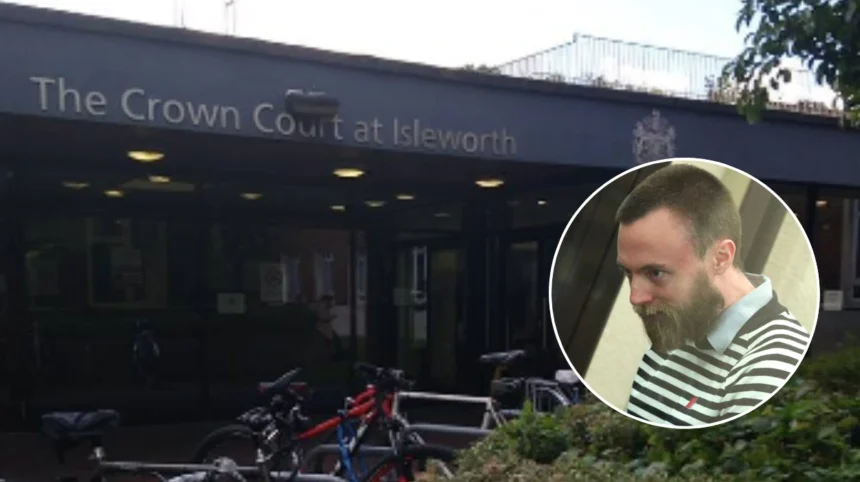
- Jack Shepherd was jailed for 20 months at Isleworth Crown Court on September 14, 2026, after pleading guilty to charges against his partner.
- His sentence will be accompanied by a four-year extended licence period, which shall run concurrently with a previous sentence expected to be completed by January 2029.
- Jack Shepherd pleaded guilty to two counts of assault occasioning actual bodily harm and one count of criminal damage.
- Charges of controlling or coercive behaviour, as well as intentional suffocation, have been dropped in lieu of a guilty plea and were not considered as convictions.
- During the hearing, it was revealed that Shepherd held the victim down and beat her in an attack that occurred in February 2025, as well as struck her on the chest with barbecue tongs causing a mark in an attack that took place in June 2025.
- The judge Martin Edmunds declined mitigation on the grounds of remorse and alcoholism since Shepherd wanted to shift the blame and had no confidence in his remorse.
- Shepherd previously had a manslaughter conviction in 2018 in relation to the 2015 death of Charlotte Brown in a Thames speedboat crash.
uk/local/hounslow/isleworth/">Isleworth Crown Court (West London Times) September 15, 2026 – Jack Shepherd has been handed a custodial sentence of 20 months at Isleworth Crown Court following admissions of offences against his partner, as reported by LDN Editor of London Daily News. The sentencing, which took place on 14 September 2026, also incorporates an extended licence period of four years to be served following his release from custody. According to the court proceedings, the judicial panel addressed the admitted offences through concluded guilty pleas, ensuring that any material not pursued as part of those specific pleas was not treated as a formal conviction.
What were the specific charges and incidents detailed during the court hearing?
As detailed by LDN Editor of London Daily News, the court heard that the assaults took place across two separate months in 2025. In relation to the February 2025 incident, LDN Editor reported that Shepherd pinned the woman down and punched her several times, which resulted in visible bruising. Regarding the June 2025 incident, LDN Editor stated that Shepherd struck the victim in the chest using barbecue tongs, an action that reports indicate caused an injury and a lasting scar. Furthermore, these two separate incidents formed a core part of the case that ultimately led to Shepherd’s recall to custody.
In terms of the formal legal charges, Shepherd entered guilty pleas to two counts of assault occasioning actual bodily harm alongside a single charge of criminal damage. As noted in the reporting by LDN Editor of London Daily News, these pleas were formally accepted by the court, establishing the factual and legal basis for the sentence handed down on 14 September 2026. Conversely, other serious allegations—including claims of controlling or coercive behaviour and an allegation of intentional suffocation—were dropped in exchange for the accepted guilty pleas. The court explicitly clarified that these dropped allegations were not treated as convictions throughout the course of the proceedings.
Explore more Isleworth News:
Jack Shepherd Partner Assault Trial at Isleworth Crown Court 2026
Hounslow Council Housing Errors Leave Disabled Person Homeless Hounslow 2026
How did Judge Martin Edmunds assess the defence mitigation and sentence terms?
When determining the appropriate legal outcome, Judge Martin Edmunds firmly rejected the mitigation advanced on Shepherd’s behalf, which relied heavily upon expressions of remorse and references to alcohol use. As observed by LDN Editor of London Daily News, the judge concluded that Shepherd actively sought to shift blame onto others and stated on the record that he had no faith in the asserted remorse. This critical judicial assessment heavily informed the court’s approach to determining the severity and proportionality of the final sentence.
Regarding the structure of the punishment, the 20-month custodial term was ordered by the bench to run concurrently with a sentence that Shepherd was already actively serving. Reporting by LDN Editor of London Daily News highlights that the projected release date on that existing prior sentence stands at January 2029. Alongside the prison term, the court enforced the aforementioned four-year extended licence period as a mandatory protective measure following his eventual release.
Background of the particular development
The sentencing proceedings at Isleworth Crown Court on 14 September 2026 follow a complex legal history associated with Jack Shepherd. Beyond the specific domestic assaults committed against his partner in February and June 2025, Shepherd previously attracted widespread public and legal attention following a 2018 manslaughter conviction.
That earlier conviction arose from the tragic death of Charlotte Brown, who died in a speedboat crash on the River Thames in 2015. While media outlets and legal observers note that the historical manslaughter case serves as broader context regarding Shepherd’s custodial status and public profile, judicial authorities maintained a strict separation, ensuring that the 2018 conviction was not conflated with the specific domestic abuse offences and criminal damage charges addressed at Isleworth Crown Court.
This legal development carries notable implications for public policy discussions, advocacy groups, and victims of domestic abuse. The rigorous prosecution of domestic assaults—even when paired with complex plea negotiations involving dropped coercive control or suffocation charges—reinforces the criminal justice system’s ongoing commitment to holding perpetrators accountable for actual bodily harm.
For advocacy groups and victims’ support networks, the case underscores the critical importance of courts scrutinising and rejecting superficial mitigation claims, such as unproven remorse or blame-shifting, during sentencing. Furthermore, because Shepherd was already serving a custodial sentence with a projected release date in January 2029, this concurrent 20-month sentence and subsequent four-year extended licence period will significantly influence his overall timeline of supervision upon release. This ensures prolonged monitoring by probation services, which directly impacts public safety and community risk management strategies concerning repeat offenders.