

Key Points
- According to MyLondon reporter Louis Dargavel Corbett, one person has died after an occurrence on the railway tracks of West London.
- British Transport Police were called in an emergency concerning a casualty at the train tracks at the Hayes region at 5:10 am on Thursday, September 10, 2026.
- The police, as well as other emergency services, came to the spot in great haste, but sadly, the person was pronounced dead upon arrival.
- It has been established that the authorities are carrying out investigations regarding what exactly happened to cause the death.
- The occurrence occurred during a period when transport disruptions had been experienced across the whole London transport network.
- Services such as the Samaritans have been emphasized by news media for people who are distressed by the news.
uk/local/hillingdon/hayes/">Hayes (West London News) September 10, 2026 – A tragic morning unfolded in the British capital as a person lost their life following an urgent incident on the railway tracks in West London, prompting a swift response from emergency services and causing widespread travel disruption.
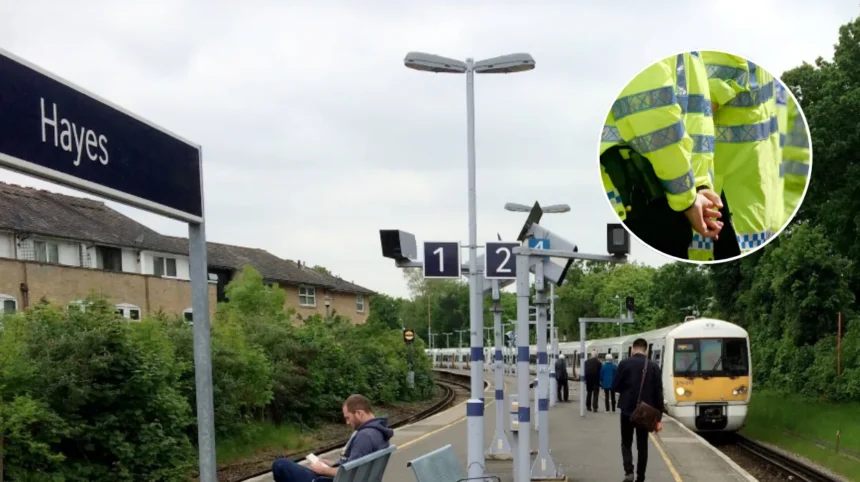
As detailed by reporter Louis Dargavel Corbett of MyLondon, the British Transport Police were alerted to the unfolding emergency at approximately 5:10 am on Thursday, September 10, after receiving urgent reports concerning a casualty situated on the tracks within the Hayes area.
What Are the Details of the Emergency Response in Hayes?
Responding promptly to the early morning alert, specialized officers from the British Transport Police, alongside teams of professional paramedics, arrived swiftly at the designated location. Despite the rapid intervention and medical efforts administered at the site, life could not be saved. As documented in reports by MyLondon, the individual involved was sadly pronounced dead at the scene.
Providing an official statement regarding the initial phase of the response, a spokesperson for the British Transport Police stated:
“We were called at around 5.10am this morning (10 September) to reports of a casualty on the tracks in the Hayes area.”
The representative further elaborated on the tragic outcome and the subsequent procedural steps being taken by law enforcement authorities, adding: “Officers responded with paramedics, however, sadly a person was pronounced dead at the scene. Enquiries into the circumstances leading up to their death are ongoing.”
How Has the Incident Impacted Local Transport Infrastructure?
The fatality on the railway infrastructure created immediate operational challenges across vital regional transit arteries. As further noted by regional reporting from outlets such as the London Standard and London Now, the tragic occurrence—initially categorized operationally as a customer incident—coincided with heavy morning travel delays.
Major services, particularly along the Elizabeth line connecting central locations to key aviation hubs and commuter towns, faced extensive suspensions and severe delays during the peak morning rush hour. Transport authorities worked alongside emergency responders to manage the network safely while police personnel carried out their initial investigative duties at the location.
Explore more Hounslow News:
Black Sheep Coffee Opens Large New Store in Hounslow 2026
TfL Proposes Major Cycleway 9 West Extension Plans in Hounslow 2026
Background of the Particular Development
Railway incidents involving casualties on tracks in major metropolitan areas like London invoke established emergency protocols involving multi-agency coordination between the British Transport Police, local ambulance services, and rail network operators such as Network Rail and Transport for London. The Hayes area, situated on key rail corridors leading out of West London towards major transit terminals and Heathrow connections, handles high volumes of commuter and high-speed passenger traffic daily.
When unexpected tragedies or medical emergencies occur on these high-density networks, standardized protocols dictate immediate service stoppages to preserve forensic integrity, facilitate life-saving or recovery operations, and ensure public and personnel safety. Investigative bodies routinely review track access, CCTV footage, and witness accounts to piece together the sequence of events leading to such fatalities. Furthermore, public transport agencies in the United Kingdom consistently partner with mental health organizations—such as the Samaritans, who maintain a free 24/7 helpline via 116 123—to offer immediate crisis intervention support and raise awareness across station environments.
Impact on Commuters, Regular Passengers, and Local Residents
This tragic development carries several direct consequences for regular commuters, local residents, and daily passengers utilizing the West London rail network. In the immediate aftermath, thousands of travelers face prolonged delays, cancellations, and the necessity of finding alternative transport modes—such as local London Underground lines, buses, or alternative rail links—leading to significant congestion across alternative routes.
For regular passengers and local residents living near the Hayes corridor, such incidents emphasize ongoing conversations regarding network safety, psychological support access at stations, and infrastructural resilience. Beyond the immediate logistical disruptions, repeated incidents on major transit lines often accelerate institutional reviews by transport operators regarding platform safety measures, community-based mental health interventions, and rapid-clearance protocols designed to minimize commuter gridlock while maintaining rigorous investigative standards.