


Key Points
- Hammersmith & Fulham have had the highest rate of suicides among London boroughs leading to local efforts and initiatives from football players.
- Fulham Football Club is supporting the “Together Against Suicide” initiative by the Premier League, conducted in collaboration with the Samaritans organization.
- For the Premier League game against Crystal Palace at Craven Cottage, Samaritans volunteers and designated match day Mental Health workers were present to reach out to fans.
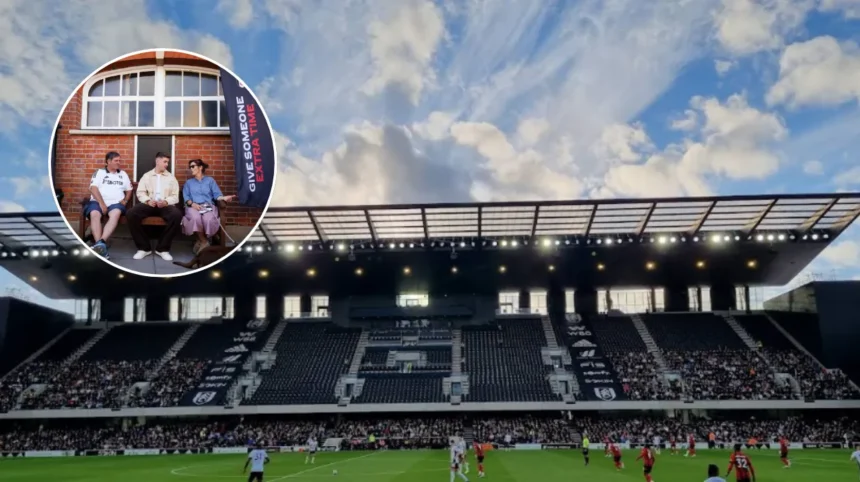
- Fulham FC footballer Tom Cairney was involved in the launching event of “Legend on the Bench” on Stevenage Road to promote discussion on mental health issues.
- A representative from the Samaritans, club’s mental health workers, and Ivan Berry gave speeches at half-time asking supporters to look out for others.
- Over 500 fans took part in an anonymous survey to help inform the “Extra Time” campaign by Fulham FC, which will include a fan football tournament, charitable events, and Christmas activities.
- The Fulham FC Foundation runs the “More Than a Game” project in partnership with the Premier League and the Professional Footballers’ Association that provides free weekly football and well-being sessions at Fulham, Kingston, and Merton.
uk/local/hammersmith-and-fulham/hammersmith/">Hammersmith & Fulham (West London Times) September 10, 2026 — Marking International Suicide Prevention Day, Fulham Football Club has spotlighted urgent mental health concerns within the local borough, which continues to record one of the highest suicide rates across London. As detailed in official club communications by Fulham FC, the initiative seeks to ensure that community members and matchgoers recognise they are not alone and that professional support remains accessible.
What is the Premier League’s ‘Together Against Suicide’ campaign at Craven Cottage?
As reported by Fulham FC, the club has integrated itself deeply into the broader Premier League-wide ‘Together Against Suicide’ initiative, which operates in direct partnership with the suicide prevention charity Samaritans. The overarching objective of the campaign is to open up vital dialogues regarding suicide, dismantle lingering stigmas surrounding mental health struggles, and empower individuals to feel confident in reaching out for help when they find themselves in distress.
During the recent Premier League fixture against Crystal Palace, volunteers from the Samaritans established a visible presence across Craven Cottage. According to documentation published by Fulham FC, these volunteers are scheduled to attend every single home Premier League match throughout the season, providing a familiar, welcoming environment for anyone requiring a listening ear.
How are players and club figures supporting the initiative?
The matchday against Crystal Palace marked the official unveiling of the “Legend on the Bench” activation site located on Stevenage Road. As noted by Fulham FC, this installation serves as a permanent visual reminder that taking the time out of a busy day to genuinely listen to another person can trigger a profound, real-world difference.
As part of this prominent launch event, professional footballer Tom Cairney joined supporters on the bench to talk directly with fans, helping to champion mental health awareness and reduce barriers to discussing suicide prevention. Furthermore, dedicated matchday Mental Health workers patrolled the stadium footprint throughout the fixture, supplying immediate support and guiding supporters toward proper clinical and community services.
During the half-time interval, Sam Gale representing the Samaritans, alongside the club’s internal team of Mental Health workers, joined Ivan Berry on the pitch. Together, they addressed supporters directly to underline the importance of the campaign, urging everyone in attendance to take a proactive moment to check in on friends, family, and fellow fans.
How can supporters get involved with the ‘Extra Time’ campaign?
Beyond matchday activations, Fulham FC has initiated deep community engagement through the ‘Extra Time’ campaign. Statistics released by the club indicate that over 500 supporters have already participated in a short, anonymous survey designed to gauge fan sentiment and dictate the structural evolution of the campaign.
Fulham FC has outlined several major community events slated for the unfolding season for those who complete the survey and engage further, including:
- A dedicated supporter football tournament.
- Various community and charity-focused outreach events.
- Special Christmas events and seasonal community activities.
- Additional organized avenues for supporters to unite behind the cause.
Explore more Hammersmith and Fulham News:
Fuller’s Acquires Ten Premium Pubs in Hammersmith and Fulham 2026
West London Ad Board Ban Trial in Shepherd’s Bush 2026
What community outreach programs are currently running?
Complementing the matchday operations, the Fulham FC Foundation operates its established “More Than a Game” programme. Formulated to celebrate World Suicide Prevention Day and sustain year-round positive mental wellbeing, the initiative offers adults aged 18 and over a safe, structured space where recreational football and mental health support intersect.
Delivered via a collaborative partnership spanning the Premier League and the Professional Footballers’ Association (PFA), the programme integrates weekly football sessions with professional mental wellbeing frameworks. Every single session features an on-site Wellbeing Practitioner to guarantee that participants can access confidential one-to-one guidance, direct emotional support, and formal signposting to specialized health services whenever necessary.
Organisers emphasize that these weekly sessions are entirely free to attend, offering a welcoming and stigma-free environment aimed at building personal confidence, physical fitness, and vital social networks. At present, “More Than a Game” operates actively across the London boroughs of Fulham, Kingston, and Merton.
Background of the Development
The launch of the “Extra Time” campaign and Fulham FC’s integration into the broader Premier League ‘Together Against Suicide’ initiative arrives against a backdrop of mounting concern regarding public mental health within urban centers. National health data consistently highlights that suicide remains a leading cause of mortality among working-age adults in the United Kingdom, with specific inner-city London districts experiencing elevated vulnerability due to socioeconomic pressures, social isolation, and institutional gaps in early intervention.
Football clubs occupy a unique cultural and civic position within British society. Because traditional public health messaging often struggles to penetrate isolated demographics—particularly middle-aged men and young adults who historically under-utilize mental health services—sporting institutions have increasingly leveraged their mass appeal. By embedding mental health signposting, safe physical spaces, and trained professionals directly into matchday environments, clubs like Fulham are transforming stadiums from traditional spaces of entertainment into frontline community health hubs. This builds on prior national frameworks, aligning sports governance bodies with expert charities like the Samaritans to dismantle the stigma of silence.
The deepening integration of mental health infrastructure into professional football matchdays is expected to yield measurable improvements in early intervention and help-seeking behaviors among local supporters. By normalizing conversations around emotional distress in high-traffic, familiar community environments like Craven Cottage, the initiative lowers the psychological barrier to entry for individuals who might otherwise avoid clinical settings or crisis hotlines.
For the primary audience—local residents, football supporters, and vulnerable adults within Hammersmith & Fulham and surrounding boroughs—this development introduces accessible, non-judgmental support systems directly into their routine recreational spaces. Over the course of the 2026/27 season, the presence of trained matchday mental health workers, visible community touchpoints like the “Legend on the Bench,” and physical activity programs such as “More Than a Game” will likely increase local mental health literacy. Consequently, this sustained community engagement can significantly decrease social isolation, ensure timelier crisis referrals, and ultimately