


Key Points
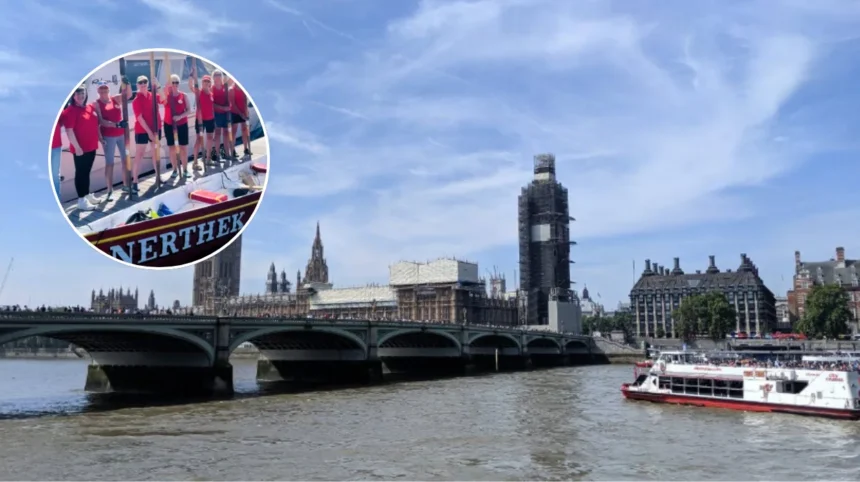
- Event Participants: The Island Harbour-based Island Gig Rowers are participating in the well-known Great River Race.
- Race Route: This challenging fixed-seat marathon race is being conducted over a distance of 21.6 miles along the River Thames from the eastern location of Millwall Docks to the western destination of Richmond.
- Motivation behind participation: One of the participants in this race is Sandie who is racing in remembrance of her deceased husband Dennis who had been receiving specialized end-of-life care at Mountbatten Isle of Wight.
- Scale of the event: Approximately 270 boats containing international teams participate in staggered starts, going under 17 of the famous bridges of London.
- Charitable objective of the race: This event is an important fundraiser for Mountbatten Isle of Wight which provides continuous care services to more than 2,500 people per day.
Isle of Wight (West London Times) September 9, 2026 — Local rowers from the Island Harbour-based Island Gig Rowers have set their sights on London’s iconic River Thames to compete in the demanding Great River Race, navigating a gruelling course from Millwall Docks to uk/local/richmond-upon-thames/richmond/">Richmond. As reported by James Rann, Digital News Reporter of Island Echo, the team is joining approximately 270 boats carrying competitors from across the globe.
Why is the Great River Race considered a unique challenge?
Known widely as London’s river marathon, the contest spans just over 21 miles through the heart of the capital city, requiring participants to pass beneath 17 major bridges. For returning participants, the physical toll is intense. Last year’s crossing took the dedicated crew three hours and 41 minutes.
Detailing the grueling nature of the endurance event, as reported by James Rann of Island Echo, participant Sandie stated that
“It’s like a marathon. Your legs and arms get wobbly as you go on.”
Despite the heavy physical fatigue, competitors are treated to unique visual spectacles. As reported by James Rann of Island Echo, Sandie noted that
“The most incredible view is coming under Tower Bridge and to see those spectacular buildings. You get a different perspective from the river.”
Who are the rowers raising funds for?
Beyond the athletic challenge, the Island Gig Rowers are using the platform to raise vital awareness and donations for Mountbatten Isle of Wight. Sandie is undertaking the physical test in poignant memory of her husband, Dennis, who was looked after by the local hospice organisation.
Emphasising the community significance of the charity, as reported by James Rann of Island Echo, Sandie said,
“Mountbatten Isle of Wight is an Island charity and everybody, at some time in their lives, will be touched by Mountbatten.”
Mountbatten Isle of Wight delivers continuous, round-the-clock care for upwards of 2,500 people on any given day. The vast majority—around 85 percent—of that essential care is deployed directly into patients’ homes, alongside day services and outpatients managed through the John Cheverton Centre community space, while remaining services operate from the charity’s specialist inpatient unit.
Explore more Richmond News:
New E-Bike Registration Plates and Safety Rules Proposed in Richmond 2026
Exploring Real World Ted Lasso Filming Locations in Richmond 2026
Background of the Particular Development
The Great River Race was established to mirror the traditional working practices of Thames watermen, combining heritage preservation with modern community fundraising. Over the decades, it has evolved into a premier fixture on the British sporting calendar, attracting everything from elite athletes and international rowers to amateur groups in fancy dress. Regional clubs, such as the Island Gig Rowers, frequently utilise large-scale national events like this to boost visibility for localized charities, leveraging the intense media coverage of London’s waterways to drive donations for community infrastructure like hospice care.
How This Development Can Affect the Particular Audience
For the local community on the Isle of Wight and supporters of regional charities, this high-profile participation directly elevates the profile of end-of-life care providers like Mountbatten Isle of Wight. By placing local figures on a national stage, community fundraising initiatives are anticipated to see increased public engagement, potentially driving up online donations and volunteer involvement.
For the broader audience of regional athletes, such high-visibility events reinforce the importance of physical endurance training coupled with social advocacy, encouraging smaller local clubs to engage in cross-country sporting spectacles to secure critical financial lifelines for community services.