

West London has one of the most varied residential property markets in the UK. The area combines high-value central neighbourhoods, established suburban districts, family housing, apartments, rental properties and major regeneration locations.
- What are the current property market trends in West London?
- Why has the West London property market changed in recent years?
- Which West London boroughs currently have the highest property prices?
- Which West London areas offer comparatively lower property prices?
- How are house prices performing across different West London boroughs?
- How important is the rental market in West London?
- How has the Renters’ Rights Act affected West London landlords and tenants?
- Which property types are most relevant to West London buyers?
- How do transport links influence West London property demand?
- How does new housing and regeneration affect West London property trends?
- How does affordability affect property demand in West London?
- What factors should buyers examine when assessing West London property?
- What factors should West London sellers consider?
- What is the outlook for West London property trends?
- How should West London property market data be interpreted?
- What do the latest West London property trends mean for the future?
For property buyers, sellers, landlords, tenants and investors, West London cannot be understood through a single average price. Market performance differs substantially between boroughs and property types. Kensington and Chelsea, Westminster, fulham/hammersmith/">hammersmith-and-fulham/">Hammersmith and Fulham, Ealing, Hounslow, Hillingdon, Brent, Harrow, Richmond upon Thames and Kingston upon Thames operate within different price, demand and housing-stock conditions.
The latest official data provides a clear picture of the wider London market. In June 2026, the average London property price was approximately £554,000, compared with £293,000 across England. London prices fell by 2.5% over the year to June 2026, while England recorded annual growth of 1.8%.
This difference shows why West London property trends require local analysis. Higher-value inner and western boroughs have experienced stronger price pressure than many outer areas. At the same time, rental demand remains significant because London continues to have the highest average private rents among English regions.
What are the current property market trends in West London?
West London property trends in 2026 show a selective market, with prices under pressure in several high-value boroughs while rental demand remains strong and affordability continues to shape buyer behaviour across established residential districts.
The wider London market remains weaker than many English regions. Official UK House Price Index data shows London prices fell 2.5% in the year to June 2026. This followed a 3.1% annual decline in May 2026 and represented the tenth consecutive month of annual price falls.
West London reflects this broader pattern, but performance differs considerably by borough.
In June 2026, the average property price was £1.25 million in Kensington and Chelsea, £854,198 in Westminster, £725,562 in Hammersmith and Fulham, £575,814 in Ealing, £512,888 in Hounslow and £474,665 in Hillingdon. Richmond upon Thames recorded £818,949, while Kingston upon Thames recorded £594,498.
Annual changes were also different. Kensington and Chelsea recorded a 14.7% fall, Hammersmith and Fulham fell 13.3%, Westminster fell 25.4%, and Ealing fell 2.7%. By comparison, Hounslow increased 1.1%, Kingston upon Thames increased 2.9%, and Hillingdon declined only 0.6%.
These figures demonstrate a fragmented market rather than a uniform West London downturn.
Why has the West London property market changed in recent years?
West London property conditions have changed because higher borrowing costs, affordability constraints, taxation, changing buyer preferences and weaker central London demand have altered purchasing power, transaction activity and price expectations across different residential neighbourhoods.
The period following the 2020 housing disruption produced strong demand for larger homes, gardens and additional internal space. Mortgage costs subsequently became a more important influence as interest rates increased.
The Bank of England maintained Bank Rate at 3.75% in July 2026 after a period of monetary tightening and subsequent reductions. The Monetary Policy Committee stated that inflation remained above the 2% target and highlighted continuing economic uncertainty.
Mortgage affordability has a direct effect on West London buyers because property values are high relative to household earnings. The Office for National Statistics reported that London had an affordability ratio of 10.6 in 2025. This means the average London home cost 10.6 times average annual earnings.
High purchase prices also increase the financial impact of Stamp Duty Land Tax. Since April 2025, standard residential SDLT rates in England have been 0% up to £125,000, 2% between £125,001 and £250,000, 5% between £250,001 and £925,000, 10% between £925,001 and £1.5 million and 12% above £1.5 million.
For West London buyers, these thresholds are particularly relevant because many properties fall into the £250,000-to-£925,000 and £925,000-to-£1.5 million bands.
Which West London boroughs currently have the highest property prices?
Kensington and Chelsea remains the highest-priced West London borough, followed by Westminster, Richmond upon Thames and Hammersmith and Fulham, with average values reflecting premium locations, historic housing stock, transport access and strong international and domestic demand.
Official June 2026 data places Kensington and Chelsea at £1,250,149, making it the most expensive local authority in England. Westminster recorded £854,198, while Richmond upon Thames recorded £818,949. Hammersmith and Fulham recorded £725,562.
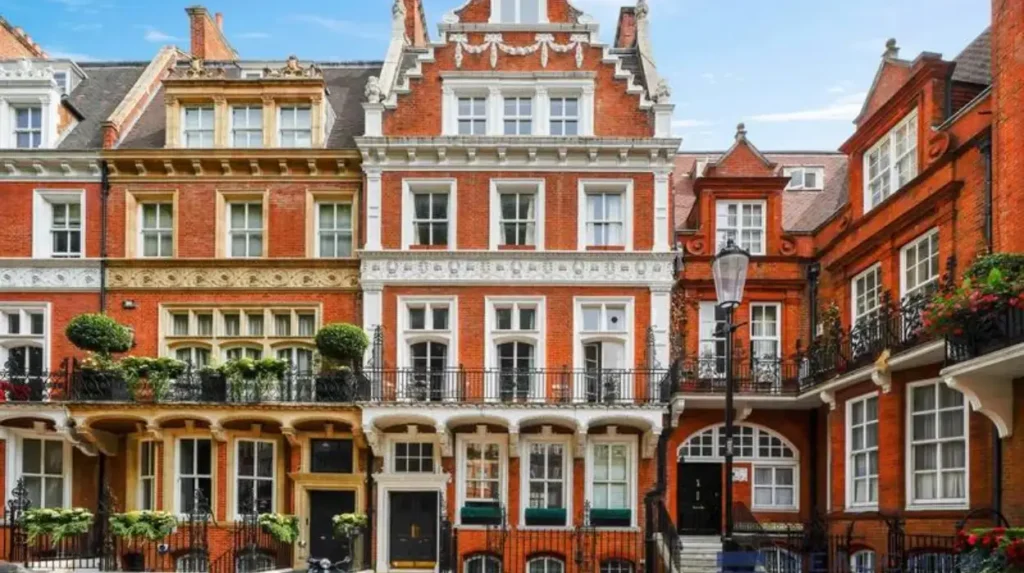
These markets contain substantial numbers of expensive period homes, townhouses, mansion blocks, converted buildings and modern apartments.
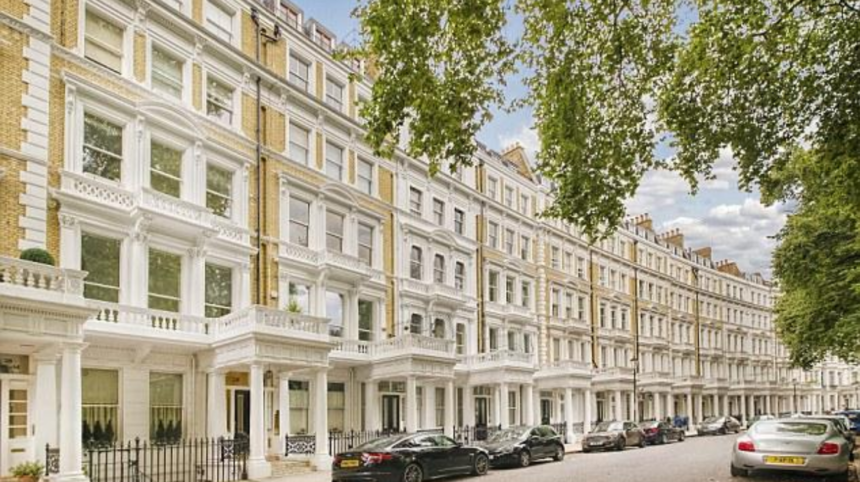
Kensington and Chelsea includes neighbourhoods such as Kensington, Chelsea, South Kensington, Notting Hill and Holland Park. The borough contains some of London’s most expensive residential addresses and has historically attracted international buyers, senior professionals and high-income households.
Westminster contains areas including Mayfair, Belgravia, Pimlico, Paddington and parts of Bayswater. Its property market is strongly influenced by central London employment, tourism, international investment and premium housing.
Richmond upon Thames has a different market structure. It combines urban housing with riverside locations, family properties, green spaces and suburban neighbourhoods. Its June 2026 average price of £818,949 was broadly stable compared with the previous year, with an annual decline of 0.3%.
Hammersmith and Fulham sits between central London and the western suburbs. Its property stock includes Victorian and Edwardian terraces, mansion flats, modern developments and larger family homes.
Which West London areas offer comparatively lower property prices?
Comparatively lower-priced West London markets include Hillingdon, Hounslow, Harrow, Brent and selected parts of Ealing, where average values are below premium central boroughs and property buyers find a broader range of conventional family housing.
Price differences across West London are substantial.
Hillingdon recorded an average price of £474,665 in June 2026. Hounslow recorded £512,888, Harrow £524,160, Brent £544,174 and Ealing £575,814.
These boroughs contain a greater proportion of suburban housing compared with Kensington and Chelsea or Westminster.
Hillingdon includes established residential areas such as Uxbridge, Ruislip, Hayes and West Drayton. Its housing market contains detached and semi-detached houses, terraces, flats and newer developments.
Hounslow includes Chiswick, Brentford, Isleworth, Hounslow and Feltham. Property values differ considerably between neighbourhoods because of housing type, proximity to transport, employment areas, schools and open space.
Harrow contains extensive suburban housing and established family neighbourhoods. Brent combines dense urban districts with large regeneration zones and established residential communities.
Ealing occupies an important position between inner and outer West London. Its market benefits from rail connectivity, Elizabeth line services, established high streets and a large stock of Victorian and Edwardian housing.
How are house prices performing across different West London boroughs?
House prices are performing unevenly across West London, with substantial annual declines in several premium boroughs but more stable or positive movements in selected outer and suburban areas such as Hounslow and Kingston upon Thames.
June 2026 data demonstrates the divergence clearly.
Kensington and Chelsea recorded a 14.7% annual decline. Hammersmith and Fulham fell 13.3%, Westminster fell 25.4%, and Brent declined 3.4%. Ealing fell 2.7%, while Harrow fell 1.4%.
Other West London locations performed differently.
Hounslow increased 1.1%, Kingston upon Thames increased 2.9%, and Richmond upon Thames decreased only 0.3%. Hillingdon recorded a 0.6% decline.
These figures need careful interpretation because local housing markets contain different numbers of transactions. The UK House Price Index states that low transaction volumes in individual local authorities can create volatility. It recommends assessing longer-term trends rather than relying on a single monthly movement.
This is particularly important for expensive boroughs where relatively few high-value transactions can significantly affect average prices.
How important is the rental market in West London?
The rental market is a major part of West London housing, supported by high employment density, international demand, transport connections, limited housing supply and households that cannot or do not choose to purchase property.
London remains England’s most expensive rental region. The Office for National Statistics reported an average London private rent of £2,273 per month in February 2026, compared with £1,430 across England.
Rental conditions differ between boroughs.
Kensington and Chelsea recorded an average monthly private rent of £3,591 in May 2026, according to ONS data.
West London’s rental demand comes from several major groups. These include professionals working in central London, international workers, students, relocating households, corporate tenants and households saving for home purchases.
Rental demand is also connected to transport infrastructure. Areas around Elizabeth line stations, London Underground stations and major rail interchanges attract tenants who prioritise journey times.
The rental market therefore has a strong relationship with employment geography. West London districts provide access to central London, Heathrow, major business areas and other employment centres.
How has the Renters’ Rights Act affected West London landlords and tenants?
The Renters’ Rights Act 2025 introduced major changes to private renting in England from 1 May 2026, including the end of Section 21 no-fault evictions and the conversion of most assured shorthold tenancies into periodic tenancies.
The Renters’ Rights Act 2025 is legislation governing important parts of England’s private rented sector.
From 1 May 2026, most existing assured shorthold tenancies automatically became assured periodic tenancies. New private tenancies also operate under the new framework.
Section 21 no-fault evictions were also removed. Landlords must use valid legal grounds when seeking possession.
The reforms also introduced changes involving rental bidding, proposed rents, discrimination and enforcement. Government guidance confirms that new restrictions apply to assured tenancies in the private rented sector from 1 May 2026.
For West London landlords, regulatory compliance has therefore become an important part of property management.
For tenants, the reforms provide greater security within the private rented sector.
The effect on property investment depends on operating costs, mortgage costs, rental income, taxation, property condition and regulatory responsibilities.
Which property types are most relevant to West London buyers?
West London buyers encounter a diverse housing stock that includes flats, maisonettes, terraces, semi-detached houses, detached houses, period properties and new-build apartments, with demand varying according to household size, location and budget.
Flats form an important part of inner West London housing. Areas such as Kensington, Chelsea, Hammersmith, Fulham and Westminster contain substantial stocks of apartments and mansion flats.
Terraced houses are prominent across established Victorian and Edwardian districts. They remain particularly important in Hammersmith and Fulham, Ealing, Brent, Hounslow and parts of Richmond and Kingston.
Semi-detached and detached houses become more common in suburban areas. Hillingdon, Harrow, Hounslow and outer parts of West London contain larger proportions of family housing.
Property type affects price performance. Nationally, the June 2026 UK HPI showed semi-detached homes recording stronger annual growth than flats, while flats and maisonettes recorded weaker performance.
Local West London results also demonstrate this distinction. In Hammersmith and Fulham, the June 2026 average price was £561,000 for flats and maisonettes, compared with £1.668 million for detached properties.
This price gap illustrates why borough-level averages do not represent the value of an individual property.
How do transport links influence West London property demand?
Transport connectivity is a major structural factor in West London property demand because Underground, Elizabeth line, railway and road connections influence commuting times, employment access, rental demand and the relative attractiveness of residential neighbourhoods.
West London contains extensive transport infrastructure.
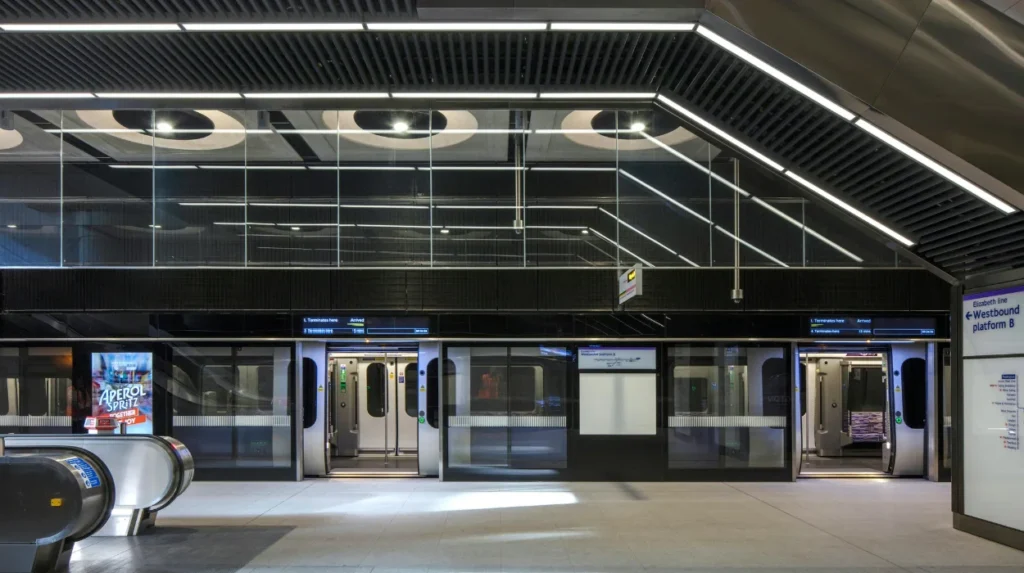
The Elizabeth line connects western districts with central London and major employment locations. London Underground routes provide additional connections through the Central, District, Piccadilly and Metropolitan lines.
Rail stations also connect West London with locations beyond the capital.
Transport accessibility affects residential demand because many households evaluate housing costs alongside commuting costs and travel times.
Areas around major transport nodes often contain higher-density housing and redevelopment schemes. Developers use transport accessibility as a key factor when planning residential projects.
However, transport access does not determine property value by itself. Noise, property condition, local amenities, school access, green space and neighbourhood character also influence individual property prices.
The result is a micro-market structure where properties a short distance apart can have materially different values.
How does new housing and regeneration affect West London property trends?
Regeneration increases housing supply, changes local infrastructure and creates new residential stock, while its effect on prices depends on development scale, property type, transport access, employment growth, planning policy and the balance between new and existing homes.
West London contains numerous regeneration and development locations.
Major development activity includes brownfield redevelopment, town-centre regeneration, estate renewal, apartment schemes and mixed-use developments.
New housing can increase supply in areas with limited existing residential stock. New developments also introduce modern energy standards, accessibility features, communal facilities and contemporary layouts.
Regeneration can also improve public spaces, transport infrastructure and commercial facilities.
The planning system plays a central role. Local planning authorities assess applications against adopted development plans, national planning policy and other material considerations.
The London Plan provides the strategic planning framework for Greater London. Individual boroughs then implement local planning policies and determine planning applications.
For property buyers, regeneration creates both opportunities and considerations. Construction activity can affect local conditions, while completed infrastructure can change accessibility and neighbourhood land use.
How does affordability affect property demand in West London?
Affordability remains one of the strongest constraints on West London housing demand because high property values require substantial deposits, mortgage capacity and transaction costs relative to household earnings.
London’s affordability ratio was 10.6 in 2025, the highest regional ratio recorded by the ONS for England and Wales.
This creates a substantial barrier for first-time buyers.
The financial requirement extends beyond the deposit. Buyers must consider mortgage interest, Stamp Duty Land Tax, legal fees, valuation costs, survey costs, moving expenses and ongoing property charges.
High-value West London purchases also create substantial SDLT liabilities. A qualifying first-time buyer receives relief on properties costing up to £500,000, with a 0% rate on the first £300,000 and 5% on the portion between £300,001 and £500,000.
This threshold is important because many West London properties exceed £500,000.
Affordability therefore influences buyer preferences. Some households choose smaller properties, move farther west, purchase flats instead of houses or remain in rented accommodation for longer.
What factors should buyers examine when assessing West London property?
Buyers should assess property price, mortgage affordability, transport access, property condition, lease terms, service charges, local planning activity, council tax, energy efficiency and long-term resale demand before purchasing in West London.
Purchase price alone does not determine the cost of ownership.
Leasehold buyers should examine the remaining lease term, service charge, ground rent provisions, building insurance arrangements, planned major works and restrictions contained within the lease.
Freehold buyers should assess structural condition, roof condition, damp, insulation, heating systems, windows and other significant maintenance requirements.
Transport access should be evaluated using actual journey times rather than distance alone.
Planning applications are also important. Proposed developments can affect local roads, density, views, construction activity and infrastructure.
Energy performance is increasingly relevant because heating efficiency affects household running costs and property standards.
Buyers should also compare sold prices rather than relying solely on asking prices. The UK House Price Index and HM Land Registry provide official transaction-based property data.
What factors should West London sellers consider?
West London sellers should price properties against recent comparable transactions, understand local buyer demand, present accurate property information and recognise that asking prices and completed sale prices represent different stages of the housing market.
A realistic asking price is supported by evidence from comparable properties.
Comparable analysis should consider location, property type, floor area, bedroom count, condition, tenure, outdoor space, parking, transport access and recent sale dates.
Sellers in premium boroughs also need to recognise changes in buyer affordability. High asking prices can reduce the number of qualified purchasers when mortgage costs and transaction taxes remain significant.
Property presentation remains relevant. Accurate floor plans, energy information, property descriptions and photographs help buyers assess suitability.
The time between listing and completion also matters. A transaction involves marketing, offers, conveyancing, mortgage approval, searches and exchange and completion procedures.
Official transaction data provides a stronger market benchmark than advertised prices because it reflects completed purchases.
What is the outlook for West London property trends?
The West London outlook is defined by affordability, interest rates, rental demand, housing supply, taxation and local economic conditions, with substantial differences expected between premium inner boroughs and more affordable suburban markets.
The latest data shows that London remains weaker than England overall. London prices declined 2.5% annually in June 2026, while England recorded 1.8% annual growth.
The direction of future market conditions depends heavily on borrowing costs and household purchasing power.
Bank Rate stood at 3.75% after the July 2026 Monetary Policy Committee meeting. The next scheduled policy decision was due in September 2026.
Rental conditions provide another important indicator. London rents remain substantially above the English average, while rental regulation has changed following implementation of the Renters’ Rights Act.
West London’s long-term fundamentals include employment access, transport infrastructure, established neighbourhoods, constrained land supply and a large rental population.
However, high prices and affordability constraints remain structural challenges.
The most useful approach to understanding West London property trends is therefore local rather than purely regional. Kensington and Chelsea, Westminster, Hammersmith and Fulham, Ealing, Hounslow, Hillingdon, Brent, Harrow, Richmond upon Thames and Kingston upon Thames all display different combinations of price, property type, rental demand and housing supply.
Explore More Area Guide
New Build Developments in West London: 2026 Guide
Luxury Property in West London: Prime Homes Guide
How should West London property market data be interpreted?
West London property statistics should be interpreted over multiple months and years because individual transactions, property types and low sales volumes can create substantial short-term changes in borough-level average prices.
Official UK House Price Index data specifically warns that local authority figures can be volatile where transaction numbers are low. The composition and number of properties sold can influence average prices.
This issue is particularly important in premium markets.
A single month containing several high-value sales can raise an average. A month dominated by flats can produce a different result from a month containing larger houses.
For this reason, buyers and sellers should examine annual changes, longer-term trends and property-type data.
Rental statistics should also be interpreted separately from house-price statistics. The ONS Price Index of Private Rents measures private rental inflation, while the UK House Price Index measures house-price inflation.
Using both datasets provides a more complete understanding of West London’s housing market.
What do the latest West London property trends mean for the future?
West London’s property market is entering its next phase with affordability, rental demand, regulation, borrowing costs and local supply shaping outcomes, while borough-level differences remain more important than a single London-wide market direction.
The 2026 market demonstrates a clear division between premium and suburban West London.
Kensington and Chelsea, Westminster and Hammersmith and Fulham experienced substantial annual price declines in June 2026. Other areas, including Hounslow, Kingston upon Thames and Richmond upon Thames, recorded more stable outcomes.
Rental demand remains a major component of the market because London continues to have the highest average private rents among English regions.
Affordability remains a structural constraint. London’s 2025 affordability ratio of 10.6 demonstrates the gap between household earnings and average property prices.
For buyers, the market provides greater importance to property-level research, financing and location analysis. For sellers, accurate pricing against completed transactions is essential. For landlords, rental regulation and operating costs remain central considerations.
West London therefore remains a complex collection of interconnected local housing markets rather than one uniform property market. Understanding borough-level prices, property types, rental conditions, transport infrastructure, taxation and planning policy provides the clearest framework for evaluating property market trends across the area.
What are the current property market trends in West London?
West London has a mixed property market. Premium boroughs such as Kensington and Chelsea and Westminster have experienced significant price pressure, while areas such as Hounslow and Kingston upon Thames have shown more stable performance.