Key Points
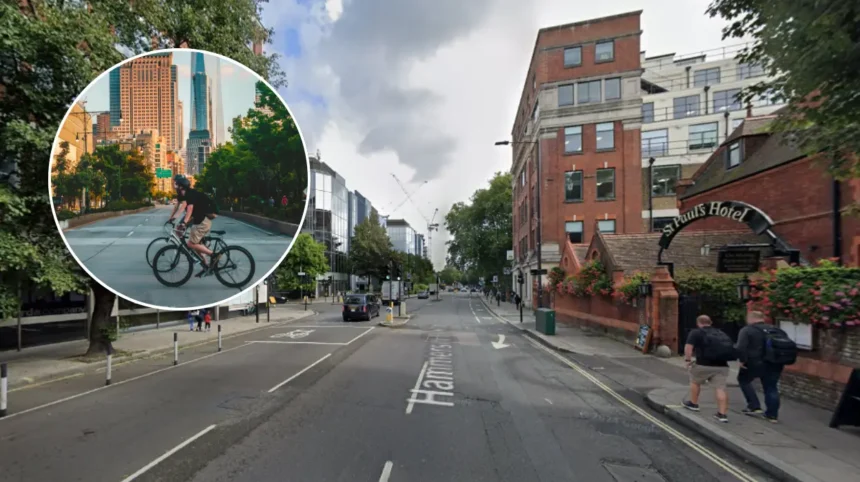
- The Cabinet of the Hammersmith & Fulham Council has officially endorsed their support for a Cycleway 9 scheme involving a permanently segregated Cycleway 9 on Hammersmith Road.
- It is said that the project will cost an estimate of around £20 million and will be financed and implemented by Transport for London (TfL).
- The development seeks to achieve a much-needed connection between Brentford, Chiswick, Hammersmith, and Kensington Olympia.
- Local schemes on Chiswick have been operational for almost six years after a temporary trial during the pandemic started in December 2020 and became permanent in September 2023.
- Some critical aspects such as pedestrian-cyclist interaction near the Blythe Road junction and the existence of three bus stop bypasses are still matters of debate within the community.
- Construction works are not scheduled yet since the project needs approval from the TfL internal governance process, a legal agreement with the local highway authority, and statutory traffic orders with a possibility for objections from the public.
uk/local/hounslow/chiswick/">Chiswick, fulham/hammersmith/">Hammersmith & Fulham Council (West London Times) October 13, 2026 — Hammersmith & Fulham Council has formally backed plans to establish a permanent, segregated cycle route along a major arterial corridor. As reported by Tom Apperley of The Chiswick Calendar, Hammersmith & Fulham Council’s Cabinet approved support for a permanent Cycleway 9 layout along Hammersmith Road on Monday, 12 October 2026. According to the report, the project is designed to complete a key section of the wider bicycle network connecting Brentford, Chiswick, Hammersmith, and Kensington Olympia.
What Are the Financial Arrangements and Who Will Pay for the Project?
The financing and execution of the physical construction will fall entirely upon regional transit authorities. As stated by Tom Apperley of The Chiswick Calendar, Transport for London (TfL) is set to pay for and carry out the infrastructure work, which council reports estimate will cost approximately £20 million. The report noted that the local authority is not currently being asked to provide capital funding for the installation, although the council expects to take on ongoing maintenance responsibilities once construction is completed. Furthermore, Tom Apperley of The Chiswick Calendar outlined that TfL must cover the full cost of the project in order for the development to proceed.
How Does This Connect to Existing Cycling Infrastructure in West London?
The new phase builds upon prior temporary and permanent active travel installations implemented across neighboring boroughs over recent years. As detailed by Tom Apperley of The Chiswick Calendar, Chiswick has hosted its designated portion of the route for nearly six years. The publication noted that the first version of Cycleway 9 was installed on Chiswick High Road as a pandemic trial in December 2020, before Hounslow Council made the section between Chiswick Lane and Heathfield Terrace permanent in September 2023. While TfL originally consulted on the broader route back in 2017, Hammersmith Road has continued to operate with a temporary layout until now.
What Steps Remain Before Construction Can Begin?
Despite the Cabinet’s backing, physical changes to the roadway are not immediately forthcoming. As reported by Tom Apperley of The Chiswick Calendar, work is not imminent because TfL still requires formal sign-off through its internal funding and governance processes. Additionally, the local council, acting as the highway authority for the road, must successfully agree to a legal deal with TfL before any construction can commence. The report by Tom Apperley of The Chiswick Calendar also emphasized that statutory traffic orders will be required, which will include a public objection period, and the Cabinet’s decision remains subject to standard local call-in procedures. Consequently, no official start date has been announced.
Explore more Hammersmith and Fulham Live Traffic & Travel News:
Hammersmith Ram Pub Closing Unauthorised Discount Store in Hammersmith 2026
Old Oak Pub Demolition Planned for West Kensington Flats 2026
What Are the Unresolved Concerns Regarding the Design?
While the overarching project has gained political backing, specific layout features continue to draw scrutiny from local stakeholders. As noted by Tom Apperley of The Chiswick Calendar, the most contentious element is the proposed design at the Blythe Road junction. The council has raised questions regarding how effectively the space will work for pedestrians, cyclists, and motor vehicles sharing the corridor, particularly given the anticipated increase in visitors resulting from the redevelopment of the nearby Olympia venue. In response, TfL maintains that the design complies with all relevant standards and has successfully passed its technical assurance checks.
Additionally, the plans incorporate three bus stop bypasses situated on the north side of the road. As highlighted by Tom Apperley of The Chiswick Calendar, these specific features have been questioned by disabled residents and local groups representing disabled people regarding accessibility and safety. When weighing the options, council officers outlined that the potential downsides of rejecting the scheme include forfeiting significant TfL investment and leaving the existing temporary layout in place indefinitely, as reported by Tom Apperley of The Chiswick Calendar.
Background of the Development
The development of Cycleway 9 represents a multi-year, multi-borough effort by Transport for London and local authorities in West London to improve cycling and walking infrastructure along strategic transit corridors. Initial consultations for the route were launched by TfL as early as 2017 to connect outer and inner London neighborhoods. Disruption and urgency surrounding active travel increased significantly during the COVID-19 pandemic in 2020, prompting temporary emergency installations such as the trial scheme on Chiswick High Road. Over subsequent years, local authorities like Hounslow transitioned portions of these temporary schemes into permanent fixtures. The current Cabinet decision by Hammersmith & Fulham Council marks the latest institutional step toward unifying these disjointed segments into a cohesive, fully segregated route extending past Kensington Olympia.
This infrastructure development will likely alter traffic dynamics, public transit access, and commercial footfall along the Hammersmith Road corridor for local residents, motorists, cyclists, and commuters. For cyclists, the establishment of a permanent, segregated lane will offer enhanced safety and connectivity, seamlessly linking West London communities from Brentford through Chiswick to Hammersmith.
For local motorists and bus passengers, the reallocation of road space and the inclusion of bus stop bypasses may introduce localized traffic adjustments and altered boarding procedures, while drawing continued scrutiny from disability advocacy groups regarding pedestrian safety. Furthermore, the integration of safe active travel routes alongside the newly redeveloped Olympia venue is expected to influence how large volumes of visitors access local events and businesses, shaping commercial and commuter patterns across the borough for years to come.