

Key Points
- Dega Salad, 43, a yoga teacher, had no option but to reside temporarily at a Travelodge hotel after her ceiling collapsed on top of her at her West London housing association flat.
- According to Louis Dargavel Corbett reporting for MyLondon, Ms Salad had reported cracks on her ceiling to Peabody, the housing association in 2024, before making further complaints in 2025.
- Ms Salad said that despite sending surveyors, “nothing was done” by the housing association to fix the leaks and widening cracks on her ceiling before it fell on her on 23 September 2026.
- The ceiling collapse destroyed all her furniture, television set, mobile phone, carpets, and equipment, making her reside temporarily in the hotel until 2 October 2026.
- Ms Salad said that she was informed that the housing association will change the locks when she enters her home during the time of repair if she goes to visit the property. She has not received any letter regarding compensation yet.
- The spokesperson for Peabody Housing Association said: “We’re sorry about the problems Dega has been having. We’re carrying out the repairs needed, and looking into the other concerns raised. We’ll speak with Dega directly.”
West London (West London Times) October 7, 2026 – A yoga and pilates instructor living in an upscale district of the capital found her life upended when structural neglect culminated in a dangerous indoor collapse. Dega Salad, 43, was sitting inside her residential property when structural timber and plaster gave way, crashing directly onto her head. The incident stripped her of her personal belongings, damaged her livelihood equipment, and rendered her home temporarily uninhabitable.
As reported by Louis Dargavel Corbett of MyLondon, Ms Salad explained how long-standing structural concerns were left unaddressed by her landlord.
“I wanted to make this place a home, I had nice furniture from when I worked a job in PR, now it’s all ruined,” she told MyLondon.
How long did the tenant wait for repairs from Peabody?
According to the accounts provided by the tenant, the structural deterioration within the property was neither sudden nor unforeseen by the occupant. Ms Salad first moved into the Chelsea flat via a house swap in 2022 to remain close to her employment opportunities within the Royal Borough of Kensington and Chelsea.
However, issues began to manifest through visible environmental degradation. As reported by Louis Dargavel Corbett of MyLondon, Ms Salad stated that cracks initially formed in her bathroom alongside persistent leaks originating from an upper-floor property. Over time, these flaws propagated outward, eventually breaching the living room area.
Ms Salad noted that despite logging initial complaints with housing association Peabody back in 2024 and repeating them through 2025, action was severely delayed. While surveyors were dispatched to inspect the structural degradation, the tenant stated that “nothing was done” to mitigate the underlying hazards before the physical collapse.
What happened on the day of the ceiling collapse?
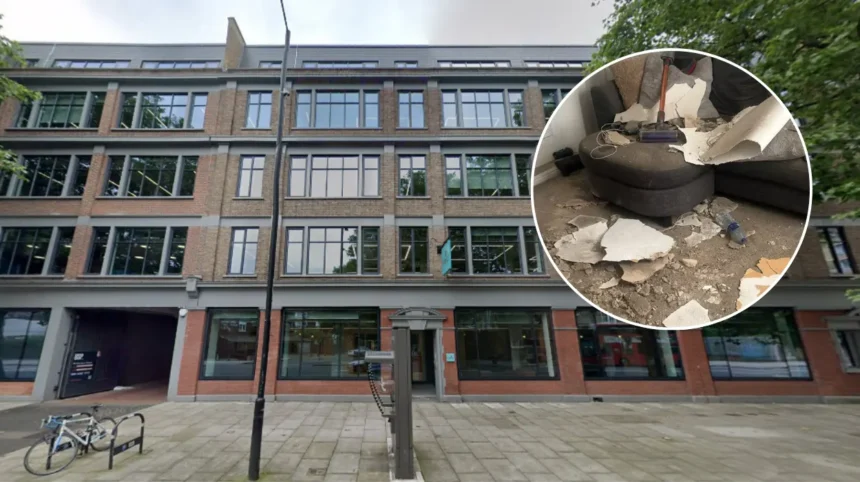
The crisis reached its peak on the afternoon of 23 September 2026. As reported by Louis Dargavel Corbett of MyLondon, Ms Salad was sitting on her sofa when the ceiling structure suddenly gave way.
“I reported it in 2024, and then again in 2025. Nothing was done. I was sitting on my sofa on September 23, when it all just crashed down,” Ms Salad told MyLondon.
The structural failure caused extensive damage to the flat’s interior and personal property. Wooden sections of the collapsed ceiling required clearing by the fire brigade, with assistance also provided by Peabody personnel on-site. The incident destroyed multiple personal and professional assets, including her mobile phone, sofa, television, flooring carpets, and specialised teaching equipment. Furthermore, the tenant expressed deep frustration regarding her financial vulnerability, stating that she lacked the personal funds required to independently replace the ruined items or finance alternative accommodation.
How did the temporary relocation and housing dispute unfold?
Following the incident, Peabody placed Ms Salad into a Travelodge hotel. However, this temporary placement created fresh logistical challenges for the self-employed fitness instructor. As reported by Louis Dargavel Corbett of MyLondon, the tenant explained that her work relies heavily on physical proximity to the Kensington and Chelsea area, making extended travel and hotel living difficult to manage.
The displacement lasted from Wednesday, 23 September, until Friday, 2 October 2026, when she was finally permitted to return to the apartment. Tensions further escalated during the repair period when Ms Salad alleged that she was informed the housing association would change the flat’s locks if she visited the property while contractors were present. Additionally, she confirmed that she has received no formal communication or correspondence regarding compensation for the extensive property damage incurred during the collapse.
Explore more uk/local/">Local West London Times News:
Old Oak Pub Demolition Planned for West Kensington Flats 2026
lyf Chelsea London Opens at Stamford Bridge in Fulham 2026
What response has the housing association issued?
In response to inquiries regarding the structural failure and the tenant’s complaints, the housing association issued a brief public statement addressing the situation.
As reported by Louis Dargavel Corbett of MyLondon, a spokesperson for Peabody stated:
“We’re sorry about the problems Dega has been having. We’re carrying out the repairs needed, and looking into the other concerns raised. We’ll speak with Dega directly.”
Background of the particular development
The incident highlights ongoing scrutiny surrounding social housing maintenance standards, tenant communication channels, and the handling of repair backlogs across UK housing associations. In recent years, public sector landlords and registered housing providers have faced heightened regulatory pressure from the Housing Ombudsman and government oversight bodies to adopt a zero-tolerance approach toward damp, structural decay, and unresolved maintenance complaints. Tenants frequently report difficulties in escalating structural defects past initial customer service triage, leading to prolonged disputes over property habitability, emergency rehousing protocols, and financial compensation for damaged personal belongings.
This development could significantly impact social housing tenants and housing associations across Greater London by accelerating calls for stricter regulatory enforcement and faster response times for structural complaints. For tenants, particularly those residing in high-cost boroughs like Kensington and Chelsea, high-profile cases like Ms Salad’s raise awareness of tenant rights and may encourage more occupants to formally document maintenance failures and seek legal or ombudsman intervention. For housing associations, increased public and media scrutiny risks prompting a comprehensive review of internal repair prioritization, contractor oversight, and emergency compensation frameworks to mitigate legal liabilities and safeguard tenant welfare.