


Key Points
- Teddington Cemetery’s extension is planned to include 17 new trees, hedging, flowering lawn and bulbs.
- The project is expected to deliver approximately 17% biodiversity net gain, above the statutory 10% minimum applicable to the scheme.
- Richmond Council says existing trees and habitats will be protected alongside new planting and ongoing landscape care.
- Residents, schools and local groups will have opportunities to join wildlife, food-growing and bulb-planting activities.
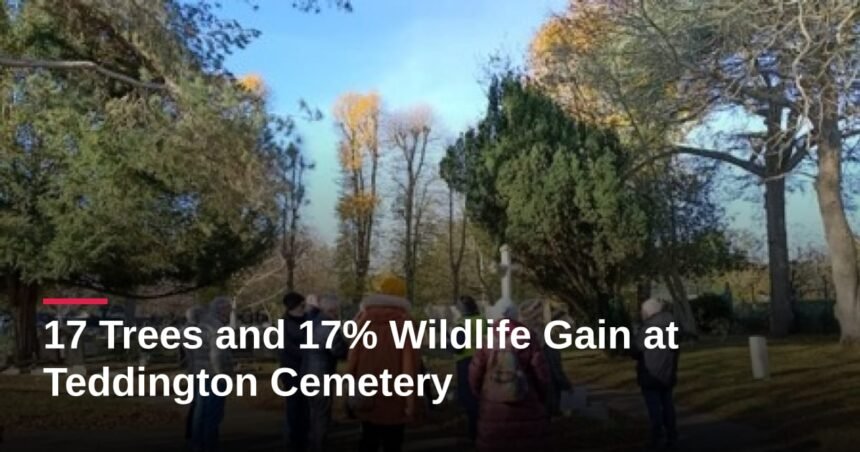
Teddington (West London Times) November 23, 2026 – Richmond Council has outlined plans for the Teddington Cemetery extension, which will add 17 new trees and increase biodiversity value by approximately 17 per cent. The project will also include hedging, flowering lawn and bulbs while retaining the cemetery’s role as a burial space. The London Borough of Richmond upon Thames said the scheme exceeds the statutory 10 per cent biodiversity net gain requirement applicable to the development. The authority said careful maintenance and community activities will support the new habitats over time.
What will the Teddington Cemetery extension include?
According to the London Borough of Richmond upon Thames, the extension will combine protection for existing trees with new planting and continuing care of the landscape. Seventeen trees will be planted, alongside hedging, flowering lawn and bulbs.
The council said the project is intended to support biodiversity for years to come while maintaining the cemetery’s essential function. It added that mowing practices allowing flowers to bloom where appropriate will help habitats establish.
How will the project support wildlife?
Richmond Council said the planting will create food, shelter and habitat for insects, birds, bats and other wildlife. Regular monitoring and replacement planting where necessary will support the growth of the new habitats.
The authority also said residents may be able to explore local wildlife and participate in food-growing and bulb-planting initiatives. Separate council-supported bulb-planting activity at Teddington Cemetery is intended to improve habitats and provide additional food for pollinators and other wildlife.
What is the background to the biodiversity plan?
Biodiversity refers to the variety of life, including trees, plants, wildflowers, insects, birds, bats and other wildlife. Richmond Council said cemeteries can support nature because they may contain mature trees, hedgerows, grassland, planted areas and quieter spaces. Statutory biodiversity net gain in England generally requires applicable developments to achieve at least a 10 per cent increase in biodiversity value compared with the pre-development habitat. The Teddington scheme is expected to provide approximately 17 per cent biodiversity net gain, according to the council.
What could the changes mean for Teddington residents?
The extension is likely to give residents, schools and community groups more opportunities to take part in nature-related activities around the cemetery. New trees, hedging, flowering areas and bulbs could provide additional habitat and seasonal food for pollinators while the landscape matures. The council’s approach indicates that the wildlife benefit will depend not only on planting but also on long-term maintenance, monitoring and replacement planting. The scheme therefore links the cemetery’s future burial capacity with managed improvements for local wildlife.