

Key Points
- Transport for London (TfL) plans to re-open the West London Orbital (WLO) line and bring passengers back into the freight tracks after more than a century of being used for freight alone.
- According to Ed Cunningham, the News and Features Editor, UK, of Time Out, the planned service will cover 18.5 kilometers between Hounslow and Hendon.
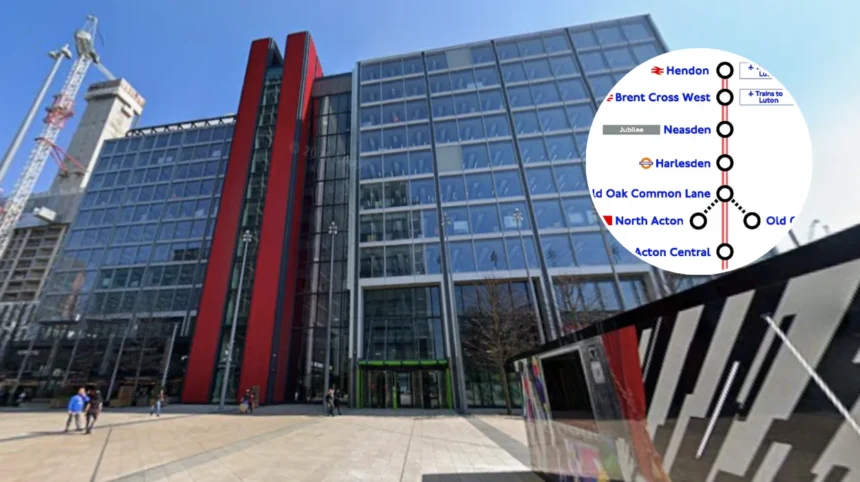
- There will be 12 stations along the route, including linking with the Jubilee line at Neasden, connecting to Luton airport from Hendon and Brent Cross West, as well as near the Central line at North Acton and the £4.3 billion HS2 station at Old Oak Common.
- The service will include up to six trains an hour, allowing the opening of 25,000 new homes, 11,500 jobs, generating economic benefits worth £1.3 billion, and 650,000 fewer car trips every year.
- Official confirmation of the project is expected in 2027 with the project costing around £700 million and the targeted opening date in the mid-2030s.
- The TfL has launched a public consultation on the service, and it will last until November 18, 2026.
London (West London Times) September 23, 2026 — A long-dormant rail corridor in the capital’s western sectors is moving closer to active passenger use as transport authorities table detailed structural blueprints for the upcoming network integration.
- Key Points
- What Are the Details of the West London Orbital Route and Infrastructure?
- Which Stations Will Form the West London Orbital Network?
- What Economic and Environmental Impacts Are Expected from the Project?
- How Can the Public Participate in the Current Consultation?
- Background of the Particular Development
What Are the Details of the West London Orbital Route and Infrastructure?
The revitalised network aims to connect communities across north and west London by repurposing existing industrial freight tracks. As outlined in official proposals, the line will stretch 18.5 kilometres, linking uk/local/hounslow/">Hounslow directly with Hendon.
According to details shared by Ed Cunningham of Time Out, the project will establish a major transit loop providing crucial integration across existing public transport arteries. The route connects directly with the Jubilee line at Neasden and offers interchange access to Luton airport services via Hendon and Brent Cross West stations. Furthermore, commuters will find the line within walking distance of the Central line at North Acton, alongside a strategic stop at Old Oak Common, a £4.3 billion High Speed 2 (HS2) interchange designated as one of the largest transport hubs in the United Kingdom.
Transport for London anticipates a frequency of up to six trains per hour along the corridor, fulfilling what planners describe as a critical missing link within the capital’s wider rail infrastructure.
Which Stations Will Form the West London Orbital Network?
The proposed service layout spans a comprehensive list of 12 stops across the western boroughs, incorporating both established railway interchanges and newly designated platforms.
The full station roster comprises:
- Hendon
- Brent Cross West
- Neasden
- Harlesden
- Old Oak Common Lane (serving Old Oak Common and North Acton)
- Acton Central
- South Acton
- Lionel Road (serving Kew Bridge)
- Brentford
- Syon Lane
- Isleworth
- Hounslow
While the physical footprint of the line is taking shape, final aesthetic branding remains undecided. Although London Overground routes received formal names and distinct line colours in 2024, the official name and map colour for the West London Orbital have not yet been finalised, though a pale pink shade appeared in recent press materials issued by TfL.
What Economic and Environmental Impacts Are Expected from the Project?
Transport planners and municipal analysts project significant regional transformations following the completion of the line. TfL models indicate that the infrastructure development could facilitate the delivery of up to 25,000 new residential properties and 11,500 local jobs.
In addition to housing and employment growth, the scheme is calculated to generate up to £1.3 billion in wider economic benefits. Environmentally, the service aims to alleviate road congestion by removing an estimated 650,000 car journeys from regional roadways each year.
The development timeline projects formal confirmation of the scheme by 2027. Construction and implementation costs are estimated to reach up to £700 million, with commercial passenger operations targeted to commence by the mid-2030s.
Explore more Local West London Times:
Horsenden Hill Volunteers Clear Massive Rubbish Dump in Ealing 2026
Ealing Council Introduces New Housing Standards Guide Ealing 2026
How Can the Public Participate in the Current Consultation?
Residents, commuters, and local business owners operating near the proposed corridor are invited to submit feedback through official channels. TfL has launched its initial public consultation regarding the service framework, scheduled to remain open until November 18, 2026. Stakeholders can review specific documentation and register their commentary on potential community impacts directly through the transport authority’s consultation portal.
Background of the Particular Development
The concept of a West London Orbital railway has roots in decades-long discussions regarding the utilisation of under-used freight lines that bypass central London bottlenecks. Historically, the freight tracks forming the proposed route served industrial transport networks rather than commuter traffic, leaving notable gaps in orbital travel options across west and north-west London.
As the capital’s population expanded and major regeneration projects took shape—particularly around the Old Oak Common development area—the necessity for a robust orbital rail link became increasingly apparent. Transport authorities integrated the scheme into long-term strategic transport plans to support urban densification, reduce reliance on private motor vehicles, and maximise the utility of major national rail investments such as HS2 and Crossrail.
The revival of the West London Orbital line stands to fundamentally alter travel dynamics for commuters, residents, and businesses across west and north-west London. For local residents and workforce populations residing near the 12 proposed stations, the development promises drastically reduced journey times, bypassing central London interchanges to create direct access to major employment and transit nodes like Old Oak Common and Hendon.
For the local economy, the anticipated delivery of 25,000 homes and thousands of jobs could drive sustained regeneration and commercial growth across boroughs such as Hounslow, Ealing, Brent, and Barnet. However, communities situated directly adjacent to the freight corridors may experience localized disruption during the construction phase leading up to the mid-2030s launch, alongside potential impacts on local property values and neighbourhood density as urban development accelerates around the new transport hubs.