


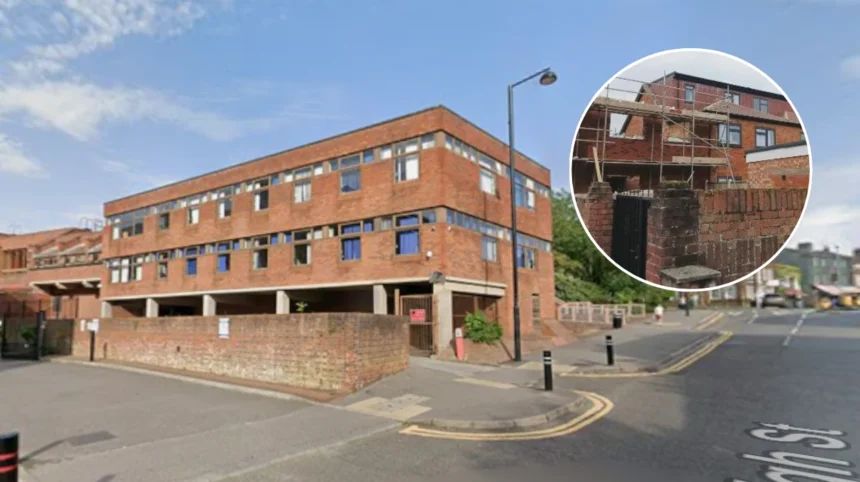
Key Points:
- Defendant: Daljit Kaur, living at Midhurst Gardens.
- Address: 104 Windsor Road, Uxbridge.
- Offence: Breach of a planning enforcement notice issued by the council concerning an unauthorized two-storey wraparound extension.
- Financial Sanctions: Overall total of over £28,000 including a £15,000 fine, a £600 victim surcharge, and £12,427 in costs to the council for prosecuting the case.
- Court Result: Admission of breach at Uxbridge Magistrates’ Court with sentencing imposed by Deputy District Judge Woodcock.
- Important Date: Modification work agreed to change the building is due to be completed by 31st December.
- Council Enforcement: Initiative led by the London Borough of Hillingdon with comments made publicly by Cllr Adam Bennett, Cabinet Member for Community, Environment and Enforcement.
uk/local/hillingdon/uxbridge/">Uxbridge (West London Times) September 28, 2026 — A London property owner has been ordered by the courts to pay more than £28,000 after pressing ahead with a substantial construction project in defiance of local authority orders. As reported by journalists at the Hillingdon Times, Daljit Kaur of Midhurst Gardens appeared before Uxbridge Magistrates’ Court where she formally admitted to breaching a planning enforcement notice issued by the London Borough of Hillingdon.
The legal proceedings followed an investigation initiated in February 2025, when the local council’s enforcement team received intelligence that a two-storey extension was being built at 104 Windsor Road and its adjoining land. According to court disclosures, an unannounced inspection conducted by local authority officers the following day confirmed that construction was actively underway, noting specifically that scaffolding poles were dangerously over-hanging the public pavement.
Further council investigations revealed that a double-storey side extension was being erected despite the site only holding valid planning permission for a single storey, alongside the creation of an entirely new entrance. Authorities noted that this setup effectively constituted an entirely new dwelling—an application that had already been formally refused twice within a span of just three months.
What were the legal consequences handed down by Uxbridge Magistrates?
Following the initial discovery, the local authority served a formal enforcement notice in April 2025, mandating that the unauthorised development be completely demolished by August of that year. However, an unscheduled site visit carried out by enforcement officers in December revealed that the multi-storey structure remained fully in place.
Rather than enforcing total demolition immediately, the local authority entered into a mutual resolution with Kaur, agreeing that the development could instead be altered to align with a previously approved planning application.
Delivering his ruling at Uxbridge Magistrates’ Court, Deputy District Judge Woodcock stated that Kaur had demonstrated a “reckless disregard” for the decisions of the local planning authority. For the offence of breaching the statutory enforcement notice, Kaur was handed a fine of £15,000. Additionally, she was ordered to pay a victim surcharge of £600 alongside the council’s full prosecution costs amounting to £12,427, bringing the total financial penalty past the £28,000 threshold. Under the terms of the court resolution, the agreed remedial works to modify the property must be completed by 31 December.
What did local council leaders say about the enforcement action?
Following the conclusion of the court case, senior local government officials emphasised a zero-tolerance approach toward unauthorised and non-compliant building works within the borough.
As detailed by the Hillingdon Times, Cllr Adam Bennett, Cabinet Member for Community, Environment and Enforcement, stated that:
“We refuse to let residents run roughshod over a planning system that is in place to ensure development in our borough remains safe, high-quality and best protects local communities.”
Cllr Bennett further added that:
“To press on with a development that has twice been refused planning permission was foolish. The defendant’s belligerent actions have proved very costly and this serves as a warning that we will pursue the strongest course of action against those who choose to flout the rules.”
Residents wishing to report suspected planning breaches within the area can do so via the local authority’s official reporting portal at www.hillingdon.gov.uk/report-planning-breach.
Background of the Development
The enforcement action taken against the Windsor Road property highlights ongoing tensions surrounding residential development controls and regulatory compliance within outer London boroughs. Local planning authorities, such as the London Borough of Hillingdon, operate under strict statutory frameworks governed by national planning policies and local development plans. These regulations are designed to ensure that residential expansions maintain neighbourhood character, structural safety, and environmental standards.
When property owners build extensions or create new dwellings without securing prior approval—or directly contravene previous refusals—local councils possess statutory powers under the Town and Country Planning Act to issue enforcement notices. These notices require landowners to rectify breaches, either through demolition or modification. Failure to comply with these legal instruments constitutes a criminal offence, shifting the matter from a civil planning dispute into the magistrates’ court system, where substantial fines and cost recoveries can be enforced to deter unlawful building practices.
This legal outcome serves as a severe financial and legal deterrent for property developers and homeowners across the region, directly impacting local residents, independent builders, and property investors within Hillingdon and similar Greater London municipalities. For local communities, the strict enforcement and heavy sentencing signal that the local authority is willing to utilize the full extent of its legal powers to protect local planning integrity, potentially reducing the prevalence of rogue or unapproved constructions that impact neighbourhood aesthetics and infrastructure.
Conversely, for property owners and local contractors, this development underscores the critical financial risks of bypassing the formal planning application process. With prosecution costs running into tens of thousands of pounds alongside hefty fines, property owners are now far more likely to experience heightened scrutiny, delayed project timelines, and increased compliance costs as they navigate local planning laws. Consequently, builders and architects operating in the area will likely experience increased client caution, placing a premium on securing proper council sign-offs before initiating any structural alterations.