Key Points
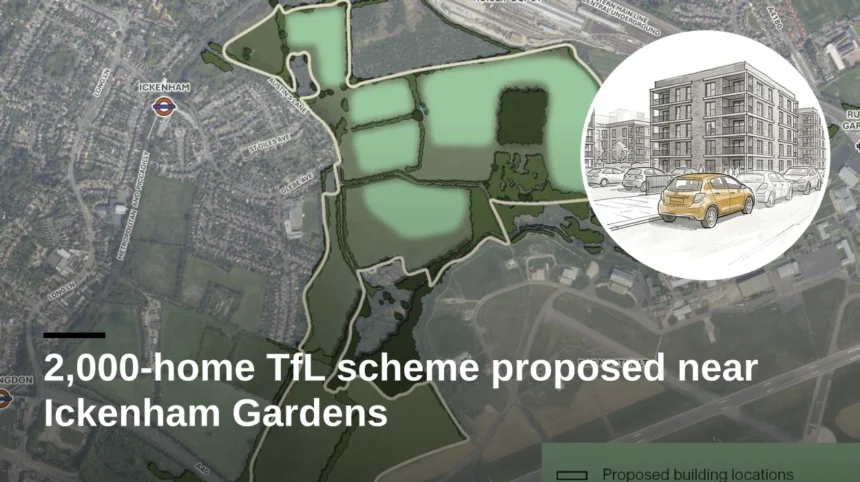
- Places for London has identified Ickenham Gardens for a proposed estate of about 2,000 homes.
- The scheme, being developed with Barratt London, could include about 1,000 affordable homes.
- Possible community facilities include health, education and cultural spaces.
- The proposal remains at an early stage, with an initial public consultation planned for December.
- Places for London chief executive Graeme Craig said residents and stakeholders would be engaged as the site’s potential is assessed.
- A separate partnership between Places for London and Barratt London is intended to deliver 4,000 homes across London over the next decade, including low-energy homes based on Passivhaus principles.
Ickenham Gardens (Cambridge Tribune) November 20, 2026 – Transport for London’s property company, Places for London, has identified land near Ickenham and Ruislip Gardens for a proposed development of around 2,000 homes. The project is being considered with Barratt London and could provide about 1,000 affordable homes, alongside transport-linked neighbourhood facilities. The proposal is still at an early stage, and the first public consultation is expected in December.
What is planned for Ickenham Gardens?
As reported by the Hillingdon Times, Places for London says the proposed estate would contain a mix of home sizes and types intended to support new and existing communities. The site is close to Ickenham and Ruislip Gardens and has access to public transport connections.
The company has also identified potential spaces for health, education and cultural activities. No planning permission, construction timetable or final design has been confirmed in the material available.
What have Places for London and Barratt London said?
Graeme Craig, chief executive of Places for London, said the project was at an early stage and that the company looked forward to engaging residents and stakeholders while considering the site’s potential.
A separate construction report said Places for London and Barratt London have entered a partnership intended to deliver 4,000 homes across London over the next decade. The report said early projects could include low-energy homes based on Passivhaus principles.
When will residents be consulted?
The first phase of public consultation is planned for December. Further details are expected through the project’s dedicated information service and future public engagement material.
Residents near Ickenham and Ruislip Gardens are likely to be able to comment on the emerging proposals, including housing mix, affordability, transport, infrastructure and community facilities. The final scope will depend on consultation, technical work and the formal planning process.
What is the background to the development?
Places for London is Transport for London’s property arm and is seeking to use land connected with the capital’s transport network for development. The Ickenham Gardens proposal is presented as a potential new neighbourhood rather than an approved scheme.
The proposed partnership with Barratt London forms part of a wider plan to deliver thousands of homes across London. The Ickenham Gardens site is described as having strong transport connections, which is a central factor in its identification for housing.
The proposal includes an indicative affordable-housing element, but the precise proportion and tenure mix have not been finalised. Consultation and planning decisions will determine whether the scheme proceeds and in what form.
How could the proposal affect local TfL plans?
If advanced, the development could support Transport for London’s wider objective of connecting new housing with public transport. A neighbourhood of around 2,000 homes could increase demand for buses, stations, walking routes and cycling connections around Ickenham and Ruislip Gardens.
For the particular audience living near the proposed site, the December consultation is likely to be the first opportunity to examine transport, construction, affordability, schools, healthcare, public space and environmental issues in detail. Any effect on TfL plans will depend on the consultation outcome, infrastructure requirements and later planning approvals.