Key Points
- Harrow Council’s Public Protection Team has initiated a targeted enforcement campaign running from 24 October until 10 November 2026.
- Additional evening patrols are being deployed across hotspot locations to cover Halloween, the half-term break, Bonfire Night, and the broader autumn fireworks season.
- A dedicated phone line (020 4604 2775) has been established, operating nightly between 7 pm and 10 pm, and extended until 11 pm on 8 November.
- An interactive online mapping tool via the MyHarrow Talk website has been launched to allow residents to log problem locations where fireworks have been misused.
- Council officers are scheduled to conduct face-to-face community engagement visits across multiple town locations starting 26 October.
- Residents witnessing illegal firework usage outside permitted hours are directed to contact police on 101, or 999 in situations presenting an immediate danger to life or property.
uk/local/harrow/">Harrow, London (West London Time) October 24, 2026 — Harrow Council has officially intensified its community protection operations by deploying a dedicated reporting phone line and an interactive online mapping tool designed to intercept dangerous and anti-social firework behaviour throughout the autumn festive period.
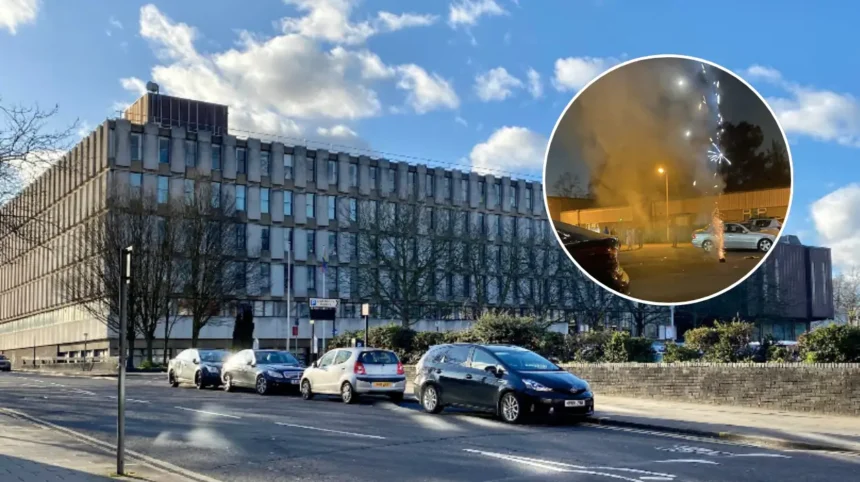
The local authority initiative, spearheaded by the Public Protection Team, spans from 24 October through to 10 November 2026. This intensive operational window is strategically structured to safeguard neighbourhoods during high-risk periods, including the October half-term break, Halloween, Bonfire Night, and associated cultural celebrations. According to reports covered by Chris Mitchell of Harrow Online, enforcement officers are stepping up evening patrols in historically troubled zones, working closely alongside local residents, responding rapidly to reports of reckless conduct, and deploying closed-circuit television (CCTV) monitoring where required.
What Channels Can Residents Use To Report Dangerous Fireworks?
To streamline community intelligence and facilitate faster enforcement interventions, the local authority has introduced two primary reporting mechanisms.
As detailed by Chris Mitchell of Harrow Online, a dedicated hotline has been established. Residents can dial 020 4604 2775 between 7 pm and 10 pm each evening, with operational hours extended until 11 pm on 8 November, to log active disturbances. Incoming reports through this line are evaluated in real-time by coordination teams to determine whether an immediate officer deployment is necessary that same evening.
In tandem with the telephone hotline, the council has launched an online reporting map hosted on the MyHarrow Talk portal. The interactive map enables community members to pinpoint specific streets, parks, and open spaces where fireworks have been discharged dangerously or where chronic anti-social behaviour has occurred in past years. However, local authorities have clarified that submissions logged via the online mapping system are intended for intelligence gathering and trend analysis rather than immediate emergency dispatch.
Where Will Council Officers Be Patrolling And Engaging With The Public?
Beyond reactive measures, municipal officers are scheduled to conduct direct outreach and advisory visits across prominent commercial and residential hubs within the borough.
The targeted locality visits will take place between 6.15 pm and 7 pm on selected evenings, commencing on Monday, 26 October. As noted in the reports by Chris Mitchell of Harrow Online, the designated engagement zones comprise:
- Harrow Town Centre
- Wealdstone
- Kenton
- Stanmore
- Pinner
- Rayners Lane
- South Harrow
- Hatch End
- Belmont
During these visits, officials will liaise directly with community members to distribute safety guidance and discuss preventative measures. Concurrently, the council has reiterated statutory boundaries regarding private celebrations, noting that fireworks detonated lawfully and safely within private residential gardens cannot be prohibited purely on the grounds of noise.
For incidents occurring outside legally permitted hours, individuals are advised to contact the Metropolitan Police via the non-emergency number 101, reserving 101 or 999 strictly for instances presenting an immediate threat to life or property.
Background of the Particular Development
The launch of Harrow Council’s 2026 reporting map and dedicated hotline follows a sustained escalation in public anxiety and community complaints regarding the unregulated detonation of fireworks across outer London boroughs. In preceding autumn seasons, local news documentation highlighted mounting friction between residents—particularly elderly populations, pet owners, and families—and individuals engaging in reckless firework discharge near residential blocks and thoroughfares. Local reporting earlier in the year underscored public demands for tighter municipal controls following intense spikes in anti-social incidents. In response to these recurring community safety challenges, local authorities have steadily evolved their enforcement strategies, transitioning from generalized seasonal warnings to active intelligence-led monitoring frameworks that combine resident-sourced mapping with targeted evening patrols.
Explore more Harrow News:
Harrow Post Office Demolished For Co-Living Block In Harrow 2026
Harrow Refuses Roxeth Children’s Home Planning Application in South Harrow 2026
Prediction on How This Development Can Affect Harrow Residents and Local Communities
The integration of a dedicated hotline and an interactive reporting map is anticipated to significantly bridge the communication gap between local residents and municipal enforcement teams. By providing an accessible, centralized channel for logging disturbances between peak evening hours, Harrow Council can deploy resources more efficiently to genuine hotspots, mitigating the sense of helplessness reported by communities in prior years. For residents, this proactive framework offers a structured avenue to voice neighbourhood concerns without overloading emergency police services. However, the ultimate efficacy of the campaign will depend on public participation in logging accurate data and the council’s capacity to translate online mapping intelligence into visible deterrents, ultimately fostering a safer and more harmonious environment throughout the high-stakes autumn festive calendar.