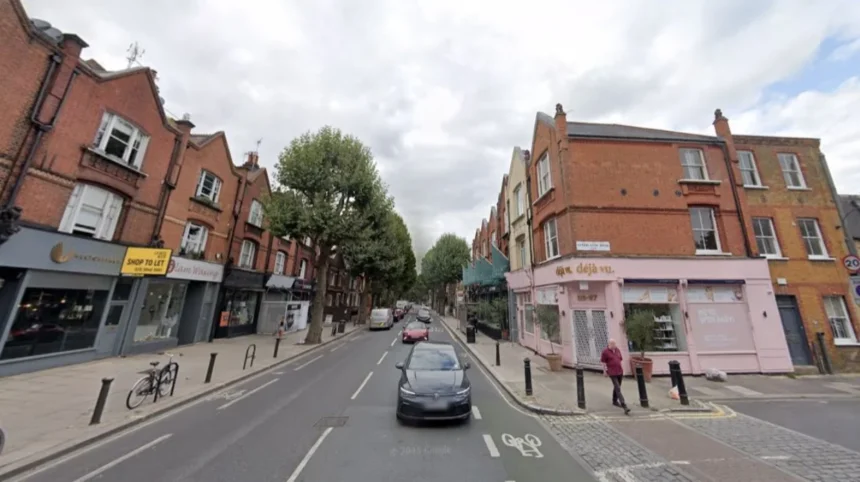
Key Points
- Hammersmith residents are being invited to participate in a community consultation meeting regarding formal Home Zone powers.
- The public gathering is scheduled to take place at John Betts Primary School on December 2nd.
- The primary focus of the discussion is to explore expanded legislative powers enabling resident-led street activities and localized traffic management.
- Local community members interested in attending have been encouraged to register their attendance by contacting local authorities via email at capital.projects@lbhf.gov.uk.
- The initiative operates under guidelines and administrative data provided directly by the London Borough of Hammersmith & Fulham.
uk/local/hammersmith-and-fulham/hammersmith/">Hammersmith (West London Times) November 11, 2026 — Residents across the Hammersmith neighbourhood are being given a fresh platform to shape local urban planning, as community leaders organize a formal consultation session to examine new resident-driven powers for managing neighbourhood street closures and community-led zones.
Will Hammersmith Residents Gain Greater Control Over Local Street Access?
As reported by Priya Shah of the Greater London Herald, local residents residing within the Hammersmith district are being formally invited to take part in an upcoming community meeting intended to explore the acquisition and application of expanded Home Zone powers.
The public consultation meeting has been scheduled to be hosted at John Betts Primary School on December 2nd. According to official disclosures highlighted by Priya Shah of the Greater London Herald, the session will specifically dive into how neighbourhoods can secure formal mechanisms to manage local roadways, facilitate resident-led street activities, and exercise greater autonomy over hyper-local traffic arrangements.
What Are the Key Objectives of the Proposed Home Zone Powers?
The push for enhanced Home Zone capabilities aims to hand localized decision-making back to the communities directly affected by urban traffic patterns. As detailed by Priya Shah in the Greater London Herald, the framework allows neighborhood groups to look closely at legal avenues for temporary or structured street closures, creating safer spaces for pedestrians, children, and community gatherings without relying solely on top-down council mandates.
Local authorities and community organizers have stressed that community engagement is vital to ensure that any prospective implementation reflects the practical needs of the people living on the affected streets. As noted in the administrative announcements released by the London Borough of Hammersmith & Fulham and cited by Priya Shah of the Greater London Herald, the upcoming consultation will provide an open forum for residents to voice their expectations, ask procedural questions, and understand the legal boundaries of managing street zones.
How Can Local Residents Participate in the Consultation Process?
With interest surrounding neighbourhood traffic schemes and community spaces remaining high across West London, organizers anticipate a strong turnout for the December 2nd meeting at John Betts Primary School.
As outlined by Priya Shah of the Greater London Herald, local residents who wish to attend and contribute to the discussions are strongly encouraged to register their interest ahead of time. Administrative channels have been opened specifically for this purpose, with the London Borough of Hammersmith & Fulham advising participants to direct their booking inquiries and registration requests via email to capital.projects@lbhf.gov.uk.
Background of the Particular Development
The conversation surrounding Home Zone powers and neighbourhood street management in Hammersmith arrives against a broader backdrop of intense urban mobility debates across West London. In recent months, local councils including the London Borough of Hammersmith & Fulham have faced scrutiny, intense public petitions, and cross-border friction regarding various traffic restraint initiatives, ANPR camera implementations, and clean-air neighbourhood strategies—such as contested access restrictions on routes like Weltje Road.
While previous council interventions have frequently focused on reducing cut-through traffic, filtering residential streets, and expanding cycling infrastructure, these top-down measures have occasionally triggered friction with neighboring authorities like Hounslow Council over displacement congestion. By contrast, the current initiative to explore formal Home Zone powers represents a pivot toward community-led consultation, aiming to empower residents to actively participate in the governance of their immediate living environments.
Prediction
This ongoing development could fundamentally alter how hyper-local traffic management and community street events are negotiated between residents and local government bodies in Hammersmith. For the primary audience—local residents, community groups, and neighborhood associations—the successful adoption of formal Home Zone powers could provide them with direct legislative tools to reduce vehicle speeds, reclaim public space for pedestrian use, and organize community activities safely without encountering bureaucratic roadblocks.
However, it may also spark careful debates among neighbouring motorists and commercial delivery operators who rely on fluid neighbourhood access. If the December 2nd meeting successfully galvanizes community backing, it could serve as a blueprint for other West London streets seeking localized traffic self-determination, shifting the balance of urban planning power closer to grassroots neighborhood groups.