


Key Points
- Downstreet Housing and Community Development is building four homes and planning 20 subsidised flats on Heaton Street.
- The project uses more than $6 million in federal flood-recovery funding.
- Neighbours Lisa Mahoney and Peter Mancauskas have appealed decisions linked to the development.
- The first appeal delayed construction by about a year; the latest case remains before Vermont’s environmental court.
- Montpelier increased some appeal fees in 2025, but the charge does not cover appeals of Development Review Board decisions to court.
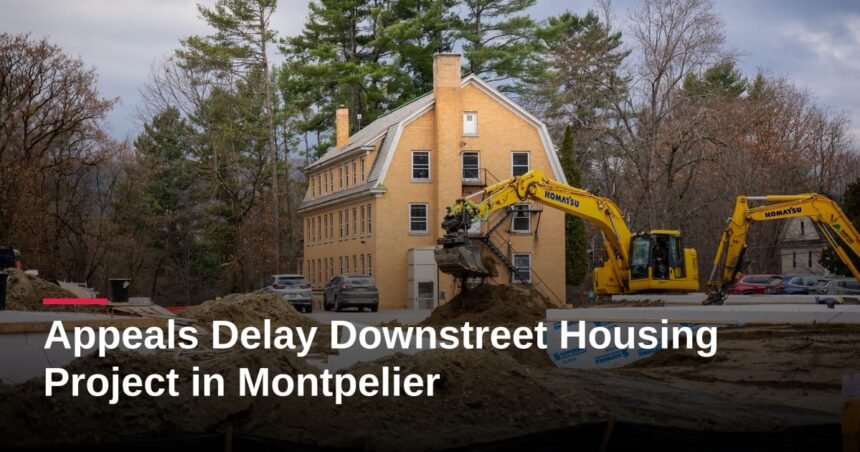
Montpelier (West London Times) November 25, 2026 — Downstreet Housing and Community Development’s plan to provide affordable homes on higher ground in Montpelier is facing another legal challenge, delaying the proposed conversion of a former nurses’ dormitory into 20 permanently subsidised flats. The nonprofit is also building four single-family homes at the Heaton Street site, using more than $6 million in federal funding intended to replace housing lost in recent floods.
- Key Points
- Why has the Heaton Street housing project been delayed?
- What housing is Downstreet planning?
- How did the earlier appeal affect construction?
- What has Montpelier changed about development appeals?
- What does the dispute mean for flood-recovery housing?
- Background to the development
- How could the appeal affect Montpelier residents?
Why has the Heaton Street housing project been delayed?
As reported by VTDigger in a report by Carly Berlin, neighbours Lisa Mahoney and Peter Mancauskas appealed the Montpelier Development Review Board’s approval of Downstreet’s application to convert the former dormitory into flats. The appeal, filed in September, asks Vermont’s environmental court to examine whether the board properly considered soil erosion, stormwater management, height bonuses for affordable housing and related issues.
The case is ongoing. Mahoney had previously raised concerns about traffic, pedestrian safety and noise from the planned homes. The neighbours and their solicitor did not respond to multiple interview requests, according to Berlin’s report.
What housing is Downstreet planning?
Downstreet has begun the first phase, involving four new single-family homes beside the historic building. The homes are intended for qualified buyers through the nonprofit’s shared-equity programme, with prices ranging from $185,000 to $275,000.
The second phase would renovate the former Washington County Mental Health Services office into 20 permanently subsidised flats. Downstreet executive director Angie Harbin described the site as an affluent neighbourhood outside the flood zone and suitable for housing.
How did the earlier appeal affect construction?
Mahoney and Mancauskas first challenged the Development Review Board’s 2025 decision allowing Downstreet to subdivide the property. A judge upheld the board’s decision, but Harbin said the challenge delayed the first phase by about a year.
Downstreet obtained an additional $300,000 in flood-recovery funding to address appeal-related costs and construction-price increases during the delay. The homeownership units were allowed to proceed in early 2026, while the apartment conversion remains on hold.
What has Montpelier changed about development appeals?
Montpelier planning director Mike Miller told VTDigger that repeated appeals had contributed to a reputation that the city was difficult to build in. In 2025, the city raised the fee for appealing an administrative decision to the Development Review Board to $1,600, reflecting staff-processing costs and intended to discourage frivolous challenges.
The fee is returned when an appellant succeeds. However, it does not apply when a Development Review Board decision is appealed directly to state environmental court, as in the Heaton Street case.
What does the dispute mean for flood-recovery housing?
For Montpelier residents seeking affordable housing outside flood-prone areas, continued litigation could postpone access to both shared-equity homes and subsidised flats. Further delays may also increase construction and legal costs, potentially placing additional pressure on limited flood-recovery funds.
The project’s outcome could influence how quickly publicly supported housing is rebuilt after flooding and how the city balances neighbourhood concerns with the need for homes in safer locations. The environmental court’s decision will determine whether Downstreet can proceed with the planned apartment conversion.
Background to the development
The Heaton Street property was originally built as a nurses’ dormitory and later used as offices by Washington County Mental Health Services. Downstreet acquired plans to return the underused building to residential use while adding four homes on the surrounding land. The project is supported by more than $6 million in federal flood-recovery funding dedicated to replacing homes lost in recent Vermont floods. Vermont lawmakers have debated limiting legal challenges to new housing but have not agreed on reforms.
How could the appeal affect Montpelier residents?
The appeal may prolong the wait for affordable homes in a part of Montpelier outside the flood zone. If the court proceedings continue, Downstreet could face further cost increases and uncertainty over the 20 planned flats. A ruling in the nonprofit’s favour would allow the apartment phase to move forward, while a successful challenge could require changes to the project or further review. The dispute highlights the practical effect that development appeals can have on flood-recovery housing for prospective buyers, renters and displaced residents.