

Key Points
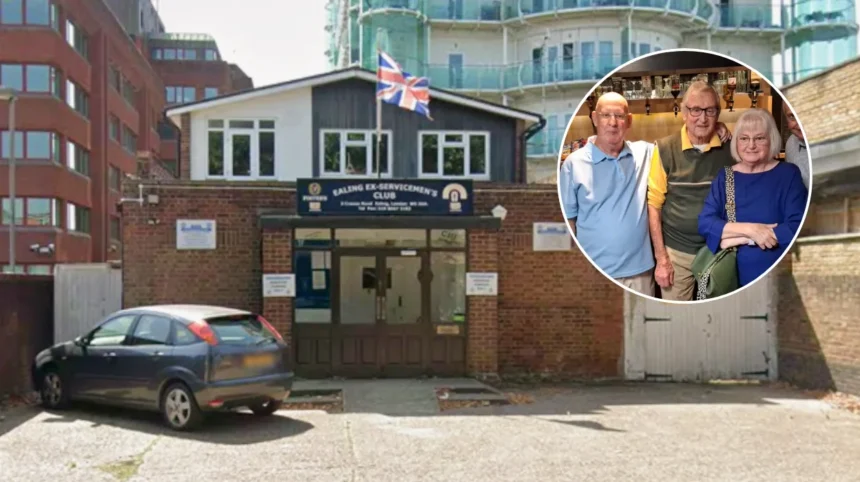
- There are fears that the historic Ealing Ex-Servicemen’s Club located in Craven Road, West London is at risk of being shut permanently because of a drastic drop in membership levels and financial struggles.
- Founded in 1919 as an initiative meant to support both the current and deceased service men, the club has been around for over a century serving as a crucial social center for the aged and families.
- According to the news posted on MyLondon by Senior Multimedia Journalist Ayokunle Oluwalana, member Terry Swan has expressed his concerns that there is going to be “nowhere to go” when the club finally closes down.
- Employees at the bar have been working for free over the last two years just to keep the club running.
- Currently, the club has about 140 members, most of them being between 70 and 80 years of age, hence resulting in restricted opening hours for weekends only.
- Organizers are now trying to seek support from the community by interacting with local MP Dr. Rupa Huq and the Mayor of Ealing.
uk/local/ealing/">Ealing, (West London Times) September 26, 2026 – A century-old institution that serves as a cornerstone of social life for elderly residents in West London is fighting for its survival against mounting financial pressures and declining membership figures.
Will the historic Ealing Ex-Servicemen’s Club have to close its doors permanently?
The Ealing Ex-Servicemen’s Club, located on Craven Road, has stood as a beacon of community cohesion since its inception in 1919. Originally constructed to support returning service personnel and honour fallen soldiers following the First World War, the venue gradually evolved into a crucial sanctuary for elderly citizens and families, with many current regulars being the descendants of deceased veterans. However, the passage of time has brought severe structural challenges, leaving the future of the establishment hanging in the balance.
As reported by Senior Multimedia Journalist Ayokunle Oluwalana of MyLondon, the community facility is now confronting the stark reality of empty coffers and a shrinking base of regular visitors. Although the venue bears the name ‘Ex-Servicemen’, member Terry Swan clarified to MyLondon that the club is entirely inclusive and open to the wider public. Despite this inclusive ethos, the demographic has aged significantly, with the current roster consisting of approximately 140 members whose ages predominantly range between 70 and 80 years old.
How are volunteers and members desperately trying to keep the venue afloat?
The battle to keep the lights on has relied heavily on extraordinary acts of sacrifice from the people who hold the institution dear. According to details shared with MyLondon by Ayokunle Oluwalana, bar staff at the Craven Road venue have not received any financial compensation over the last two years, instead choosing to donate their time voluntarily to maintain operations.
As reported by Ayokunle Oluwalana of MyLondon, member Terry Swan stated that “this club is the one place the older generation can get to for their night out in the week.” He further explained to MyLondon:
“They are people whose parents were ex-servicemen, and now they are the lasting members. If this place closes, I fear for the older generation because they’ll have nowhere to go. There’s nowhere around that’s close enough for them to get to. This is a lifeline for them. We are like one big happy family down there. Everybody knows everyone; it’s a lovely place.”
The financial crunch has already forced drastic cutbacks. While the venue traditionally welcomed patrons seven days a week, operating hours have plummeted to weekend evenings only. Activities that once fostered community spirit—such as bingo nights, raffle draws, poker tournaments, and pool sessions—have slowed down dramatically, with several amenities sitting entirely unused. The club narrowly avoided a planned shutdown in July, but rising overhead costs and exhausted reserves mean the reprieve may be short-lived.
Explore more Ealing News:
UWL Welcomes Thousands of New Students Across Ealing 2026
New Publicly Owned London Bus Company Launches in Ealing 2026
What steps are being taken to secure future funding and community engagement?
Faced with the prospect of losing a vital social outlet, community members are mobilising to raise awareness and attract fresh financial backing. Terry Swan revealed plans to organise a dedicated open day aimed at recruiting new members and driving donations. Furthermore, advocates have reached out to prominent local figures, holding discussions with Ealing MP Dr Rupa Huq—who has already visited the premises—while also seeking formal backing from the Mayor of Ealing. An online fundraising campaign has also been launched to bridge the financial gap.
As reported by Ayokunle Oluwalana of MyLondon, Terry Swan emphasised the irreplaceable nature of the venue, stating: “I’ve seen many other clubs for elderly people close over the last few years, and this is [kind of] the last close one for a lot of the members. They have walking aids and mobility scooters; it’s the only place they can easily get to. Hopefully, we can get attention and save this club because it represents so much to the community.”
Background of the development
The plight of the Ealing Ex-Servicemen’s Club reflects a broader, systemic trend affecting traditional working men’s clubs, British Legion branches, and independent community spaces across the United Kingdom over the past two decades. Established in the wake of the First World War, these venues were designed to provide mutual aid, affordable social recreation, and psychological sanctuary for veterans and working-class families.
However, shifting generational habits, the rise of commercial hospitality alternatives, urban gentrification, and sharp spikes in commercial energy and maintenance costs have severely eroded their financial foundations. In suburban London, where property values and living overheads are exceptionally high, volunteer-run institutions with ageing membership bases often find it nearly impossible to compete with modern entertainment venues or absorb sudden inflationary shocks without institutional subsidies.
Should the Ealing Ex-Servicemen’s Club be forced to close its doors permanently, the immediate impact on its elderly demographic and local families will be profound and deeply isolating. For the senior members—many of whom rely on walking aids or mobility scooters—the club represents more than just a social venue; it is a critical, accessible lifeline preventing acute social isolation and loneliness within West London.
The loss of this safe, familiar environment would strip vulnerable pensioners of their primary weekly outing, regular peer support networks, and affordable recreation. While community fundraisers and political outreach offer a glimmer of hope, failure to secure long-term financial stabilisation will likely accelerate the disappearance of grassroots, peer-led community spaces tailored specifically to the needs of the elderly in urban neighbourhoods.