Key Points
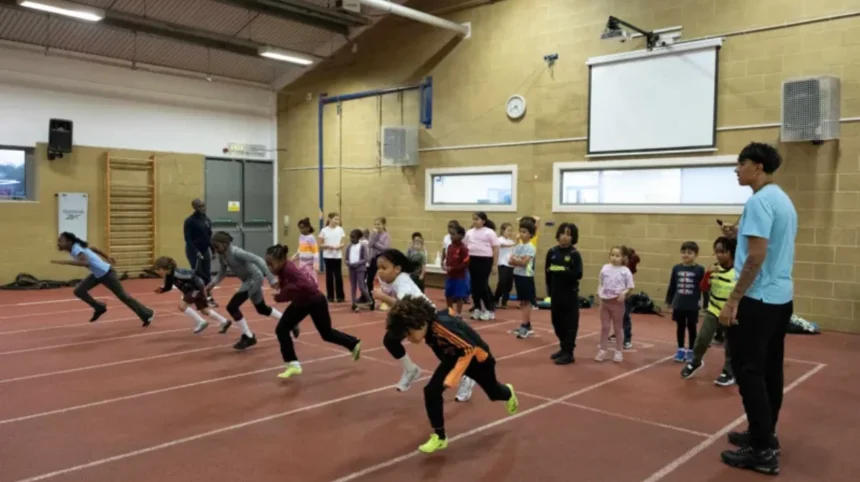
- Brent Council plans to redevelop an indoor athletics track at Willesden Sports Centre in north-west London into an expanded gym space as part of a £1.4m upgrade project.
- Track Academy, a charity operating at the centre, states that hundreds of young people aged five to 23 will be left without a vital indoor winter training space.
- The charity engages more than 500 people annually, with approximately 60% of its participating athletes coming from low-income backgrounds.
- Patrik Ewe, running the charity, criticises the council for failing to provide a “like-for-like” alternative indoor space for athletics training.
- Three-time British Olympic sprinter Adam Gemili has publicly backed the campaign, telling BBC London that losing indoor facilities makes cold-weather training significantly harder.
- Brent Council maintains that alternative indoor provisions and the outdoor 400-metre athletics track will remain unaffected and available for use.
London, UK (West London Times) November 9, 2026 — Hundreds of young athletes face losing their primary indoor winter training ground after Brent Council approved plans to convert an indoor athletics track into an expanded gym facility at the Willesden Sports Centre.
- Key Points
- What are the details of the Willesden Sports Centre redevelopment project?
- How has Track Academy responded to the closure?
- What position does Brent Council hold regarding the facility changes?
- Which prominent athletes and community members have spoken out?
- Background of the particular development
- Prediction
What are the details of the Willesden Sports Centre redevelopment project?
Brent Council initiated plans to overhaul the facilities at the Willesden Sports Centre located on Donnington Road, Willesden, as part of a wider £1.4m financial investment. According to statements from the local authority, the regeneration project aims to tackle capacity and layout constraints by creating more gym space for the local community. However, the scheme requires the removal of the existing 60-metre indoor running track.
As reported by local news providers, Track Academy—a registered youth charity founded in 2007 by former international triple jumper Connie Henry MBE—was informed in early June that the indoor track would close permanently within weeks. The charity runs structured sessions up to three times a week, providing mentorship, educational support, and athletic training for participants ranging from five to 23 years of age.
How has Track Academy responded to the closure?
Patrik Ewe, who manages the charity, expressed deep concern over the timing and suitability of the council’s proposals. Speaking on the impact of the redevelopment, Patrik Ewe stated that the track was “a vital safe space for our community” and criticized the local authority for failing to offer a suitable alternative indoor space.
Emphasizing the demographic profile of the participants, Patrik Ewe noted that
“Track Academy engages with more than 500 people a year,”
adding that
“60% of its athletes were from low-income backgrounds and come to the centre to do athletics, have fun and see their friends.”
While the charity retains access to the centre’s outdoor 400-metre running track, Patrik Ewe warned that participation numbers would inevitably decline during the harsher winter months. Dismissing the council’s alternative arrangements, Patrik Ewe stated:
“They’re ripping up an indoor track, and yes there is a sports hall, but our kids can’t do athletics there. There is an outdoor track, but when it’s raining, when it’s hailing – when can our young people go?”
What position does Brent Council hold regarding the facility changes?
Defending the local authority’s decisions, Liz Dixon, cabinet member for community safety and public health at Brent Council, stated that the existing gym facilities had experienced severe capacity and layout constraints. Liz Dixon added that Track Academy
“will continue to have access to indoor provision, while the outdoor 400m athletics track is entirely unaffected.”
Brent Council officials emphasized that ongoing discussions have been held with the charity to identify cooperative solutions and alternative options within the borough, ensuring that local sports provision remains broad and accessible.
Which prominent athletes and community members have spoken out?
The decision has attracted high-profile backing from elite British sports figures. Three-time British Olympic sprinter Adam Gemili voiced strong support for the affected young runners, telling BBC London that the UK desperately needs to safeguard indoor facilities. Adam Gemili added that closures of this nature were
“making it harder for our athletes to train in those really hard, cold winter months.”
Local families have similarly highlighted the social and personal value of the space. Bernard Olive, a local parent whose children attend the weekly sessions, explained how crucial the environment is for his family, stating:
“I’ve got a boy who has special needs, and coming here helps his self-esteem and confidence. When they’re inside the gym, they feel so safe and comfortable.”
Echoing these sentiments, Evelyn Sozi—whose daughter has trained with Track Academy for five years—emphasized the broader health benefits of the facility:
“It’s vital for her mental health, her fitness, time away from the screen, dare I say, and socialising with others.”
Megan Omoya-Broad, a 19-year-old participant who has used the track for years, also expressed sadness over the impending loss, noting,
“I feel like I’ve grown up on the indoor track.”
Background of the particular development
The dispute over the Willesden Sports Centre highlights a recurring tension between municipal authorities seeking to modernise commercial leisure assets and grassroots sports organisations operating on tight community funding. Indoor training facilities across urban centers in the United Kingdom face acute financial pressures, often forcing local councils to balance revenue-generating fitness spaces, such as commercial-style gyms, against specialized athletic infrastructure.
Track Academy has operated out of the London Borough of Brent for nearly two decades, establishing itself as a key social intervention program that uses athletics as a vehicle for youth development and community cohesion. The clash underscores broader structural challenges facing youth sports in inner-city environments, where winter weather restricts outdoor training options, making sheltered running spaces indispensable for continuous athletic development.
Prediction
This development could severely disrupt athletic progression and youth engagement across north-west London, directly impacting low-income families, youth charity participants, and aspiring athletes who rely on affordable indoor winter training facilities. For the local community and Track Academy participants, the loss of the 60-metre indoor track risks widening inequality in sports access, as families who cannot afford private indoor training facilities may be forced to abandon winter training routines entirely. If alternative arrangements fail to replicate the safety, shelter, and specific training conditions of the indoor track, participation numbers are expected to sharply decline, potentially threatening the long-term viability of community sports initiatives in the area.