

Key Points
- 66-year-old Trevor Dunkley pleaded guilty at the Wolverhampton Crown Court to murdering Patricia Lashley in 1998 and hindering her lawful burial.
- Patricia Lashley, a 33-year-old woman and mother of seven children, went missing from her house in Dudley, West Midlands, in September 1998.
- According to Dunkley’s confession to police after a recent visit of a police officer to him, he had killed her after coming back from a night shift.
- The defendant admitted that the body of Patricia Lashley had been kept in the cellar for some time until it was dumped in the household bins a year later in its decomposed state.
- According to West Midlands Police, it is very difficult to recover her remains because of the way she was disposed of.
- Dunkley was committed to jail, and his sentencing is set for November 6 at Wolverhampton Crown Court.
Dudley (West London Times)— September 12, 2026 — A 66-year-old man has formally admitted to the killing of a mother of seven nearly three decades after she vanished from her home. Trevor Dunkley entered guilty pleas to charges of murder and preventing the lawful burial of Patricia Lashley during a court appearance on Friday. Ms Lashley, who was 33 years old at the time of her disappearance, vanished from the Dudley area in September 1998.
- Key Points
- How Did the Cold Case Breakthrough Occur After Nearly 30 Years?
- What Did the Defence Reveal About the Disposal of the Victim’s Remains?
- What Actions Did the Perpetrator Take Immediately Following the Killing?
- What Did the Judge and Police Say During the Court Hearing?
- Background of the Particular Development
How Did the Cold Case Breakthrough Occur After Nearly 30 Years?
According to details shared by West Midlands Police, the breakthrough in the decades-long missing person investigation came when an officer recently visited Dunkley at his address. As documented by Will Twigger and Matthew Cooper, Dunkley offered a shock confession during this conversation, telling the officer, “I killed her, I’s sorry.”
Following this admission, Dunkley was arrested and interviewed by detectives. He disclosed that he and Ms Lashley, who was his partner, had shared a home in Hall Street, Dudley. Dunkley confessed that on the day of the murder, he returned home following a night shift and attacked Ms Lashley with his fists while she was in bed, stating that the “red mist” had descended upon him.
What Did the Defence Reveal About the Disposal of the Victim’s Remains?
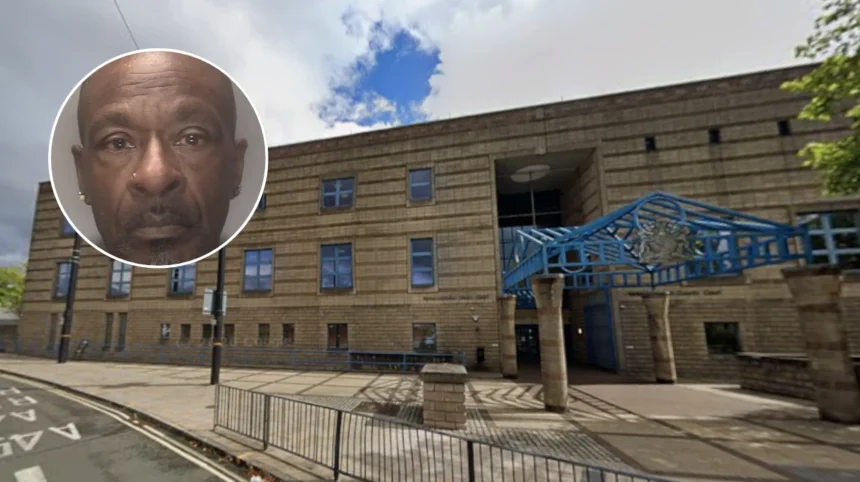
Appearing at Wolverhampton Crown Court wearing round-rimmed glasses and a grey sweater, Dunkley showed no emotion in the dock. As reported by Will Twigger and Matthew Cooper, his barrister, Balbir Singh, addressed Judge Michael Chambers KC regarding the circumstances of the case and the location of the victim.
When asked by Judge Chambers if the victim’s body had been recovered, Mr Singh stated, as quoted by Reach PLC journalists:
“No, because this is 28 years ago and the body was put into the cellar downstairs. It decomposed. When he was moving about nine months to a year later the skeleton was disposed of into the bins.”
Mr Singh further noted that the charges were brought entirely based on what the defendant told police when there was no physical forensic evidence remaining of the incident. Dunkley confessed that after the murder, he covered Patricia’s body with bedding and moved her down to the cellar. Approximately a year later, he disposed of her skeletal remains across household waste bins over several weeks. Consequently, authorities have confirmed it is highly unlikely that Ms Lashley’s remains will ever be found.
What Actions Did the Perpetrator Take Immediately Following the Killing?
As detailed in reports by Will Twigger and Matthew Cooper, Dunkley admitted that after murdering the 33-year-old mother, he took Patricia’s baby to Social Services. He falsely informed authorities at the time that Ms Lashley had left him and abandoned her child.
Ms Lashley was formally reported missing by her sister in June 1999. In the years that followed, regular public appeals were launched to locate her. Police noted that Ms Lashley, who was locally known as Pat or Jade, lived in Hall Street, Dudley, maintained links to London, Wales, Newcastle, and Scotland, and occasionally used the names Vanessa, Tricia, and the surname Bradford. Dunkley reportedly confessed nearly 30 years later because he suspected that the police were finally “onto him”.
Explore more West London Crime News:
Southall Police Seize Five Illegal E-Scooters in Ealing 2026
Met Police Seize Drugs and Make Two Arrests in West Ealing 2026
What Did the Judge and Police Say During the Court Hearing?
Several members of Ms Lashley’s family sat in the courtroom to witness Dunkley enter his guilty pleas for offences committed between September 22 and September 28, 1998.
Addressing the defendant at the conclusion of the hearing, Judge Michael Chambers KC stated, as covered by Will Twigger and Matthew Cooper:
“You have had the courage to plead guilty to these matters and will get appropriate credit in due course. I am required to set the minimum term that you will have to serve before the Parole Board consider your case. As you are aware, the sentence for murder is life imprisonment. I am going to order a pre-sentence report. It’s in your interests to co-operate with the preparation of that report. In the meantime you must remain in custody.”
Dunkley was remanded in custody and will return to Wolverhampton Crown Court for sentencing on November 6.
Detective Inspector Michelle Cordell from the West Midlands Police Homicide Unit released a statement regarding the devastating case. As reported by Will Twigger and Matthew Cooper, DI Cordell stated:
“This was a truly harrowing case in which a young mother was murdered inside the home she shared with her partner and her baby. Trevor Dunkley is the only living person who truly knows what happened that day. What we do know is that, by his own admission, he subjected Patricia Lashley to a sustained and violent assault which led to her death.”
DI Cordell added:
“His actions afterwards are unspeakably cruel. It is difficult for anyone to comprehend how he could live for so long, knowing what he had done and within the same location he had deposited her body. Not only did he deprive Patricia of a lawful or decent burial, he robbed her family of the opportunity to lay her to rest. For decades, they have had to live without answers and with the hope that one day she would return. There can be no justification for his actions.”
Background of the Particular Development
The resolution of Patricia Lashley’s disappearance brings closure to a cold case that remained active for nearly three decades within the West Midlands Police jurisdiction. Ms Lashley vanished in September 1998 and was officially reported missing by her sister in June 1999. For over twenty-eight years, her family endured profound ambiguity, managing periodic appeals for information without any indication of a criminal breakthrough.
Cold case reviews often rely on shifting personal circumstances, changes in relationships, or unexpected disclosures from suspects as years pass. In this instance, routine investigative follow-up by West Midlands Police officers directly prompted the 66-year-old defendant to break decades of silence. Because domestic homicides where bodies are concealed present unique forensic hurdles, the absence of physical remains made historical prosecution nearly impossible until the perpetrator’s direct confession provided the legal basis for charges of murder and preventing a lawful burial.
This development highlights the ongoing efficacy of cold case reviews and proactive police engagement in unresolving historic missing persons investigations. For the local community in Dudley and, most importantly, the surviving family members of Patricia Lashley, the guilty plea provides formal legal accountability, even in the absence of a recovered body.
For the broader public and families of long-term missing persons, this case demonstrates that cold cases are subject to continuous re-examination, and breakthroughs can occur decades after an initial disappearance. It reinforces institutional commitment within UK police forces to revisit historical unsolved files, offering a template for how modern investigative persistence can eventually secure justice and legal closure for victims’ relatives who have suffered prolonged uncertainty.