


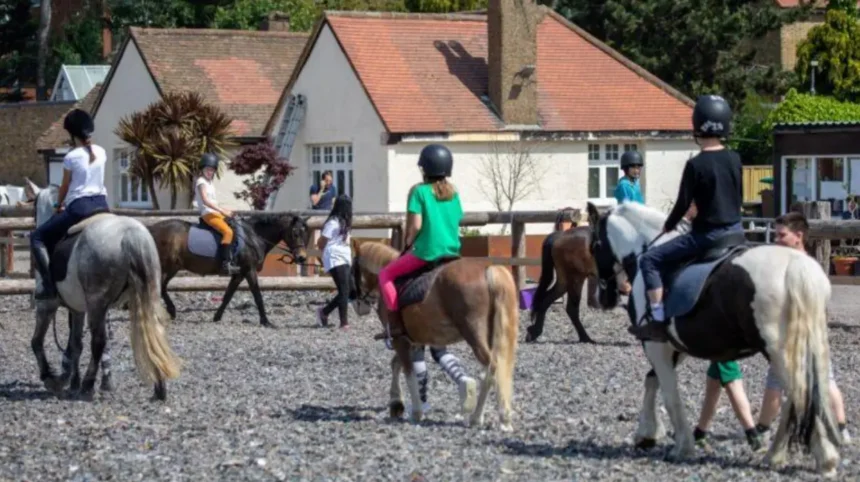
Horse riding in West London offers opportunities for children, adults, beginners and experienced riders to learn equestrian skills, develop confidence and experience outdoor recreation. The area combines traditional riding schools, community equestrian centres, accessible pony activities and countryside riding facilities around uk/local/ealing/">Ealing, Richmond, fulham/hammersmith/">Hammersmith, Hillingdon, Hayes and Uxbridge.
- What Is Horse Riding and How Is It Practised in West London?
- Where Can You Go Horse Riding in West London?
- Ealing Riding School
- Wormwood Scrubs Pony Centre
- Abbeyfields Equestrian Centre
- Stag Lodge Stables
- Stag Lodge 2
- Littlebourne Equestrian Centre
- What Types of Horse Riding Lessons Are Available in West London?
- Beginner Horse Riding Lessons
- Private Horse Riding Lessons
- Group Horse Riding Lessons
- Children’s Pony Riding Lessons
- Advanced Horse Riding Training
- Can Beginners Learn Horse Riding in West London?
- What Happens During a First Riding Lesson?
- How Long Does It Take to Learn Horse Riding?
- What Should Beginners Wear?
- Is Horse Riding Available for Children and Families in West London?
- What Can Children Learn at a Riding School?
- Are Pony Lessons Suitable for Young Children?
- What Should Parents Check Before Booking?
- Where Can You Enjoy Horse Riding Near Richmond Park?
- What Is Hacking in Horse Riding?
- Can Beginners Go Horse Riding in Richmond Park?
- What Rules Apply to Horse Riding in Public Parks?
- What Is the Difference Between Dressage, Show Jumping and Hacking?
- Are There Inclusive and Therapeutic Horse Riding Activities in West London?
- How Does Riding for the Disabled Work?
- What Are the Benefits of Inclusive Equestrian Activities?
- Where Can Families Find Inclusive Riding?
- What Are the Health and Fitness Benefits of Horse Riding?
- How Does Horse Riding Support Physical Fitness?
- Does Horse Riding Improve Balance and Coordination?
- Does Horse Riding Support Mental Wellbeing?
- What Safety Rules Should Riders Follow in West London?
- What Safety Equipment Is Required?
- Why Are Qualified Instructors Important?
- What Laws Regulate Riding Schools in England?
- How Much Does Horse Riding Cost in West London?
- What Determines Riding Lesson Prices?
- Are Group Lessons Cheaper Than Private Lessons?
- What Additional Costs Should Riders Consider?
- How Can You Choose the Best Horse Riding School in West London?
- Check Licensing and Professional Approval
- Assess Horse Welfare
- Compare Teaching Facilities
- Consider Travel and Accessibility
- Which West London Areas Have Access to Horse Riding Facilities?
- Horse Riding Around Ealing and Acton
- Horse Riding Around Hammersmith and Shepherd’s Bush
- Horse Riding Around Hayes and Southall
- Horse Riding Around Richmond and Wimbledon
- Horse Riding Around Uxbridge and Harefield
- What Is the Future of Horse Riding in West London?
West London has a distinctive equestrian environment. Riders can access established stables, professionally managed riding arenas and facilities close to major green spaces. Some centres focus on structured riding lessons, while others provide guided hacks, pony experiences, horse-care education and specialist activities for people with disabilities.
Horse riding is an organised physical activity involving communication between a rider and a horse. It requires balance, coordination, controlled movement, knowledge of animal behaviour and an understanding of riding safety. Professional instruction provides the foundation for learning these skills.
For West London residents, local riding schools provide access to equestrian activities without requiring ownership of a horse. Lessons generally include mounting, posture, steering, stopping, basic horse care and progressive riding exercises.
What Is Horse Riding and How Is It Practised in West London?
Horse riding is an equestrian activity in which a person controls and communicates with a horse while mounted. In West London, riding takes place through structured lessons, private coaching, group sessions, pony activities and supervised outdoor riding experiences.
Horse riding belongs to the wider equestrian sector, which includes horse training, dressage, show jumping, recreational riding, horse care and competitive events. An equestrian centre provides facilities and professional supervision for these activities.
In West London, riding schools serve different age groups and experience levels. Beginners usually start with basic instruction in an enclosed riding arena. Experienced riders receive more advanced training in movement, control, jumping and dressage.
A riding school typically provides horses or ponies, instructors, riding equipment, stabling and designated teaching areas. The instructor matches each rider with a suitable horse according to experience, physical suitability and confidence.
How Does a Riding School Operate?
A riding school manages horses, instructors, facilities and lesson schedules. Its responsibilities include animal welfare, rider supervision, equipment maintenance and safe teaching practices.
A typical lesson follows a structured process:
- The instructor assesses the rider’s experience and suitability.
- The riding school selects an appropriate horse or pony.
- The rider receives safety instructions and equipment guidance.
- The instructor explains mounting, posture and basic controls.
- The rider practises exercises under supervision.
- The session finishes with dismounting and appropriate horse care.
This structure allows beginners to develop skills gradually rather than attempting advanced riding techniques immediately.
Why Is Horse Riding Available in Urban West London?
West London contains established green spaces, historic stable yards and suburban areas with equestrian facilities. Locations around Ealing, Richmond, Hayes and Hillingdon support riding activities alongside residential and commercial development.
Some centres operate within unusual urban environments. Ealing Riding School, for example, has a long-established presence near Gunnersbury Avenue. Its history dates to 1986, when its horses included animals associated with the former Rothschild Gunnersbury estate and horses previously used for local transport. The British Horse Society
This combination of urban accessibility and established equestrian facilities makes horse riding a practical recreational activity for local residents.
Where Can You Go Horse Riding in West London?
West London has several established equestrian facilities offering riding lessons, pony activities and specialist instruction. Notable locations include Ealing Riding School, Wormwood Scrubs Pony Centre, Abbeyfields Equestrian Centre and nearby Richmond Park stables.
The best riding centre depends on location, age, experience, lesson availability and the type of riding activity required. Some facilities specialise in beginners, while others provide more structured progression and outdoor riding.
Ealing Riding School
Ealing Riding School provides equestrian activities for children and adults, including riding instruction and horse-related experiences. Its established history makes it a significant local facility for West London residents. The British Horse Society
The centre accommodates riders with different experience levels, including beginners and more advanced participants. It also provides activities that introduce visitors to horse care and stable environments.
Its location makes it relevant to residents of Ealing, Acton, hounslow/chiswick/">Chiswick and surrounding neighbourhoods.
Wormwood Scrubs Pony Centre
Wormwood Scrubs Pony Centre is a community-focused equestrian facility in Hammersmith and Fulham. It provides riding and horse-related learning opportunities, including activities supporting disabled participants.
The centre is associated with the Riding for the Disabled Association (RDA), which supports accessible equestrian participation. Its work connects horse riding with inclusion, confidence-building and structured learning.
The facility is particularly relevant to residents of Shepherd’s Bush, White City, Hammersmith and nearby areas.
Abbeyfields Equestrian Centre
Abbeyfields Equestrian Centre is an equestrian facility serving Hayes and the wider Middlesex area. It provides a local option for people looking for riding activities outside central London.
Its Hayes location makes it relevant to residents of Southall, Hillingdon, Uxbridge and nearby communities. Riders should contact the centre to confirm current lessons, suitability requirements and availability.
Stag Lodge Stables
Stag Lodge Stables provides equestrian experiences beside Richmond Park, including organised outdoor riding. The park setting distinguishes it from riding schools that operate mainly within enclosed arenas.
Riders should check which services operate at each Stag Lodge location. The operator announced a change from 1 October 2026, with Stag Lodge 1 focusing on group hacks and Pony Park Lessons, while beginner and private lessons continue at Stag Lodge 2.
Stag Lodge 2
Stag Lodge 2 provides riding instruction and equestrian training near Richmond Park and Wimbledon Common. It serves riders seeking beginner instruction and further skill development.
Its position near major green spaces makes it a relevant option for residents of Richmond, Wimbledon, Putney and Kingston.
Littlebourne Equestrian Centre
Littlebourne Equestrian Centre is a larger equestrian facility serving Harefield and the wider Hillingdon area. Its facilities include stabling, turnout areas and riding facilities.
The centre is relevant to riders looking for an equestrian environment closer to the greenbelt countryside surrounding north-west London.
What Types of Horse Riding Lessons Are Available in West London?
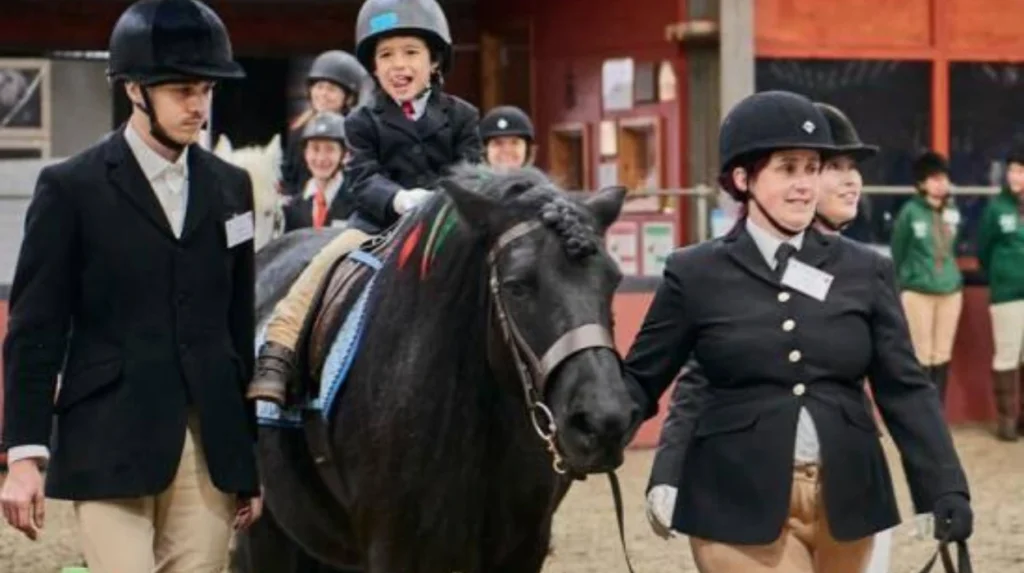
West London riding schools offer several lesson formats, including beginner lessons, private tuition, group instruction, children’s pony sessions and advanced equestrian training. Examples include introductory arena lessons, one-to-one coaching, lead-rein riding and supervised outdoor hacks.
Lesson formats differ according to the rider’s experience, age, confidence and learning objectives. A suitable programme introduces basic horse handling before progressing to independent riding and specialist disciplines.
Beginner Horse Riding Lessons
Beginner lessons introduce people to horses and the fundamentals of riding. No previous riding experience is necessary for an introductory session.
The first lessons normally cover:
- Approaching and handling a horse safely.
- Understanding basic horse behaviour.
- Mounting and dismounting.
- Maintaining a balanced riding position.
- Holding and using the reins.
- Walking and stopping with instructor guidance.
Beginners generally start with walking exercises. The instructor introduces additional movements when the rider demonstrates sufficient balance and control.
Private Horse Riding Lessons
Private lessons provide individual instruction between one rider and an instructor. They allow the coach to concentrate on the rider’s posture, confidence, balance and technique.
This format suits adults learning for the first time, nervous riders and experienced participants working towards specific riding objectives.
Private instruction also provides opportunities to address individual difficulties without the pace of a group lesson.
Group Horse Riding Lessons
Group lessons involve several riders learning together under an instructor’s supervision. Participants normally have similar experience levels.
These sessions teach fundamental riding techniques while introducing riders to following instructions, maintaining appropriate distances and controlling horses around other animals.
Riding schools determine group sizes according to their facilities, horse availability and safety arrangements.
Children’s Pony Riding Lessons
Pony riding introduces younger children to horses through age-appropriate instruction. Ponies are smaller equines commonly used for younger or smaller riders, subject to individual suitability.
Some West London centres provide introductory activities for children. Stag Lodge Stables, for example, advertises Pony Park Lessons for children aged three to six.
Children’s programmes can include lead-rein riding, grooming, basic horse handling and supervised interaction with ponies.
Advanced Horse Riding Training
Advanced lessons develop technical riding abilities beyond basic control. They include more demanding arena exercises and specialist disciplines.
Examples include dressage, show jumping and pole work. Instruction depends on the rider’s experience, the horse’s training and the facilities available.
Can Beginners Learn Horse Riding in West London?
Beginners can learn horse riding in West London through introductory lessons at established riding schools. Centres assess experience, physical suitability and confidence before assigning horses and instructors. Training usually progresses from basic handling and balance to controlled walking and independent riding.
Learning to ride does not require previous experience or personal horse ownership. Riding schools supply suitable horses and essential teaching equipment according to their individual arrangements.
The British Horse Society (BHS) recommends selecting a reputable riding establishment with appropriate attention to rider safety, horse welfare and professional instruction.
What Happens During a First Riding Lesson?
A first lesson introduces the rider to the horse and the riding environment. The instructor explains basic safety procedures before mounted exercises begin.
The session usually includes an introduction to horse behaviour, suitable equipment, mounting and the correct riding position.
Beginners learn to maintain a balanced seat while following the instructor’s directions. The initial objective is controlled movement rather than speed or advanced techniques.
Some riders receive additional support through a lead rein or lunge lesson.
A lead rein is a strap attached to the horse’s bridle and held by an instructor or experienced handler. It provides additional control during introductory riding activities.
Lunge lessons involve an instructor controlling the horse from the ground using a long line. This arrangement allows beginners to concentrate on balance and posture.
How Long Does It Take to Learn Horse Riding?
Learning time depends on lesson frequency, individual coordination, confidence and previous experience with animals or physical activities.
A beginner typically requires repeated sessions to develop reliable balance, steering and stopping skills. Progression to independent riding depends on the instructor’s assessment rather than a fixed number of lessons.
Regular weekly instruction provides continuity because riders practise similar movements and reinforce previously learned techniques.
What Should Beginners Wear?
Appropriate clothing improves comfort and supports safe riding. Beginners should follow the riding school’s equipment requirements before attending.
Essential riding equipment includes:
- A correctly fitted riding helmet.
- Suitable riding boots with a small heel.
- Comfortable, close-fitting trousers.
- Gloves designed for riding.
- Clothing appropriate for outdoor conditions.
The BHS provides guidance on riding clothing and equipment for new participants. Riding centres also explain which protective items they supply and which riders must bring themselves.
Is Horse Riding Available for Children and Families in West London?
Children and families can access horse riding in West London through pony lessons, supervised introductory sessions and family-oriented equestrian activities. Ealing Riding School, Stag Lodge Stables and Wormwood Scrubs Pony Centre provide examples of facilities serving younger participants.
Children’s riding programmes introduce equestrian activities through supervised sessions appropriate to their age and development. Their structure focuses on safety, confidence, horse behaviour and basic riding skills.
Parents should select programmes according to the child’s age, physical suitability and previous experience.
What Can Children Learn at a Riding School?
Children learn more than mounted riding. Structured equestrian activities introduce responsibility, animal care and practical knowledge.
Common learning activities include grooming, leading a pony, understanding stable routines and recognising basic horse behaviour.
Grooming involves cleaning and maintaining the horse’s coat using appropriate brushes. Leading involves guiding a horse while walking beside it using a lead rope.
These activities help children understand how horses respond to handling and human movement.
Are Pony Lessons Suitable for Young Children?
Pony lessons provide an introduction to riding for children who meet the centre’s minimum age and suitability requirements.
Some centres offer lead-rein sessions, where a trained handler maintains control of the pony while the child learns basic posture and balance.
Stag Lodge Stables advertises Pony Park Lessons for children aged three to six. Parents should confirm the current programme, session length and admission requirements before booking.
What Should Parents Check Before Booking?
Parents should ask about instructor qualifications, safeguarding arrangements, supervision, insurance and horse welfare.
British Equestrian recommends checking whether the riding establishment holds the required local authority approval. It also advises families to ask about safeguarding and insurance arrangements. British Equestrian+1
Parents should also confirm whether helmets are provided, whether a parent must remain on site and what happens if weather conditions affect an outdoor lesson.
Where Can You Enjoy Horse Riding Near Richmond Park?
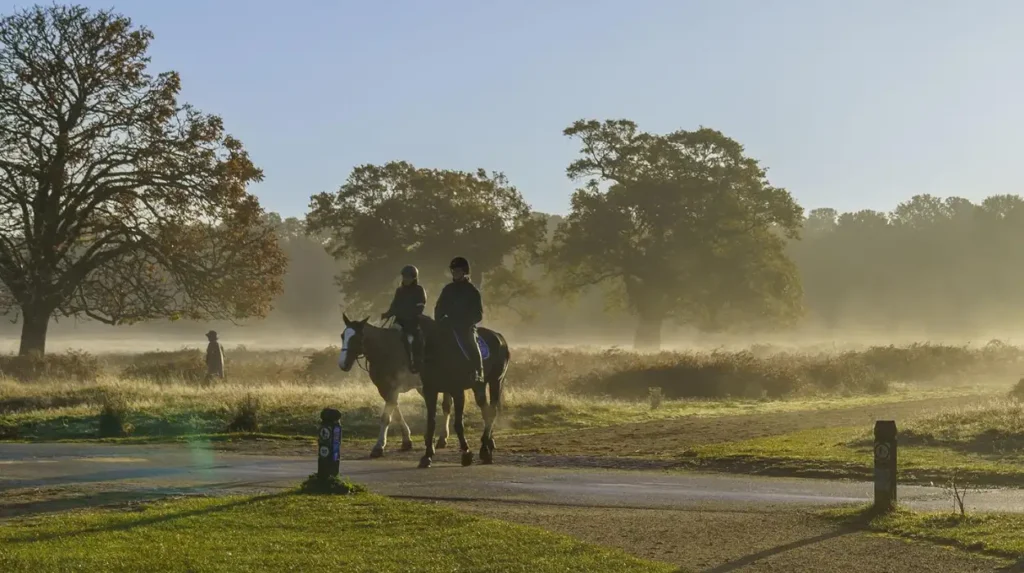
Richmond Park is an important outdoor equestrian destination in south-west London. Its designated riding routes provide opportunities for organised horse riding, while nearby stables offer instruction and supervised riding experiences for different abilities.
Richmond Park is a large historic royal park managed by The Royal Parks. It is known for open grassland, woodland, wildlife and established recreational routes.
Horse riding is one of the activities accommodated within the park. Riders must follow park regulations and use permitted riding routes.
What Is Hacking in Horse Riding?
Hacking is recreational outdoor riding away from a riding school’s enclosed arena. It usually takes place along approved tracks, bridleways or designated countryside routes.
A hack allows riders to practise controlling a horse in a more varied environment. Outdoor conditions include changing surfaces, natural obstacles and other park users.
Stag Lodge Stables provides a local connection to Richmond Park riding. Riders should confirm the route, experience requirements and supervision arrangements before booking.
Can Beginners Go Horse Riding in Richmond Park?
Beginners can access outdoor riding through suitable programmes, but the riding school determines whether a participant has the necessary experience.
First-time riders normally benefit from arena instruction before attempting a longer outdoor hack. Some centres offer guided experiences designed for less experienced participants.
The instructor considers balance, confidence, control and the horse’s suitability before approving participation.
What Rules Apply to Horse Riding in Public Parks?
Riders must follow park-specific regulations, designated route restrictions and instructions from park management.
Responsible riding includes controlling speed, respecting pedestrians, avoiding sensitive wildlife areas and keeping appropriate distances from other horses.
Riders should check current Royal Parks guidance before visiting Richmond Park.
What Is the Difference Between Dressage, Show Jumping and Hacking?
Dressage, show jumping and hacking are distinct equestrian activities. Dressage develops precision and controlled movement, show jumping tests a horse and rider’s ability to navigate obstacles, and hacking involves recreational riding along outdoor routes.
Each discipline requires different riding techniques and training objectives. Riding schools introduce these activities according to the participant’s ability and available facilities.
Dressage
Dressage is a formal equestrian discipline based on controlled movements performed by a horse and rider.
Training develops balance, coordination, responsiveness and precision. Riders practise transitions between different paces and controlled movement patterns.
The horse responds to subtle instructions through the rider’s seat, legs and reins.
Show Jumping
Show jumping is a competitive equestrian discipline in which horse and rider navigate a sequence of obstacles within a designated arena.
The objective is to complete the course while avoiding faults and meeting the competition’s time requirements.
Training involves approach control, balance, timing and communication between the horse and rider.
Beginners normally develop reliable flatwork skills before progressing to jumping exercises.
Hacking
Hacking is recreational riding outside the riding arena. It includes supervised rides through suitable countryside, woodland and designated park routes.
Outdoor riding introduces different ground surfaces and environmental conditions. Riders must demonstrate appropriate control and follow the instructor’s safety guidance.
Which Discipline Should a Beginner Choose?
Beginners should start with general riding instruction rather than choosing an advanced discipline immediately.
Basic lessons develop the skills required for dressage, jumping and hacking. An instructor can recommend a suitable progression once the rider demonstrates reliable control and balance.
Are There Inclusive and Therapeutic Horse Riding Activities in West London?
Inclusive horse riding provides opportunities for disabled people to participate in supervised equestrian activities. Wormwood Scrubs Pony Centre supports this approach through community-based riding and horse-learning programmes connected with the Riding for the Disabled Association.
The Riding for the Disabled Association (RDA) is a UK charity that uses horses and equestrian activities to support disabled people. Its programmes include riding, carriage driving and equine-assisted activities.
Inclusive riding programmes adapt activities to individual requirements. Adjustments depend on mobility, communication needs, confidence and the participant’s physical abilities.
How Does Riding for the Disabled Work?
Riding for the Disabled programmes use trained volunteers, instructors and suitable horses or ponies to support participants.
Activities are organised according to individual assessments. Support arrangements include appropriate mounting assistance, supervision and adapted equipment where necessary.
Participants can experience mounted activities and learn about horse behaviour through supervised interaction.
What Are the Benefits of Inclusive Equestrian Activities?
Inclusive equestrian activities provide opportunities to develop physical coordination, confidence and social participation.
Mounted activities involve maintaining balance and responding to controlled movement. Horse-care activities introduce communication, responsibility and practical learning.
The suitability and benefits of each programme depend on the participant’s individual needs and professional assessment.
Where Can Families Find Inclusive Riding?
Wormwood Scrubs Pony Centre is a notable West London option for inclusive equestrian participation. Families can contact the centre to discuss eligibility, programme arrangements and available support.
The RDA also provides information about affiliated centres and opportunities throughout the UK.
What Are the Health and Fitness Benefits of Horse Riding?
Horse riding involves physical coordination, balance, postural control and muscular activity. Regular participation provides structured exercise and outdoor recreation, while horse care introduces additional physical tasks such as grooming, leading and preparing riding equipment.
Riding is a physical activity that requires continuous interaction between the rider and the horse. The rider adjusts body position according to the horse’s movement and the instructor’s directions.
How Does Horse Riding Support Physical Fitness?
Horse riding engages the muscles responsible for posture and stability. Riders use their abdominal muscles, back muscles, legs and hips to maintain a balanced position.
Basic riding exercises involve maintaining posture, controlling movement and coordinating the hands and legs.
Horse-related activities also involve walking, grooming, cleaning equipment and preparing the animal for a session.
Does Horse Riding Improve Balance and Coordination?
Balance and coordination are essential riding skills. Riders continuously adjust their position to remain stable while the horse walks, trots or changes direction.
Instruction develops awareness of body position and controlled movement. Repeated practice reinforces coordination between the rider’s hands, legs and upper body.
Does Horse Riding Support Mental Wellbeing?
Horse riding provides structured outdoor activity and interaction with animals. Learning a new skill also involves setting goals and developing confidence through practice.
Horse care introduces routines that encourage responsibility and attention to animal behaviour.
These activities form part of the wider recreational and educational value of equestrian participation. They do not replace professional medical or psychological treatment.
What Safety Rules Should Riders Follow in West London?
Horse riding safety depends on appropriate protective equipment, qualified supervision, suitable horse selection and responsible behaviour. Riders should wear correctly fitted helmets and suitable footwear, follow instructor directions and use licensed riding establishments.
Horses are large animals with individual temperaments and behavioural responses. Safe riding requires preparation before mounting and continuous attention during a lesson.
What Safety Equipment Is Required?
A riding helmet is essential protective equipment. It should fit correctly and meet the riding school’s recommended safety standards.
Riders also need appropriate footwear with a small heel to reduce the risk of the foot slipping through the stirrup.
Gloves improve grip and protect the hands. Comfortable riding trousers reduce friction during mounted activities.
Why Are Qualified Instructors Important?
Qualified instructors assess riders, select suitable horses and organise lessons according to experience.
They teach mounting, dismounting, horse control and safe positioning. They also monitor participants throughout the session.
The British Horse Society provides information about approved riding centres and professional equestrian instruction.
What Laws Regulate Riding Schools in England?
The Riding Establishments Act 1964 and subsequent amendments provide the licensing framework for riding establishments in England and Wales.
Local authorities are responsible for licensing relevant riding establishments. Licensing arrangements address the operation of riding businesses and the welfare and suitability of horses used for riding.
The Animal Welfare Act 2006 establishes a wider legal framework for protecting animals from unnecessary suffering and requiring responsible care.
Riding establishments must also consider applicable health and safety requirements, including safe facilities, suitable supervision and risk management.
British Equestrian identifies local authority approval as an important requirement when choosing a riding centre. It also recommends checking insurance and safeguarding arrangements.
How Much Does Horse Riding Cost in West London?
Horse riding prices in West London depend on lesson duration, instructor arrangements, horse suitability and the type of activity. Private instruction, group lessons, children’s pony sessions and outdoor hacks have different pricing structures.
The cost of horse riding is not limited to the lesson itself. Riders should consider equipment, travel, additional coaching and any membership or registration requirements.
What Determines Riding Lesson Prices?
Several factors influence the price of a riding session.
A private lesson requires individual instructor attention. Group instruction distributes teaching time across several participants.
Longer lessons generally involve more mounted instruction. Specialist training can also involve additional costs associated with facilities, equipment and horse preparation.
Are Group Lessons Cheaper Than Private Lessons?
Group lessons generally have a lower individual cost than one-to-one instruction because the instructor teaches several riders during the same session.
Private lessons provide individual attention and a programme focused on one participant.
The best option depends on the rider’s learning objectives, confidence and budget.
What Additional Costs Should Riders Consider?
Additional expenses include riding clothing, protective equipment, travel and optional horse-care activities.
Some riding schools provide helmets and other equipment for introductory sessions. Others require participants to bring specific items.
Before paying, riders should confirm cancellation policies, weather arrangements and whether the advertised price includes equipment.
Because prices and availability change, direct confirmation with the riding school provides the most reliable information.
How Can You Choose the Best Horse Riding School in West London?
Choosing a horse riding school involves checking local authority licensing, instructor qualifications, horse welfare, insurance, safeguarding and lesson suitability. Riders should also compare location, available activities, teaching formats and accessibility before booking.
A suitable centre provides a structured learning environment and clear information about its services.
Check Licensing and Professional Approval
Ask whether the riding school holds a current local authority licence. Check whether it also has approval or affiliation from recognised equestrian organisations.
The British Horse Society maintains a directory of approved riding centres. Its listings help riders identify establishments with recognised equestrian standards.
Assess Horse Welfare
Horse welfare is an essential part of responsible equestrian management.
Visitors should look for clean and appropriately maintained stables, access to suitable turnout, well-maintained equipment and horses that appear appropriately cared for.
Ask how the centre manages horse workloads, veterinary care and rest periods.
Compare Teaching Facilities
Riding facilities differ between centres. Some have outdoor arenas, while others provide indoor or covered teaching spaces.
A centre with suitable facilities for the intended activity provides a more appropriate learning environment.
Ask whether the school offers beginner instruction, private lessons, group sessions or specialist training.
Consider Travel and Accessibility
West London covers a large geographical area. A riding school near Ealing is not necessarily convenient for residents of Hillingdon or Richmond.
Compare journey times, public transport connections, parking arrangements and accessibility before selecting a centre.
Explore More Area Guide
Best Bowling Alleys in West London for Families and Groups
Basketball Courts in West London: Best Indoor and Outdoor Venues
Which West London Areas Have Access to Horse Riding Facilities?
Horse riding facilities serve several parts of West London, including Ealing, Hammersmith, Hayes, Richmond and Hillingdon. Residents can select nearby centres according to their location, riding experience and preferred equestrian activities.
Horse Riding Around Ealing and Acton
Ealing Riding School serves the Ealing area and surrounding neighbourhoods.
Its location near Gunnersbury Avenue makes it relevant to residents of Acton, Chiswick and neighbouring parts of West London.
Horse Riding Around Hammersmith and Shepherd’s Bush
Wormwood Scrubs Pony Centre provides a local equestrian facility for Hammersmith and Fulham.
It is particularly relevant to families and individuals interested in inclusive riding and community-based horse activities.
Horse Riding Around Hayes and Southall
Abbeyfields Equestrian Centre provides access to equestrian activities around Hayes.
Residents of Southall, Yeading and nearby parts of Hillingdon can consider this location when comparing riding schools.
Horse Riding Around Richmond and Wimbledon
Stag Lodge Stables and Stag Lodge 2 provide access to riding activities around Richmond Park.
These facilities are relevant to residents of Richmond, Putney, Wimbledon and Kingston.
Horse Riding Around Uxbridge and Harefield
Littlebourne Equestrian Centre provides an option for residents of Harefield, Uxbridge and the surrounding Hillingdon area.
Its position near the greenbelt makes it relevant to riders seeking facilities outside more densely developed urban neighbourhoods.
What Is the Future of Horse Riding in West London?
Horse riding in West London remains relevant to recreational sport, outdoor education, inclusive activities and animal-care learning. Established riding schools, community facilities and equestrian centres provide opportunities for participation across different ages and abilities.
The future of local equestrian activities depends on maintaining accessible facilities, protecting horse welfare and supporting professional instruction.
Maintaining Equestrian Facilities in Urban Areas
Urban development creates challenges for facilities that require land, stabling, turnout areas and outdoor riding space.
Established centres provide an important connection between urban communities and traditional equestrian activities. Maintaining these facilities requires responsible land management, appropriate investment and compliance with animal welfare regulations.
Expanding Access for Children and Adults
Riding schools introduce equestrian activities to people who do not own horses.
Children benefit from structured learning opportunities, while adults can develop new riding skills or return to an activity after a break.
Community facilities also support participation among people who require adapted instruction.
Supporting Responsible Horse Ownership and Care
Horse welfare remains central to the future of equestrian participation.
Riding establishments must provide suitable housing, nutrition, exercise, veterinary care and appropriate working conditions for horses.
Professional instruction and responsible management help maintain safe relationships between horses, riders and the wider community.
Horse riding in West London combines recreational sport, professional instruction, children’s activities and inclusive equestrian experiences. Ealing, Hammersmith, Hayes, Richmond and Hillingdon provide access to established riding facilities serving different communities.
Ealing Riding School, Wormwood Scrubs Pony Centre, Abbeyfields Equestrian Centre, Stag Lodge Stables and Littlebourne Equestrian Centre represent notable options across the area.
Beginners should prioritise introductory lessons, suitable protective equipment and qualified instruction. Families should check age requirements and safeguarding arrangements, while experienced riders should compare specialist training and outdoor riding opportunities.
By selecting an appropriately licensed establishment and following responsible riding practices, West London residents can participate in equestrian activities while supporting horse welfare and local riding facilities.
Where can you go horse riding in West London?
Popular horse riding facilities in West London include Ealing Riding School, Wormwood Scrubs Pony Centre, Abbeyfields Equestrian Centre, Stag Lodge Stables and Littlebourne Equestrian Centre.