

Key Points
- Harrow Council has approved a rise in littering penalties from £500 to £750.
- An early-payment reduction will lower the littering penalty to £300.
- Public Space Protection Order breaches will rise from £100 to £500.
- The most serious fly-tipping offences will carry penalties of up to £5,000.
- The highest fly-tipping penalty will apply only where aggravating factors are present, including hazardous waste or repeat offending.
- The changes follow government regulations that increased the maximum penalties available to councils.
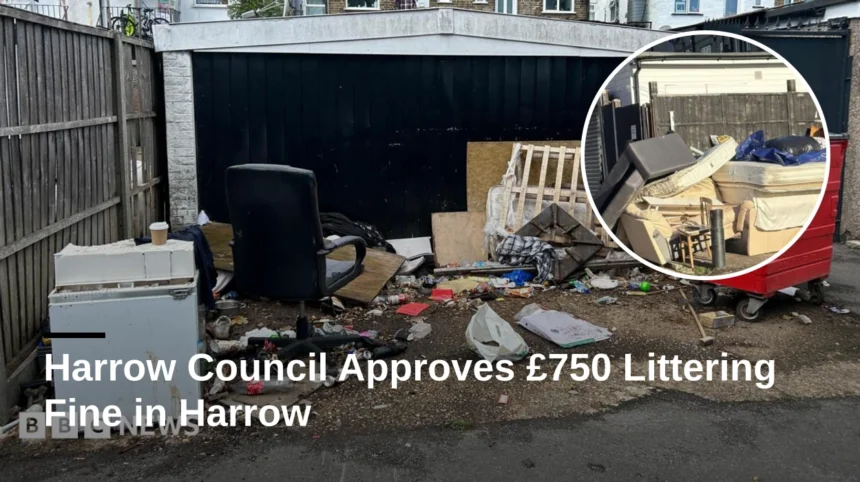
Harrow (West London Times) November 27, 2026 – Harrow Council has approved plans to introduce London’s highest littering penalty, increasing the standard fine from £500 to £750. The council will also raise penalties for breaches of Public Space Protection Orders from £100 to £500 and introduce a £5,000 penalty for the most serious fly-tipping offences. A reduced littering payment of £300 will be available for people who pay early.
- Key Points
- What penalties has Harrow Council approved?
- When will the highest fly-tipping penalty apply?
- Why has Harrow increased the penalties?
- What concerns have been raised about enforcement?
- What could the changes mean for people targeted by the enforcement scheme?
- Background to Harrow’s environmental enforcement
- What happens next for Harrow Council?
What penalties has Harrow Council approved?
According to BBC News, Harrow Council approved the changes as part of efforts to tackle persistent littering and illegal waste dumping. The £750 littering penalty is the highest permitted under the new national maximum for such offences.
Harrow News London reported that the council’s revised measures also include a £5,000 penalty for serious fly-tipping. London Local News reported that the standard fly-tipping penalty will remain £1,000, with a reduced payment of £500 when paid early. The new aggravated fly-tipping penalty will be £5,000, or £1,000 if paid early.
When will the highest fly-tipping penalty apply?
The £5,000 penalty will not apply to every fly-tipping case. BBC News reported that it will be reserved for offences involving aggravating factors, such as hazardous waste, repeated offending, multiple bags, harm to vulnerable people or dumping carried out by a business for financial gain.
The changes follow government regulations that came into force on September 1, 2026, allowing councils to issue littering penalties of up to £750 and fly-tipping penalties of up to £5,000.
Why has Harrow increased the penalties?
At a cabinet meeting reported by BBC News, Councillor Pritesh Patel said the government’s increase in available maximum penalties gave Harrow an opportunity to strengthen its response to environmental crime. He said most people followed the rules but that meaningful consequences were needed for those who did not.
Harrow Council has previously used CCTV cameras, online publication of suspected offenders’ images and videos, and court proceedings to address fly-tipping. Asian Standard Newspaper reported that officers issuing fines must wear body-worn cameras for the penalties to be valid.
What concerns have been raised about enforcement?
Reports cited by BBC News and GoLondon said the council faced criticism in January 2026 over the number of prosecutions at a fly-tipping hotspot on Weighton Road in Harrow Weald. Residents said the location needed clearing every few days, despite a CCTV camera being installed.
Only seven people had been sanctioned during the previous year, according to the reports. One resident told a February cabinet meeting that seven fines could be issued in a week. The council described the continuing problem as “disgusting”.
What could the changes mean for people targeted by the enforcement scheme?
The new penalties give Harrow Council stronger financial sanctions against people who drop litter, breach Public Space Protection Orders or dump waste illegally. The main audience will be suspected offenders, including individuals and businesses responsible for repeated, hazardous or financially motivated dumping.
The measures may also increase pressure on the council to demonstrate consistent enforcement, particularly at known hotspots such as Weighton Road. Their practical effect will depend on evidence gathering, lawful issuing of penalties and the council’s ability to identify offenders.
Background to Harrow’s environmental enforcement
Harrow Council has used CCTV, social-media appeals and prosecutions as part of its response to littering and fly-tipping. Residents in Harrow Weald have reported recurring waste problems at Weighton Road. The council was criticised after only seven people were sanctioned there during one reported year. The latest penalty changes were approved after national rules increased the maximum fines available to local authorities.
What happens next for Harrow Council?
Harrow Council will need to apply the new penalties in line with the relevant regulations and its stated criteria for aggravating factors. The council may face closer scrutiny over whether enforcement activity matches the increased fines, especially in areas with repeated dumping. Early-payment options will provide lower settlement amounts, while the highest penalties will be aimed at the most serious cases.