


Key Points
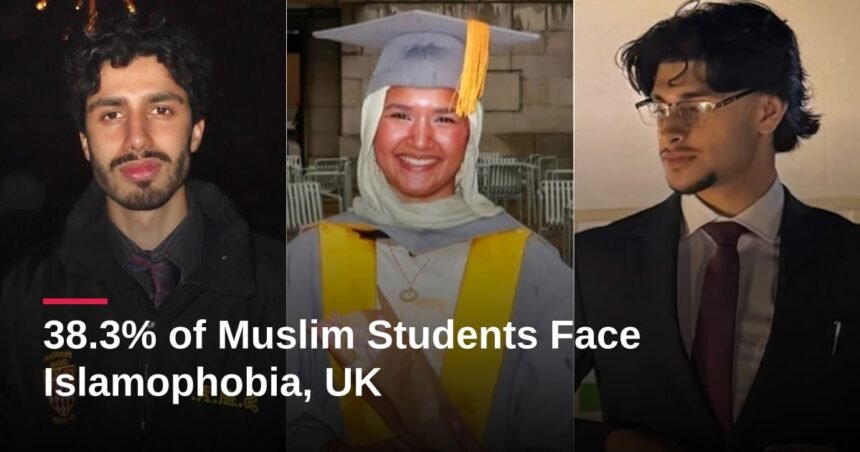
- A Federation of Student Islamic Societies survey found 38.3 per cent of Muslim students experienced Islamophobia at university.
- The survey covered 715 students at 63 higher education institutions.
- Women reported higher rates than men, while the figure reached 53 per cent among Muslim women at Russell Group universities.
- Many affected students said they did not report incidents or did not know how to report them.
- The Federation of Student Islamic Societies called for clearer definitions, staff training, stronger complaints procedures and protection for religious observance.
London (West London Times) November 25, 2026 – More than one in three Muslim students in the United Kingdom reported experiencing Islamophobia at university, according to a Federation of Student Islamic Societies survey reported by Al Jazeera and Wonkhe. The study found that 38.3 per cent of 715 respondents across 63 higher education institutions had personally experienced anti-Muslim hostility. The findings also identified barriers involving reporting, prayer arrangements, academic participation and discussion of Palestine.[1][2]
- Key Points
- How widespread was Islamophobia among Muslim students?
- Why did students say incidents were not reported?
- What did students and universities say?
- What measures has the Federation of Student Islamic Societies requested?
- What is the background to the development?
- How could this affect the audience of “We need to be seen”: Over a third of UK Muslim students face Islamophobia?
How widespread was Islamophobia among Muslim students?
As reported by Al Jazeera, 42 per cent of Muslim women and 34 per cent of Muslim men said they had experienced Islamophobia. Among Muslim women at Russell Group universities, the proportion rose to 53 per cent.[1]
The report included accounts of verbal abuse, alleged physical harassment and exclusion from university activities. One student said urine had been thrown at a group wearing hijabs, while another said they were told to return home if they did not like being in the United Kingdom.[1]
Students also described difficulties attending Friday prayers. The survey found that 21 per cent considered their timetables completely incompatible with daily and Friday prayers.[1]
Why did students say incidents were not reported?
Al Jazeera reported that 68 per cent of students who experienced Islamophobia did not feel able to report it, and almost half of all respondents did not know how to make a report. Among those who reported incidents, 45 per cent said their concerns were not handled properly.[1]
The survey also found that 45 per cent of respondents experienced a moderate to high mental-health impact. Three in five said they felt afraid or intimidated when expressing views on Palestine.[1]
Rahma Hegy, vice-president for student affairs at the Federation of Student Islamic Societies, said students often remained silent because they did not expect accountability.[1]
What did students and universities say?
Al Jazeera reported that Aayan Hashmi, a 20-year-old University of York law student and Islamic Society president, described support from his faculty and students’ union but said some Muslim students felt alienated by social activities centred on drinking. He also said students sometimes felt forced to choose between faith and studies when prayers conflicted with lectures.[1]
Syed Ali, a 21-year-old University of Cambridge politics and international relations student, told Al Jazeera that prejudice could be expressed through academic language and was sometimes difficult to distinguish from racism.[1]
Al Jazeera said it contacted the School of Oriental and African Studies, the University of York and the University of Cambridge but had not received responses by publication.[1]
Separately, Queen Mary University of London said it had adopted the United Kingdom Government’s non-statutory definition of anti-Muslim hostility after consultation with staff, students and representative groups. The university said its guidance was intended to support a respectful and inclusive campus while preserving academic freedom and freedom of speech.[3][6]
What measures has the Federation of Student Islamic Societies requested?
The Federation of Student Islamic Societies called on universities and students’ unions to adopt a definition of Islamophobia, train staff and student leaders, add anti-Muslim hostility to reporting systems and investigate complaints against staff outside their own departments.[1]
It also called for Friday prayers to be protected in timetables, examinations not to be scheduled on Eid and the Government’s Prevent programme to be reviewed. Wonkhe reported that the organisation also urged the Office for Students to address Islamophobic harassment in guidance and called for sector-wide expectations to be developed with Universities UK and GuildHE.[2]
What is the background to the development?
The findings were published in the Federation of Student Islamic Societies report Belonging in question – the Muslim students’ experience in higher education, which collected responses from Muslim students and Islamic Society committee members.[2]
Al Jazeera reported that the proportion of Muslim students describing experiences of Islamophobia had risen from about 25 per cent in 2005 to the current survey level.[1]
The report treats religious hostility and racialisation as overlapping experiences, noting that Muslim identity is often interpreted through both faith and race.[1]
Recent university initiatives include Queen Mary University of London’s adoption of the Government’s anti-Muslim-hostility definition and the University of Sussex’s Islamophobia Awareness Month activity.[3][4][6]
How could this affect the audience of “We need to be seen”: Over a third of UK Muslim students face Islamophobia?
The findings could increase pressure on universities to make reporting routes clearer, monitor complaints consistently and assess whether timetables accommodate religious observance. Students’ unions and university leaders may also face greater scrutiny over staff training, prayer facilities and protections for students discussing Palestine.
For Muslim students and their families, the survey may provide evidence that reported experiences are part of a wider institutional pattern rather than isolated incidents. Its effect will depend on whether universities publish measurable responses, investigate complaints independently and demonstrate that anti-Muslim hostility has consequences.