Key Points
- Lucy Powell criticised broadcasters for amplifying a prison message from Russell Brand.
- Brand’s wife, Laura Gallacher, read the message on their YouTube channel.
- Downing Street said an urgent investigation was examining whether Brand breached prison rules.
- The BBC said the clip was broadcast on Today because of an internal miscommunication and was removed from BBC Sounds.
- The Government is considering possible changes to the law on sexual consent involving older adults and teenagers.
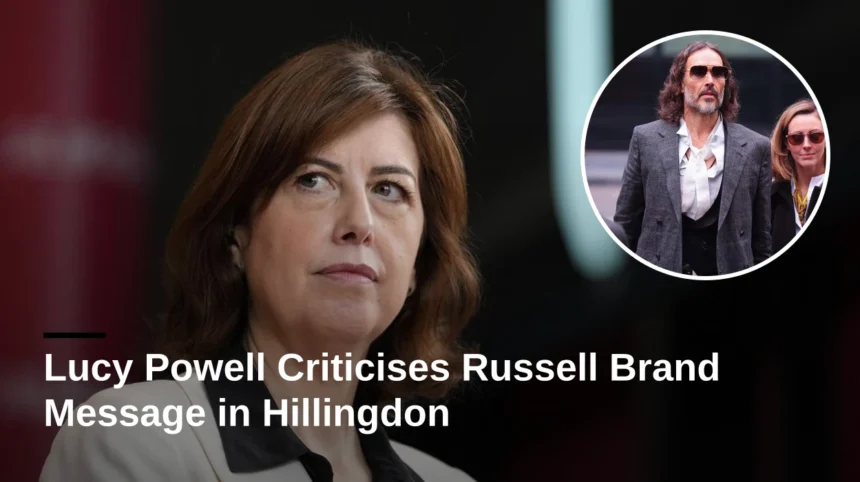
Hillingdon (West London Times) November 18, 2026 – Education Secretary and Labour deputy leader Lucy Powell has criticised media organisations for broadcasting a message from convicted sex offender Russell Brand, saying his words should not have been amplified. Brand’s wife, Laura Gallacher, read the message during a YouTube programme on Sunday, in which he maintained that he was not guilty of the offences for which he is serving a 10-and-a-half-year prison sentence. Downing Street has confirmed an urgent investigation into whether Brand breached prison rules by arranging for the message to be made public.
Why did Lucy Powell criticise broadcasters over Russell Brand’s message?
As reported by BBC News in its report “Minister criticises media for ‘amplifying’ Russell Brand’s prison message”, Ms Powell told LBC Radio that she was “appalled” and believed mainstream media organisations should not have transmitted the clip. She said Brand was showing no remorse or sensitivity towards victims after being convicted of serious sexual offences.
The Evening Standard reported that Ms Powell rejected the suggestion that her position amounted to censorship, saying the platform should not have been amplified. The clip was played by several outlets, including BBC Radio 4’s Today, ITV’s This Morning, Sky News, LBC and The News Agents podcast.
The BBC said the Today programme broadcast the clip in error because of miscommunication within the team. The recording was subsequently removed from the BBC Sounds catch-up service.
What is being investigated about Russell Brand’s prison message?
Downing Street described the message as “clearly appalling” and said it was being urgently investigated. Officials are examining whether Brand breached prison rules by providing a statement that was intended to be made public through another person.
Reports by The Independent, ITV News and other outlets said prisoners are prohibited from making statements that cause distress to victims, while contact with the media is permitted only in exceptional circumstances. The Government said prisoners cannot avoid those rules by arranging for someone else to publish or read their comments. Any disciplinary action will depend on the outcome of the investigation.
What wider legal changes are being considered?
Ms Powell said the Government was seriously examining possible changes to the law on sexual consent following Brand’s case. She said the issue was complex and had not been substantially changed for decades.
Home Secretary Shabana Mahmood said ministers needed to consider enforcement, the effect on teenage relationships and where any new legal boundary should be drawn. Mia Latter has waived her anonymity to allege that Brand raped her when she was 16 and has called for legal reform. Allegations involving entertainer David Walliams have also contributed to the wider debate.
Under current law, adults may have sex with consenting 16- and 17-year-olds. The discussion has included calls for a staggered age of consent to prevent older adults from using status or influence to pursue much younger partners.
How could the development affect Brand’s audience?
The dispute is likely to increase scrutiny of Russell Brand’s communications from prison and of platforms that repeat statements made on his behalf. For Brand’s supporters, the investigation and limited media coverage may make access to his messages more difficult; for victims and organisations focused on sexual violence, the debate may reinforce concerns about public platforms giving prominence to statements that deny wrongdoing. Any effect on his audience will depend on the prison investigation, broadcasters’ editorial decisions and any future changes to the law.