


Key Points
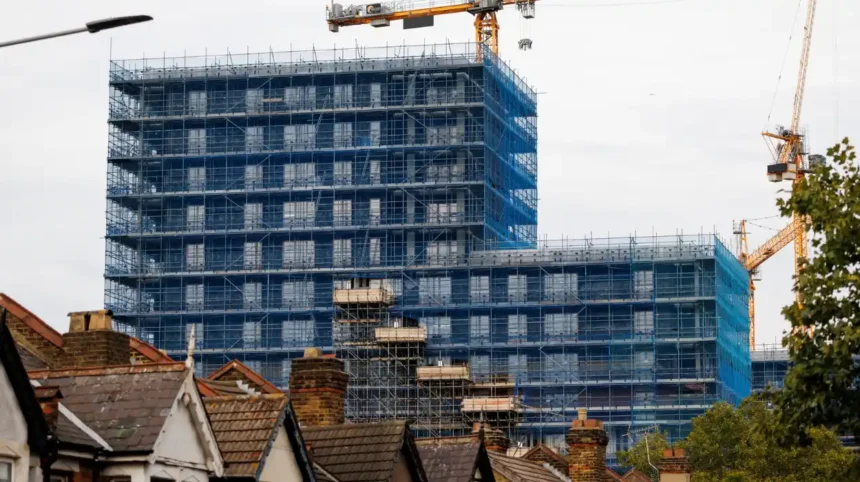
- Ealing Council has approved the formal marketing and sale of over 200 half-built homes following the sudden collapse of two key housing construction partners.
- Across six stalled development sites, a total of 230 half-built homes are affected, featuring 208 affordable homes comprising 174 London Affordable Rent properties, 34 shared ownership properties, and 22 open market sale properties.
- The original contractor for Southall Market Car Park, 4 Square Services, collapsed in mid-2023, while subsequent rescue plans involving Mackenzie Homes were terminated due to delivery and financial risks.
- Henry Construction Projects went into administration in 2023, halting construction on the Dean Gardens development in West Ealing, which featured 53 homes (including 31 affordable units), alongside the Chesterton and Evesham, Wood End, Shackleton Road, and Norwood Road schemes.
- Structural assessments revealed that several unfinished structures, including Chesterton, Evesham, Wood End, Shackleton Road, and Norwood Road, suffered from individual structural defects and risks, making them unviable to retain and pointing toward total demolition.
- Councillor Louise Brett, Deputy Leader of the Council and Cabinet Member for Safe and Genuinely Affordable Homes, approved a £200,000 budget for marketing agents and associated disposal costs.
Ealing, West London (West London Times) November 16, 2026 — As reported by Philip James Lynch of MyLondon, Ealing Council has initiated plans to sell more than 200 incomplete residential properties after two primary housing contractors went bust during construction, leaving multiple flagship regeneration sites stalled and facing potential demolition.
Why Are More Than 200 Half-Built Homes in Ealing Being Sold Off by the Local Authority?
The local authority has confirmed that six stalled development sites across the borough will be officially marketed for disposal after construction partners collapsed. As detailed by Philip James Lynch of MyLondon, the crisis stems from the sudden corporate failures of housing contractors in 2023, which left 230 half-built properties stranded.
Of these, 208 homes were designated as affordable housing, specifically broken down into 174 properties earmarked for London Affordable Rent, 34 shared ownership units, and 22 properties slated for open market sale.
The largest individual site affected is located at Southall Market Car Park, which accounts for 125 homes, all of which were originally designated as affordable housing. According to insights shared by Philip James Lynch of MyLondon, the council previously attempted to rescue the project by entering into a funding agreement with Mackenzie Homes.
However, that agreement was ultimately terminated by municipal leaders due to mounting delivery and financial risks, following the mid-2023 collapse of the original builder, 4 Square Services. Municipal officials note that Southall Market Car Park is the sole site where completing the standing structure may remain technically feasible, though it will still be put up for market sale.
Which Housing Schemes Are Facing Demolition Across West London?
The fallout extends significantly beyond Southall, impacting communities in West Ealing and Northolt where structural integrity has been compromised. As reported by Philip James Lynch of MyLondon, the Dean Gardens development in West Ealing was under construction by Henry Construction Projects before the firm collapsed in 2023.
That particular scheme comprised 53 homes, including 31 affordable units. Following comprehensive engineering evaluations, municipal authorities concluded that the Dean Gardens site is no longer viable to complete, making demolition the most likely outcome.
Similarly, the Chesterton and Evesham project—which originally planned for 25 Passivhaus homes entirely dedicated to affordable housing under a £40 million contract awarded to Henry Construction—is facing the wrecking ball. Philip James Lynch of MyLondon noted that the exact same fate awaits the Wood End site in Northolt, where homes were scheduled entirely for affordable rentals.
Additional schemes on Shackleton Road and Norwood Road, which collectively accounted for 16 affordable homes, have also been written off. Rigorous structural reviews conducted by council engineers determined that these developments suffered from severe individual structural defects and latent risks, rendering them entirely unviable to retain or finish.
What Alternative Options Did Ealing Council Consider Before Opting for Market Disposal?
Faced with stalled regeneration and political pressure, municipal leadership evaluated multiple pathways before settling on an open market sell-off. As highlighted by Philip James Lynch of MyLondon, council officers thoroughly examined the possibility of municipal redevelopment, which would have allowed the local authority to retain direct ownership of the properties and secure long-term rental income streams.
However, municipal officers ultimately advised that
“the most appropriate next step is to formally test the market for the disposal and development of the sites.”
Elaborating on the strategy, Ealing Council stated that
“the purpose of the proposed marketing exercise is not simply to obtain land value offers, but to identify the most effective route to unlocking the development potential of the sites.”
To operationalise this strategy, Councillor Louise Brett, Deputy Leader of the Council and Cabinet Member for Safe and Genuinely Affordable Homes, formally approved a £200,000 budgetary allocation to fund professional marketing agents and cover administrative and operational costs associated with the disposal process. Defending the decision, the local authority emphasised that it remains
“committed to supporting housing delivery and regeneration objectives, and marketing will enable officers to explore whether alternative delivery approaches could achieve improved outcomes for residents whilst reducing risk to the council.”
Background of the Development
The collapse of municipal housing partnerships in Ealing reflects a broader, systemic crisis within the United Kingdom construction sector, which has faced severe macroeconomic pressures in recent years. High inflation, skyrocketing prices for raw building materials, acute labour shortages, and soaring borrowing costs pushed several prominent mid-tier and major UK construction firms into administration during 2022 and 2023. Among them, Henry Construction Projects—which held multi-million-pound public sector contracts across London—collapsed into administration, leaving local authorities scrambling to secure half-built assets.
For Ealing Council, these developments represent a major setback in local housing targets, particularly regarding the delivery of genuinely affordable council homes and specialized green building standards like Passivhaus units. Municipal housing strategies across London have increasingly relied on joint ventures and private sector contractors to accelerate housebuilding targets amid acute local housing waiting lists. When these private delivery partners fail mid-build, local authorities are left holding unfinished, weather-exposed structures that rapidly deteriorate, forcing difficult financial trade-offs between expensive direct public rescue efforts and writing off investments via commercial disposal and demolition.
Prediction
This development is likely to have significant short- and long-term repercussions for local residents, council taxpayers, and housing applicants across the London Borough of Ealing. For families trapped on the local housing waiting list and those in desperate need of affordable or social rent properties, the loss—and potential demolition—of over 200 scheduled affordable homes represents a severe blow, further prolonging housing insecurity in West London. While Ealing Council hopes that marketing the sites to new commercial developers will eventually unlock viable construction pipelines, the transition period required for rebidding, planning reassessments, and site clearance will inevitably delay housing delivery by several years.
Furthermore, local council taxpayers may shoulder financial scrutiny regarding sunk costs tied to the failed contracts and the write-off of public infrastructure investments that are now slated for demolition. On the other hand, private developers and housing associations acquiring these cleared or partially standing plots may benefit from discounted land values, though they will inherit the challenge of building out viable schemes in a constrained economic climate. Ultimately, the local community and housing applicants will bear the immediate human cost of delayed regeneration, while the council faces mounting pressure to demonstrate that private market disposal can successfully deliver the affordable housing units originally promised.

