


Key Points
- Call for Reconsideration: Ealing Council has formally requested that the Mayor of London reconsider the ambitious housing targets set out in the draft London Plan.
- Economic Risk: The council warns that delivering around 11,000 proposed homes on designated industrial land could endanger approximately 7,000 local jobs.
- Strong Housing Record: Ealing highlighted its position as a leading borough for residential delivery, having constructed more new homes than any other London borough in 2024/25, alongside leading the capital in affordable housing units under construction.
- Balanced Strategy Demanded: Local authority leaders argue that strategic planning for the capital must function simultaneously as a robust economic plan, protecting local businesses, supply chains, and infrastructure.
- Long-Term Protection: Council officials emphasise that once industrial land is repurposed for residential development, it is virtually impossible to reclaim for commercial and manufacturing use.
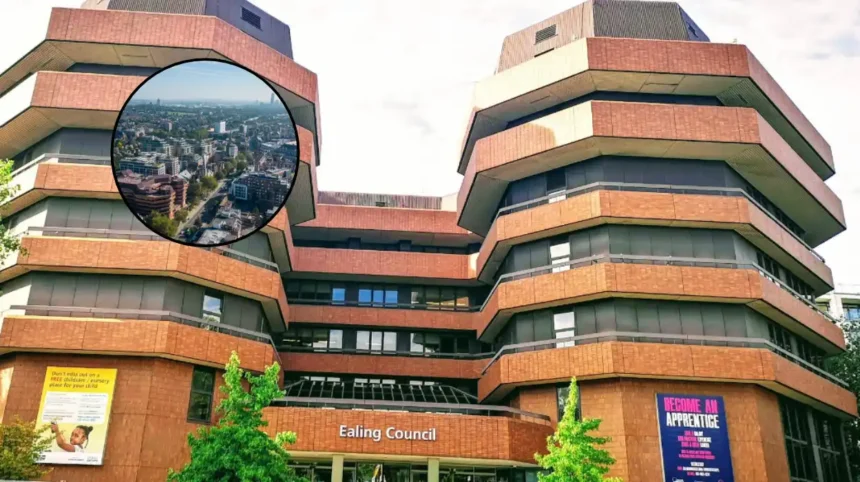
Ealing (West London Times) November 4, 2026 – uk/local/ealing/">Ealing Council has officially urged the Mayor of London to re-evaluate proposed housing targets within the draft London Plan, cautioning that the current scale of residential development slated for industrial sites could severely disrupt the local economy and jeopardise thousands of employment opportunities across the borough.
- Key Points
- Why is Ealing Council Challenging the Mayor’s Housing Targets?
- How Does Ealing’s Current Housing Delivery Compare Across London?
- What Have Council Leaders Said Regarding Industrial Land Protection?
- Background of the Development
- Prediction: How This Development Can Affect London Boroughs, Local Workers, and the Regional Economy
While the local authority has reaffirmed its explicit support for mayoral ambitions to expand London’s residential capacity—specifically regarding the delivery of genuinely affordable housing—it maintains that housing growth must not occur at the expense of strategic industrial infrastructure, commercial viability, and sustained business operations.
Why is Ealing Council Challenging the Mayor’s Housing Targets?
The debate centers on the ongoing revision of the London Plan, the overarching strategic framework that dictates the spatial development, transport planning, and infrastructure allocation across all 32 London boroughs and the City of London. In its formal consultation response, Ealing Council drew attention to the friction between regional housing quotas and local industrial retention.
According to figures outlined in the council’s submission, the proposed draft London Plan framework could mandate the construction of approximately 11,000 new residential units on land currently designated for industrial and commercial use within Ealing. Internal projections generated by the local authority estimate that converting these strategic sites for housing development could put roughly 7,000 local jobs at risk, undermining established supply chains and small-to-medium enterprise (SME) hubs.
Ealing Council contends that regional planning strategies must maintain a dual focus, operating seamlessly as both an aggressive housing blueprint and an economic preservation strategy that integrates employment, public transport, civic services, green spaces, and essential utilities.
How Does Ealing’s Current Housing Delivery Compare Across London?
In defending its stance, Ealing Council underscored its established track record in residential construction, rejecting any suggestion that its challenge stems from a reluctance to meet regional housing needs. The local authority recorded the highest volume of completed new homes among all London boroughs during the 2024/2025 financial year.
Furthermore, the borough currently holds the distinction of having the largest pipeline of genuinely affordable housing units actively under construction anywhere in the capital. Council representatives argued that these metrics demonstrate a proven commitment to homebuilding, asserting that their critique of the draft plan is rooted in practical spatial planning rather than resistance to development.
What Have Council Leaders Said Regarding Industrial Land Protection?
As reported by municipal news correspondents covering the consultation process, Council Leader Peter Mason stated that
“the borough wants ambitious housing delivery, but not at the expense of the jobs and investment needed to make it viable.”
Mason emphasised that sustainable community growth requires a synchronized approach where employment opportunities expand alongside the residential footprint.
Adding further detail on the commercial importance of the designated sites, Councillor Monica Hamidi stated that
“industrial land is essential to local business growth and supply chains, and once lost, it is very difficult to replace.”
Hamidi highlighted that industrial space provides foundational infrastructure for logistics, manufacturing, and service sector enterprise that cannot easily be relocated or recreated once rezoned for high-density housing.
Consequently, Ealing Council is lobbying regional policy makers for adjusted, realistic housing targets that align directly with long-term economic growth models, preserving vital industrial employment zones while maintaining steady residential construction.
Background of the Development
The London Plan serves as the statutory spatial development strategy for Greater London, issued by the Mayor of London and implemented across individual London boroughs. Periodically revised to account for demographic shifts, economic pressures, and national policy directives, the plan sets legally binding housing targets for each local authority while establishing overarching policies regarding environmental sustainability, industrial land use, transport links, and social infrastructure.
Over the past decade, Greater London has faced an acute housing shortage alongside rising rental costs and heightened demand for social homes. In response, regional planning directives have increasingly focused on intensifying land use within inner and outer boroughs, frequently identifying underutilised brownfield locations and industrial estates as primary opportunities for high-density residential redevelopment.
Ealing, situated in West London, represents one of the capital’s key economic corridors. Its industrial zones—particularly around areas such as Park Royal, one of Western Europe’s largest industrial parks—serve as vital operational nodes for food manufacturing, film and media production, logistics, and regional distribution networks serving the wider London economy. The tension between preserving these employment hubs and meeting regional residential quotas has increasingly become a central point of debate between borough leaders and City Hall planning officials during draft London Plan consultation cycles.
Prediction: How This Development Can Affect London Boroughs, Local Workers, and the Regional Economy
Should the Mayor of London maintain the proposed housing targets without modifications for industrial land protections, the decision is expected to trigger widespread structural shifts across West London’s socio-economic landscape:
- Impact on Local Employment and Workforce Stability: The potential loss of up to 7,000 industrial jobs would disproportionately affect light manufacturing, logistics, maintenance, and supply-chain workers across the borough. A contraction in industrial floor space could force existing businesses to relocate outside Greater London, leading to localized job losses or forcing employees into longer, more costly commutes to industrial hubs outside the capital.
- Consequences for Small and Medium Enterprises (SMEs): Small businesses reliant on affordable commercial rents and proximity to urban supply routes could face displacement. Higher land values resulting from residential rezoning typically increase commercial lease costs, pushing smaller logistics providers, trade counters, and local repair services out of the area.
- Strain on Civic Infrastructure and Services: Rapid residential construction in historically industrial areas places immediate pressure on existing social infrastructure, including primary healthcare facilities, school placements, public transport capacity, and utility networks, unless accompanied by matching developer contributions and infrastructure investment.
- Precedents for Regional Urban Policy: A compromise between City Hall and Ealing Council could establish a key benchmark for other outer London boroughs facing similar land-use conflicts. If Ealing successfully secures tailored housing targets that safeguard industrial land, it may prompt adjacent local authorities to demand similar economic protections, potentially altering the capital’s wider spatial development strategy for the coming decade.