

Sports centres in West London provide structured spaces for fitness, swimming, indoor games, outdoor sport, exercise classes and community activities. The area’s facilities serve residents, workers, students, families and visitors across boroughs including uk/local/ealing/">Ealing, Hounslow, fulham/hammersmith/">hammersmith-and-fulham/">Hammersmith and Fulham, and Kensington and Chelsea.
- What are sports centres in West London?
- Which types of sports centres are available in West London?
- What are the major sports centres serving West London?
- Why is Gunnersbury Park Sports Hub significant?
- How do borough leisure centres support local activity?
- What sports can people play at West London sports centres?
- How do sports centres support children and families?
- How accessible are sports centres in West London?
- How do booking and membership systems work?
- What role do sports centres play in West London communities?
- How do sports centres support local clubs?
- How do sports centres connect with parks and public spaces?
- How should people choose a sports centre in West London?
- What is the future of sports centres in West London?
- Why does long-term sports planning matter?
- How will accessibility and inclusion shape future facilities?
- Why are sports centres important to West London?
West London has a broad sports infrastructure. Facilities range from large multi-sport hubs with football pitches and tennis courts to local leisure centres with swimming pools, gyms and fitness studios. This network supports both organised sport and everyday physical activity.
Local authorities play an important role in maintaining access to sport. Ealing Council, for example, lists numerous indoor and outdoor sports centres across the borough, while Kensington and Chelsea supports major leisure centres and a wider network of sports facilities.
Understanding the different types of sports centres helps people choose facilities that match their activity, location, accessibility and booking requirements.
What are sports centres in West London?
Sports centres in West London are dedicated facilities for organised sport, exercise and physical activity. They include leisure centres, sports halls, swimming pools, gyms, outdoor pitches and specialist venues that provide structured access for individuals, families, clubs, schools and community groups.
A sports centre is a purpose-built or adapted facility designed to support physical activity. The term covers several types of provision. A leisure centre generally combines fitness and recreational services. A sports hub brings several indoor and outdoor facilities together at one location. A specialist venue focuses on particular activities such as climbing, tennis or football.
West London’s geography creates demand for different forms of provision. Dense inner districts require accessible indoor facilities, while larger parks and open spaces support outdoor pitches and multi-sport developments.
Public access is an important feature of the regional sports network. Many council-supported centres offer pay-and-play activities alongside membership options. Pay-and-play means users pay for an individual activity or session rather than maintaining a full membership.
What facilities do modern sports centres provide?
Modern sports centres commonly provide gyms, sports halls and fitness studios. Examples include cardiovascular equipment, badminton courts and instructor-led exercise spaces.
Larger centres often include swimming pools, changing facilities, spectator areas, cafés and rooms for community use. Outdoor facilities expand the range of activities through football pitches, cricket areas, tennis courts and multi-use games spaces.
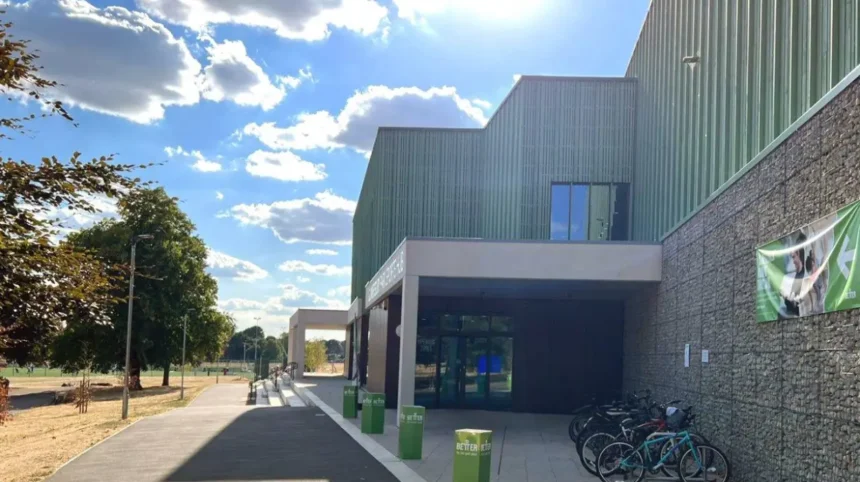
Gunnersbury Park Sports Hub demonstrates the multi-sport model. The facility opened in 2021 and includes a gym, sports hall, studios, outdoor pitches and eight tennis courts. Its facilities support activities including badminton, basketball, football, cricket, rugby and tennis.
Why does West London need a varied sports network?
Different activities require different spaces. Swimming requires pools with appropriate safety and changing facilities. Indoor team sports require sports halls. Football and cricket require suitable pitches. Strength training requires specialist gym equipment.
A varied network also supports different users. Children use junior coaching and holiday programmes. Adults use gyms and fitness classes. Sports clubs require regular training and competition space. Older residents benefit from accessible exercise and wellbeing programmes.
The range of facilities across West London therefore supports participation throughout different stages of life.
Which types of sports centres are available in West London?
West London contains several types of sports centres, including public leisure centres, multi-sport hubs, school-based community facilities and specialist sports venues. Each type provides different equipment, spaces and booking arrangements for fitness, swimming, team sports, coaching and recreational activity.
The most familiar type is the public leisure centre. These facilities often combine a gym with swimming, exercise classes or indoor sports.
Multi-sport hubs provide a wider concentration of facilities. Gunnersbury Park Sports Hub is an example, combining indoor exercise spaces with grass and artificial pitches and tennis courts.
School-based sports centres form another part of the local network. Schools sometimes open their sports halls, courts and pitches for community use outside teaching hours. Ealing Council’s sports-centre listings include facilities associated with local schools as well as dedicated leisure venues.
What is the difference between a leisure centre and a sports hub?
A leisure centre generally focuses on everyday recreation and fitness. Common facilities include a swimming pool, gym and exercise studios.
A sports hub concentrates several sporting facilities at one location. It often includes larger outdoor provision and space for organised clubs, competitions and school programmes.
The distinction is not absolute. Individual centres vary according to their location, size and investment history. Users should therefore check the facilities offered at a specific venue rather than relying only on its name.
What are specialist sports venues?
Specialist venues provide facilities designed for particular activities. Examples include climbing centres, tennis facilities and football centres.
Westway Sports Centre in Kensington and Chelsea forms part of the area’s wider specialist provision. The borough also identifies Westway as a location for football, cricket and climbing activities.
Specialist venues are important because some sports require equipment or environments that standard leisure centres do not provide.
What are the major sports centres serving West London?
Major sports centres in West London include large public leisure facilities and multi-sport venues across Ealing, Hounslow and Kensington and Chelsea. Gunnersbury Park Sports Hub, Kensington Leisure Centre and Chelsea Sports Centre are important examples of accessible community provision.
Gunnersbury Park Sports Hub is located on Popes Lane in W3. It serves communities around Acton, Chiswick, Brentford and neighbouring areas.
The centre contains a 100-plus station gym, a five-court sports hall, fitness studios and extensive outdoor facilities. Its outdoor provision includes tennis courts and grass and artificial playing areas.
Kensington Leisure Centre is another major public facility. The Royal Borough of Kensington and Chelsea identifies it as a principal leisure centre and provides access to activities including swimming, gym use, badminton and fitness classes.
Chelsea Sports Centre serves another part of the borough’s sports network. The council lists the centre for gym use, swimming and programmed physical activities.
Why is Gunnersbury Park Sports Hub significant?
Gunnersbury Park Sports Hub combines indoor and outdoor sport at a single location. This structure allows users to move between individual exercise, team sports and pitch-based activities.
The centre’s sports hall accommodates activities including badminton, basketball, handball, futsal, netball and volleyball. The outdoor areas provide football, rugby, cricket and tennis facilities.
Accessibility is also part of the venue’s infrastructure. Published facility information identifies wheelchair adaptations, accessible changing, disabled toilets, accessible parking and lift access.
How do borough leisure centres support local activity?
Borough leisure centres provide regular and predictable places for physical activity. Their importance extends beyond competitive sport.
Swimming sessions support recreational exercise and formal lessons. Fitness studios host scheduled classes. Sports halls provide indoor courts and group activity space. Gyms support individual training.
Kensington and Chelsea’s public leisure network also demonstrates how centres can provide programmes for different groups, including disability sports and scheduled adult activities.
What sports can people play at West London sports centres?
People can participate in a wide range of sports at West London centres, including swimming, football, tennis, badminton, basketball, cricket, volleyball and fitness training. Available activities depend on each venue’s buildings, equipment, pitches and organised programme.
Indoor sports are particularly important in London’s built environment. Sports halls provide protected, bookable spaces for activities that need marked courts and consistent surfaces.
Badminton is commonly played in multi-court halls. Basketball and volleyball also use indoor court space. Futsal, a small-sided form of football played on a hard indoor surface, is available at some larger venues.
Outdoor sports depend on the availability of pitches and courts. Football is widely provided through grass and artificial pitches. Tennis requires marked courts and nets. Cricket requires prepared wickets or nets for practice and matches.
What fitness activities are available?
Fitness provision usually includes cardiovascular training, resistance training and group exercise.
Cardiovascular training uses equipment such as treadmills, exercise bikes and rowing machines. Resistance training uses machines, free weights and bodyweight exercises to develop muscular strength.
Group exercise includes scheduled sessions led by instructors or delivered through digital programmes. Common examples include yoga, Pilates, cycling and high-intensity interval training.
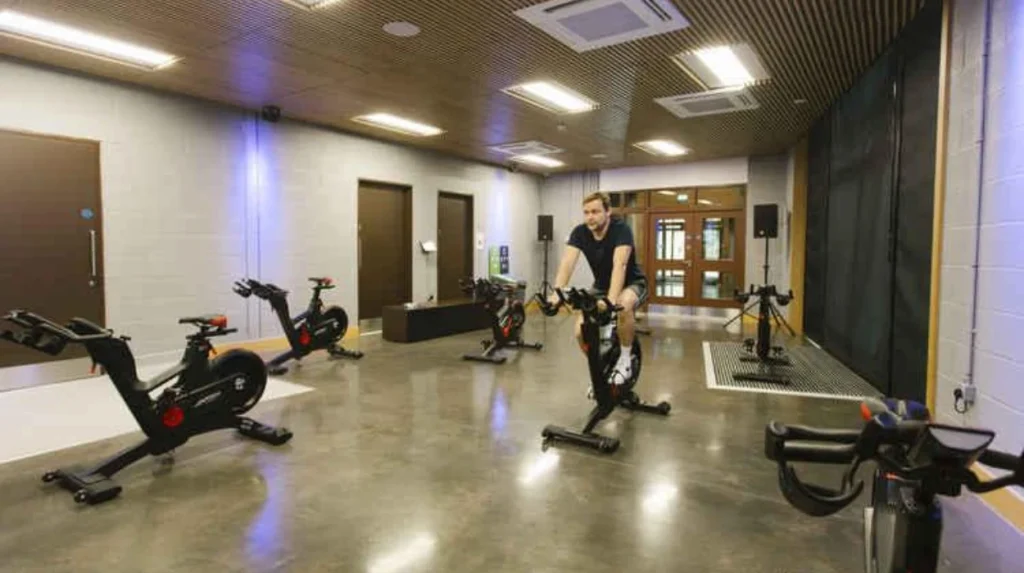
Gunnersbury Park Sports Hub provides both instructor-led and studio-based exercise facilities, alongside a dedicated group cycling space.
Where can people find swimming facilities?
Swimming is generally provided through public leisure centres rather than standalone sports halls.
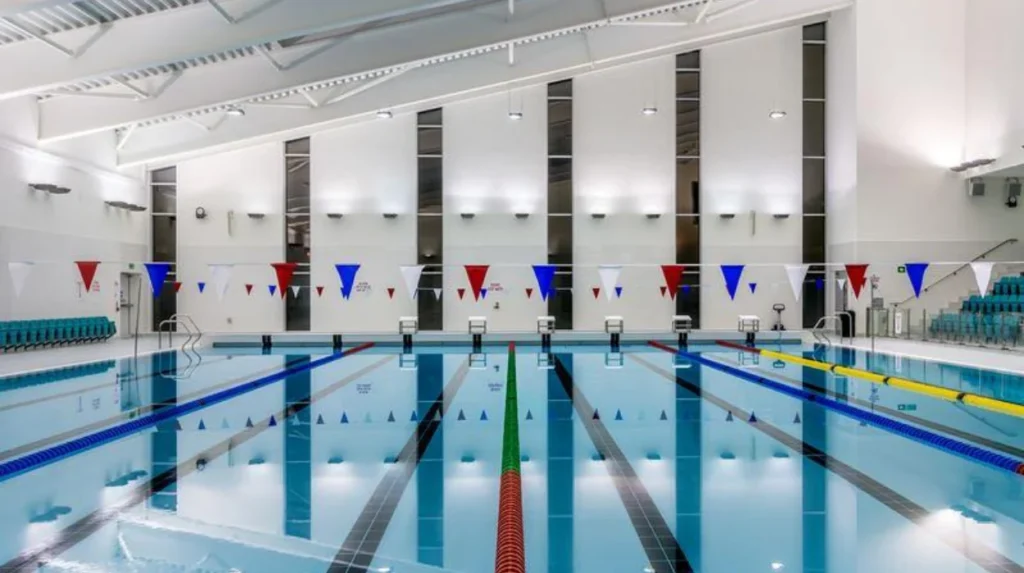
Kensington Leisure Centre and Chelsea Sports Centre are listed by the Royal Borough of Kensington and Chelsea as locations for swimming activities. The council also provides information about lane swimming and swimming programmes at these facilities.
Pool programmes normally separate activities into defined sessions. Examples include lane swimming, general swimming and lessons. Session times vary according to programming requirements.
How do sports centres support children and families?
West London sports centres support children and families through swimming lessons, junior fitness programmes, holiday activities, sports coaching and accessible recreation. Structured sessions introduce young participants to physical activity while providing organised spaces for learning, exercise and team sport.
Children require facilities and programmes suited to their age and stage of development. Sports centres therefore often separate junior activities from adult programmes.
Swimming lessons are a major example. Lessons use structured groups and qualified instructors to teach water confidence and swimming skills.
Team-sport coaching provides another route into regular activity. Football, basketball, gymnastics and tennis programmes give children scheduled opportunities to learn rules and physical skills.
What family activities are available?
Family activities include swimming, junior coaching and holiday programmes. Examples include tennis camps, multi-sport sessions and organised swimming activities.
Gunnersbury Park Sports Hub hosts programmes for younger participants through community sports organisations, including football, gymnastics, dance and multi-sport activities.
Parents should check age requirements before booking. Junior gym access, coached sessions and swimming activities often operate under specific supervision rules.
Why are local sports programmes important?
Regular programmes create structured opportunities for participation. They provide consistent times, equipment and supervised spaces.
Sports clubs also depend on access to local facilities. Regular bookings allow teams to train, organise leagues and develop youth programmes.
This relationship makes sports centres part of the wider community sports infrastructure rather than simply places for individual exercise.
How accessible are sports centres in West London?
Accessibility at West London sports centres includes step-free routes, accessible changing areas, adapted toilets, parking and programmes for disabled participants. Facilities differ between venues, so users should check current accessibility information and activity arrangements before travelling.
Physical accessibility starts with the route into a building. Step-free entrances and ramps support wheelchair users and people with limited mobility.
Internal design also matters. Accessible toilets, changing rooms and lifts improve movement through larger facilities.
Gunnersbury Park Sports Hub publishes accessibility features including wheelchair adaptation, accessible changing, ramp access and accessible parking.
How do programmes improve access to sport?
Accessible participation also depends on the activities offered.
Kensington and Chelsea lists disability sports activities at Kensington Leisure Centre, including badminton, boccia, gym sessions and swimming. Boccia is a precision ball sport designed for players with severe physical disabilities and is also played recreationally by a wider range of participants.
Scheduled inclusive activities give participants clearer information about when facilities and staff support are available.
What should visitors check before booking?
Visitors should check four main areas: accessibility, equipment, session times and booking requirements.
Examples include step-free access, pool hoists, accessible changing rooms and specialist equipment.
Current information is important because programmes, maintenance work and opening hours change. Official centre pages provide the most reliable information before a visit.
How do booking and membership systems work?
West London sports centres generally use a combination of memberships, pay-and-play access and advance bookings. The correct option depends on the activity, facility availability and operator, while popular courts, classes and pitches often require reservations before arrival.
Membership provides ongoing access under the terms set by the operator. It is commonly used for gyms and regular exercise programmes.
Pay-and-play access allows users to purchase individual activities. This structure is useful for occasional swimming, court hire or one-off classes.
Advance booking helps operators manage capacity. It is particularly important for sports halls, tennis courts, swimming sessions and fitness classes.
What should users know about facility hire?
Facility hire is used by clubs, schools, businesses and informal groups.
A sports hall can be hired for activities such as badminton or basketball. Outdoor pitches can be hired for football or rugby. Community rooms provide space for meetings and organised programmes.
Gunnersbury Park Sports Hub includes indoor and outdoor spaces that support both individual users and organised groups.
Hire charges and booking rules depend on the operator and the type of activity.
Are discounts available for local residents?
Some local authorities operate resident schemes.
The Royal Borough of Kensington and Chelsea offers a resident card that provides eligible residents with discounts on activities at Kensington Leisure Centre and Chelsea Sports Centre. The scheme includes specified swimming concessions and advance booking benefits.
Eligibility requirements should always be checked through the relevant authority or centre.
What role do sports centres play in West London communities?
Sports centres are important community infrastructure because they provide shared spaces for exercise, organised sport, learning and social activity. Their facilities support local clubs, schools and residents while helping boroughs maintain accessible opportunities for regular physical activity.
Community infrastructure refers to facilities that support everyday social and public life. Sports centres form part of this infrastructure alongside parks, libraries and community buildings.
Their value comes from shared use. A single sports hall can serve a school programme during one period, a local club later in the day and recreational users during evenings or weekends.
This shared model increases the use of specialist spaces and equipment.
How do sports centres support local clubs?
Sports clubs need regular access to suitable facilities. Football teams need pitches. Volleyball clubs need marked courts. Tennis clubs need courts and coaching space.
The Gunnersbury Park facility hosts a range of local sports organisations and educational users. Its sports hall and outdoor facilities support structured participation by clubs and community groups.
Regular access supports training schedules, competitions and youth development.
How do sports centres connect with parks and public spaces?
West London contains both indoor facilities and park-based sports provision.
Gunnersbury Park illustrates this connection. The sports hub is located within a major public park environment, combining a dedicated building with outdoor pitches and courts.
Ealing Council identifies the wider park as an important recreational space with sporting facilities, gardens and other public amenities.
This combination gives users access to organised facilities and open outdoor environments.
How should people choose a sports centre in West London?
The best way to choose a West London sports centre is to compare location, available activities, accessibility, cost, booking rules and opening times. Users should select a venue that matches their regular activity needs and confirm current details through official providers.
Location affects whether a facility is practical for regular use. A centre near home, work or public transport is easier to incorporate into a weekly routine.
Activity availability is the next consideration. A swimmer needs pool access. A tennis player needs courts. A football group needs an appropriate pitch.
The size of the facility also matters. A large sports hub provides a broad range of activities, while a smaller local centre often provides convenient access to core fitness services.
What should regular gym users consider?
Regular gym users should compare equipment, opening hours and membership conditions.
Equipment categories include cardiovascular machines, resistance equipment and free weights. Examples include treadmills, cable machines and dumbbells.
Opening hours affect the practical value of membership. Gunnersbury Park Sports Hub publishes different operating times for weekdays and weekends, with individual facilities also having separate schedules.
Users should confirm the current timetable before committing to a membership.
What should sports teams consider?
Teams should focus on facility dimensions, surface quality, changing provision and booking availability.
Football teams need suitable pitch formats. Tennis groups need enough courts for the planned number of players. Indoor teams need reliable access to sports halls.
Long-term booking arrangements are especially important for organised clubs because regular training depends on consistent facility access.
Explore More Area Guide
Outdoor Gyms in West London: Free Parks and Fitness Facilities
Running Routes in West London: Best Parks and Riverside Trails
What is the future of sports centres in West London?
The future of West London sports centres depends on maintaining existing facilities, improving accessibility and responding to changing participation patterns. Local strategies increasingly treat leisure, physical activity and sport as essential community infrastructure requiring coordinated long-term planning.
Sports facilities require continuous investment. Buildings need maintenance. Equipment requires replacement. Outdoor pitches need regular management.
Local planning also influences future provision. Hounslow’s infrastructure planning recognises leisure, physical activity and sport as a specific area of community infrastructure and identifies multiple leisure facilities serving the borough.
Ealing’s sports-facility strategy also assesses indoor and outdoor provision across the borough and identifies the importance of accessible community facilities.
Why does long-term sports planning matter?
Population change creates new demand for facilities. New housing developments increase the number of potential users in an area.
Planning therefore considers existing capacity alongside future needs. Indoor sports halls, swimming pools and outdoor pitches all require land, investment and long-term management.
Protecting and improving facilities supports continued public access.
How will accessibility and inclusion shape future facilities?
Accessibility is becoming a central part of facility design and operation.
Future improvements focus on physical access, inclusive programming and better information for users. Examples include accessible changing rooms, adapted equipment and sessions designed for specific participation needs.
Sports centres that serve a wide range of residents provide stronger community infrastructure and support broader participation.
Why are sports centres important to West London?
Sports centres are essential to West London because they provide accessible places for exercise, recreation, organised competition and community activity. Their combined network of leisure centres, sports halls, pools, gyms and outdoor facilities supports physical activity across the region.
West London’s sports infrastructure is diverse because the area’s communities and physical spaces are diverse.
Large multi-sport hubs provide extensive indoor and outdoor facilities. Local leisure centres offer regular access to swimming, fitness and recreational activity. Specialist venues support sports that require dedicated equipment and environments.
Facilities such as Gunnersbury Park Sports Hub, Kensington Leisure Centre and Chelsea Sports Centre demonstrate the different ways public sports provision operates across West London. Together with school facilities, clubs, parks and specialist venues, they form a wider network for participation.
For residents, the key task is identifying the right facility for the activity required. Location, accessibility, booking arrangements and available equipment should guide that choice.
For West London as a whole, continued investment in sports centres remains important for maintaining accessible opportunities for fitness, recreation and organised sport. A well-connected network of facilities supports individuals, families, schools and community organisations and keeps physical activity embedded within everyday urban life.
What are the main sports centres in West London?
Major sports facilities in West London include Gunnersbury Park Sports Hub, Kensington Leisure Centre and Chelsea Sports Centre. The wider area also has local leisure centres, gyms, swimming pools, sports halls, tennis courts and outdoor playing fields.