Key Points
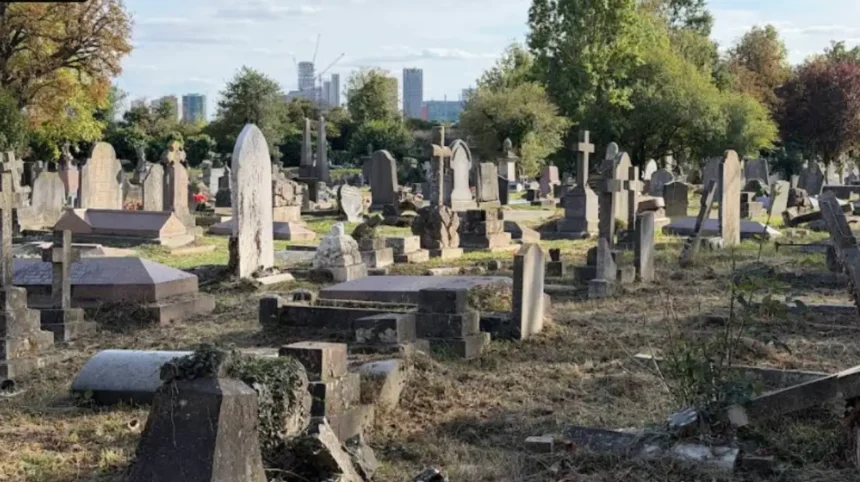
- Location and Atmosphere: Kensal Green Cemetery in North West London offers tree-lined avenues, grand Victorian monuments, and an atmospheric setting for an autumn stroll.
- Historical Origins: Built in 1833 as London’s first commercial cemetery to tackle severe urban overcrowding, it was originally named All Souls Cemetery and run by the General Cemetery Company.
- Architectural Highlights: The site features Greek Revival buildings, an entrance arch, two chapels, colonnades, and underground catacombs.
- Notable Burials: Over 700 notable individuals rest here, including engineers Isambard Kingdom Brunel and Sir Marc Isambard Brunel, computer pioneer Charles Babbage, literary figures like Anthony Trollope, and British royalty such as Prince Augustus Frederick, Duke of Sussex.
- Modern Status: It remains a working cemetery where visitors are advised to keep visits respectful, stick to permitted paths, and utilize public transport like the Bakerloo line to reach Harrow Road.
London, My London (West London Times) October 31, 2026 — As reported by Véronique Hawksworth, AI Content Editor of MyLondon, individuals seeking a seasonal walk steeped in history rather than modern plastic decorations can explore the historic grounds of Kensal Green Cemetery, which features tree-lined avenues, grand Victorian architecture, and underground catacombs.
What Makes Kensal Green Cemetery a Unique Destination for Autumn Walks?
As detailed by Véronique Hawksworth of MyLondon, Kensal Green Cemetery serves as an atmospheric location for an autumn wander as London’s first commercial cemetery. Hawksworth noted that “its ornate memorials and Greek Revival buildings give visitors plenty to take in, while its history stretches from royal burials to pioneering engineers and celebrated writers”.
The site is well known for impressive Victorian architecture, which includes an entrance arch, two chapels, colonnades, and catacombs that create an ideal backdrop for seasonal exploration. However, Hawksworth emphasized a crucial reminder for the public, stating that “it’s important for visitors to note that this is a working cemetery, so keep visits respectful and stick to permitted paths and visiting hours”.
Who Are the Notable Figures and Royalty Buried at the Cemetery?
According to reporting by Véronique Hawksworth of MyLondon, more than 700 notable people are interred within the grounds of Kensal Green Cemetery. Among the prominent figures listed by Hawksworth are engineer Isambard Kingdom Brunel alongside his father, Sir Marc Isambard Brunel, and computer pioneer Charles Babbage.
Literary enthusiasts can locate the final resting places of writers such as William Makepeace Thackeray, Anthony Trollope, and Wilkie Collins. Furthermore, the cemetery holds artistic and theatrical figures including artist John William Waterhouse and actor George Grossmith, alongside royal residents like Prince Augustus Frederick, Duke of Sussex, and Princess Sophia, both children of King George III.
How Did Kensal Green Cemetery Originate and Evolve?
As outlined by Véronique Hawksworth of MyLondon, Kensal Green officially opened in 1833 when overcrowding across London’s burial grounds escalated into a serious urban crisis. Parliament authorized seven commercial cemeteries on what were then the outer edges of the city, collectively recognized today as the “Magnificent Seven”.
Originally designated as All Souls Cemetery, the grounds were constructed and managed by the General Cemetery Company, with landscaping reportedly inspired by Père Lachaise Cemetery in Paris. Hawksworth noted that “the Duke of Sussex’s burial in 1843 boosted its popularity, and it became a favoured resting place for wealthy Victorians”. Additionally, the Friends of Kensal Green Cemetery, established in 1989, have continually contributed to the care of the site and the organization of guided tours.
How Can Visitors Access the Cemetery From Central London?
Providing travel guidance, Véronique Hawksworth of MyLondon explained that visitors can take the Bakerloo line in the direction of uk/local/harrow/">Harrow & Wealdstone and exit at Kensal Green station. Boarding is available from various central London stations, including Waterloo, Charing Cross, Oxford Circus, and Paddington.
From Kensal Green station, the main entrance situated on Harrow Road is reachable via a short walk. Transport for London (TfL) service updates should be checked prior to departure, alongside confirmation of the cemetery’s operating hours and entry guidelines. Details concerning specific historic graves and guided walks can also be found via the Friends of Kensal Green Cemetery platform.
Explore more fulham/hammersmith/">hammersmith-and-fulham/">Hammersmith and Fulham News:
Altheome Relocates to ARC West London Labs in Hammersmith 2026
LBHF Links Property Development With Business Growth London West 2026
Background of the Particular Development
The continued public interest in historic Victorian cemeteries like Kensal Green reflects a broader cultural shift toward heritage tourism and urban conservation. Established during the 1830s sanitary crisis when inner-city churchyards could no longer cope with London’s booming population, the Magnificent Seven cemeteries transformed burial practices by introducing park-like, landscaped grounds intended for both quiet contemplation and public respite. Over the decades, organizations such as the Friends of Kensal Green Cemetery have worked alongside local authorities and heritage groups to safeguard these historic structures against weathering and urban development, ensuring that architectural marvels like the catacombs and neoclassical chapels remain accessible to future generations.
This sustained public engagement with historical landmarks directly affects local communities, heritage conservationists, and visitors in West London. As interest in architectural tourism and seasonal walking trails grows, local transport hubs, small businesses, and preservation societies can anticipate increased foot traffic around the Harrow Road corridor. While heightened visibility helps secure funding and community support for ongoing restoration projects, it also requires careful visitor management to balance public access with the respectful operation of an active cemetery.