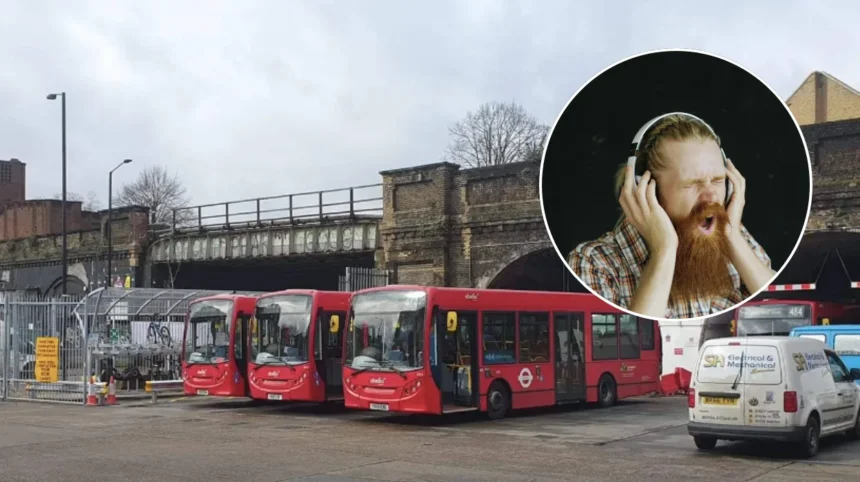
Key Points
- A new campaign has been launched by the UK government called ‘share the carriage, not the noise’ in order to fight antisocial behavior on public transportation.
- Any traveler who is found listening to loud music or watching movies, vaping, littering, or acting threateningly on buses will be issued a fixed penalty notice and fined up to GBP 100.
- Prime Minister Andy Burnham said that this initiative will help to stop the passengers from playing loud media on their cell phones.
- This power has been given to bus operators under the Bus Services Act 2025 which allows all the local transport authorities of England to set local policies.
- Bus drivers will not have the responsibility of penalizing anyone, but authorized officers like Transport Safety Officers and the Police will do so.
- However, any rail passenger who will refuse to listen to the authorized rail officers can get fined up to GBP 1000.
London, (West London Times) October 19, 2026 – Passengers using public transport across the United Kingdom are facing stringent new penalties under a government crackdown designed to eliminate everyday nuisances such as loud mobile phone audio, vaping, and littering.
What are the new UK government public transport fines and rules for passengers?
As reported by Ayokunle Oluwalana of MyLondon, the UK government has rolled out a major initiative to tackle low-level antisocial behaviour on buses and trains. Under the newly introduced ‘share the carriage, not the noise’ campaign, commuters engaging in disruptive activities face immediate financial repercussions.
As detailed by Ayokunle Oluwalana of MyLondon, passengers can now receive a fixed penalty fine of up to GBP 100 for littering, playing music or videos out loud, vaping, and displaying threatening behaviour on buses.
Addressing the rationale behind the policy, Prime Minister Andy Burnham stated that:
“We’ve all been on the train when someone starts blasting music or videos from their phone. It gets on your nerves and can quickly spoil the journey.”
Prime Minister Andy Burnham further added:
“So, we’re launching a nationwide campaign reminding passengers to use headphones on trains. On top of that, we’re giving local leaders new powers to tackle loud music, vaping and littering on buses. It’s a simple thing, but one that will make journeys that little bit better for all of us.”
Explore more UK News:
Beckenham entrepreneur, 27, shortlisted for national Emerging Leader of the Year award
David Bowie’s 80th Birthday Will Be Remembered With Great Celebrations in London
How will local authorities and transport officers enforce these new penalties?
The legislative backing for these local transport powers originates from the Bus Services Act 2025. This framework allows all local transport authorities across England to establish and enforce tailored local regulations.
To ensure safety and operational efficiency, bus drivers will not carry the burden of issuing or enforcing penalties. Instead, as outlined in the reporting by Ayokunle Oluwalana of MyLondon, authorised officers—including Transport Safety Officers and the Police—will be tasked with managing incidents and dealing with offenders.
While bus passengers face fines of up to GBP 100, the penalties for rail travellers refusing to cooperate are significantly steeper. Rail passengers could face fines scaling up to GBP 1000 if they are instructed to stop by authorised rail officers and refuse to comply with instructions to improve their behaviour.
Background of the particular development
The introduction of these strict fixed penalty notices represents a culmination of mounting public pressure regarding passenger etiquette and antisocial behaviour on public transportation networks. Over recent years, transport authorities across the United Kingdom have noted a rise in complaints concerning personal device noise, electronic cigarette usage in enclosed spaces, and general disrespect for shared communal travel environments.
The legislative foundation was laid by the Bus Services Act 2025, which decentralised enforcement capabilities and empowered local transport leaders to tackle regional transit issues directly. By bridging national campaign messaging with localised enforcement powers, the government has moved from voluntary advisory codes—such as polite requests to use headphones—to legally backed financial deterrents handled by specialised transport safety personnel rather than frontline vehicle operators.
This regulatory shift is expected to significantly alter daily commuting habits for millions of daily public transport users across England. Commuters can anticipate a noticeably quieter and more orderly travel environment on both buses and trains as the threat of a GBP 100 or GBP 1000 fine deters disruptive habits like loud media playback and vaping. For public transport passengers, the development means heightened accountability, with immediate financial consequences for ignoring basic carriage etiquette. At the same time, transport workers will likely experience reduced verbal conflicts, as trained safety officers and police assume responsibility for penalising non-compliant individuals.