


Key Points
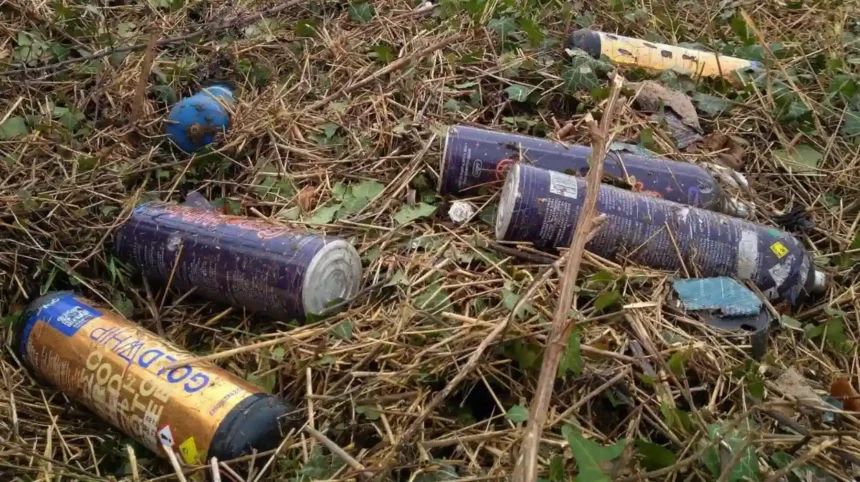
- Three people have been apprehended as a result of a police raid in south-west London, where 450 bottles of nitrous oxide were confiscated.
- The apprehension took place last Friday night on September 25 after a number of plainclothes police officers encountered a van allegedly holding the gas for its distribution during night-time parties.
- The search of the vehicle revealed the 450 nitrous oxide bottles along with some cash.
- According to breaking news reporter Samuel Turner from the West London Times, a spokesperson from the Metropolitan Police said “The illegal supply and use of nitrous oxide could have dangerous effects on our town.”
- In addition, the Metropolitan Police warned that fights might break out between suppliers, and use of the substance poses dangers to health.
- All three suspects who have been apprehended are being investigated by the police at the moment.
- Nitrous oxide falls under the category of a Class C drug in the UK. Its possession and supply for unlawful inhalation purposes are considered to be illegal actions.
The Met stressed the broader preventative measures taken across London, as the number of street-level community crime officers had risen, along with high-visibility patrols in certain areas, and the use of modern technology like facial recognition cameras, drones, and e-bikes.
Kingston upon Thames (West London Times) October 2, 2026 – Three men have been taken into police custody following a targeted operation in south-west London that resulted in the recovery of 450 canisters of nitrous oxide and a substantial quantity of cash. Plain-clothes officers patrolling near Kingston town centre intercepted a suspicious vehicle allegedly used to stockpile the restricted substance for commercial distribution during local nightlife events. Authorities have confirmed that the suspects remain under ongoing investigation as law enforcement agencies step up efforts to combat public anti-social behaviour and the illegal supply of classified substances.
Why Were Three Men Arrested in Kingston Town Centre?
The enforcement action took place last Friday night, September 25, when proactive plain-clothes officers deployed in the vicinity of Kingston town centre identified a van suspected of being utilized for illicit commercial operations. As detailed by breaking news reporter Samuel Turner of West London Times, a subsequent search of the vehicle yielded 450 bottles of nitrous oxide alongside a significant amount of cash, pointing toward an active distribution network targeting weekend nightlife crowds.
What Are the Dangers Associated With Nitrous Oxide Distribution?
Addressing the wider community implications of the seizure, a Metropolitan Police spokesperson emphasized the severe risks tied to the illicit trade and consumption of the gas. As reported by Samuel Turner of West London Times, the Metropolitan Police spokesperson stated that
“the illegal supply and misuse of nitrous oxide can have serious consequences for our town.”
Expanding on the specific hazards, the spokesperson cautioned that conflicts arising between competing commercial sellers frequently escalate into physical violence. Furthermore, the recreational inhalation of the substance can induce major medical complications, while the accumulation of discarded metal containers and associated intoxicated public conduct severely degrades local community safety and environmental standards.
What Legal Status Does Nitrous Oxide Hold in the United Kingdom?
Under current United Kingdom legislation, nitrous oxide is classified as a Class C controlled drug. Consequently, both the possession of the substance for wrongful inhalation and the commercial supply of the gas for such purposes constitute explicit criminal offences, carrying serious legal consequences for offenders caught participating in the trade.
How Is the Metropolitan Police Tackling Community Crime and Drug Supply Across London?
In response to ongoing community safety concerns, law enforcement officials have outlined broader tactical deployments across the capital. The Metropolitan Police spokesperson stated:
“Across London we’ve put hundreds more officers on the frontlines of community crime-fighting teams, upping visible patrols in the right ‘hot spots’ so we can deter and catch criminals – including with new tech like live facial recognition cameras, drones and e-bikes.”
These measures form part of an ongoing strategy to suppress urban criminality and target illegal drug markets operating within vibrant night-time economy zones.
Background
The recent arrests in Kingston upon Thames arrive amid heightened regulatory and legislative scrutiny surrounding the recreational use and commercial trafficking of nitrous oxide across the United Kingdom. Commonly known as laughing gas, nitrous oxide has faced increasing crackdowns from local authorities and national policymakers following mounting evidence of its physical harms, nerve damage risks, and its association with public nuisance and littering in urban entertainment districts. Following reclassification measures that elevated the substance to a Class C controlled drug, police forces across Greater London have ramped up intelligence-led operations, utilizing plain-clothes surveillance, vehicle checks, and technological assets to disrupt street-level suppliers catering to weekend nightlife crowds.
Prediction
This enforcement development and the ongoing crackdown on nitrous oxide distribution are anticipated to have a notable deterrent effect on local nightlife economies and illicit supply networks within Kingston upon Thames and surrounding south-west London boroughs. For local residents, business owners, and patrons of the night-time economy, the increased police presence and targeted operations against street-level dealers can reduce visible anti-social behaviour, street littering, and alcohol- or drug-fuelled disturbances in public spaces. However, industry analysts and local stakeholders note that while high-visibility policing and vehicle seizures disrupt immediate supply chains, determined illicit vendors may adapt by shifting distribution methods online or through encrypted messaging platforms, requiring sustained multi-agency enforcement and community education initiatives to achieve long-term public health and safety improvements.