


Key Points
- For eleven months, Ealing Council had a homeless family consisting of a man known as Mr X, his pregnant wife, and their child in B&B and hotel accommodation sharing communal facilities despite the six weeks statutory period.
- Initially, the homeless family showed up in June 2024 and they had no alternative but to sleep, live and eat in one small room without a safe place for their kid to play.
- Philip James Lynch of My London is the Local Democracy Reporter, who claims that the family claimed that the kitchen facilities were hard to access, dirty and inconvenient.
- The Local Government and Social Care Ombudsman found several faults with the council, such as lack of deadline checks on accommodation suitability and addition of the family to the Temporary Accommodation Transfer Register after the official complaint.
- Ealing Council was required to pay around £8,400 for the period when they stayed in B&B accommodation and an extra £1,400 for the hotel accommodation mistake.
- The Ealing Council accepted the ombudsman’s conclusion and made an apology citing pressure from housing issues and lack of affordable housing in London as reasons.
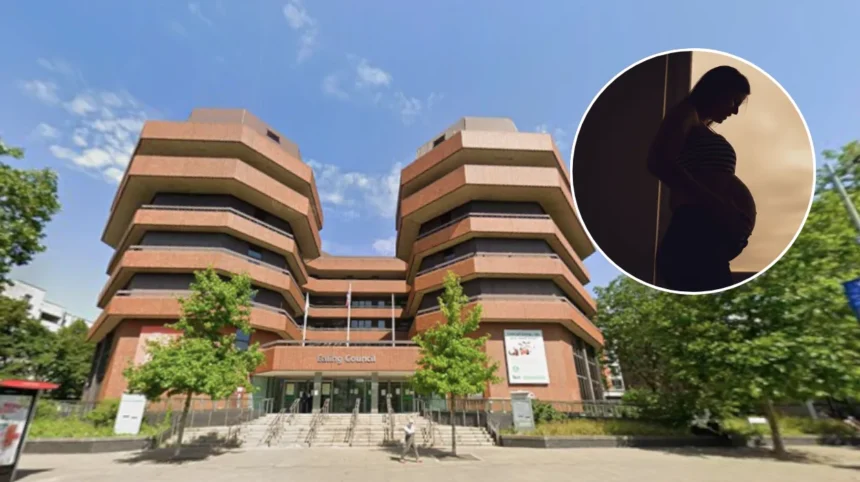
West London (West London Times) September 30, 2026 — As reported by Philip James Lynch of My London, uk/local/ealing/">Ealing Council breached the law by leaving a pregnant mother and her children in a bed and breakfast for 11 months, exceeding the statutory six-week limit by a staggering 43 weeks. The family, consisting of a man designated as Mr X, his pregnant wife, and their young child, first presented as homeless in June 2024. During their prolonged ordeal, they were placed into B&B-style accommodation consisting of a single room with shared kitchen facilities.
- Key Points
- What Were the Living Conditions Endured by the Family?
- How Did the Council Handle the Family’s Formal Complaints?
- What Reasons Did Ealing Council Give for the Housing Failures?
- Background of the Particular Development
- How can this development affect homeless families and local authorities in London?
As noted by Philip James Lynch of My London, the family was subsequently moved between two separate B&Bs and a hotel, despite Mr X repeatedly requesting self-contained housing. The Local Government and Social Care Ombudsman acknowledged the difficulties arising from a chronic shortage of housing in the borough, yet emphasized that leaving Mr X’s family in B&B accommodation for 11 months constituted a clear fault by Ealing Council. Once finally moved out of the B&Bs, the family was placed into a single hotel-style room with shared kitchen facilities for an additional 17 and a half weeks.
What Were the Living Conditions Endured by the Family?
As detailed by Philip James Lynch of My London, Mr X stated that his family “had to live, sleep and eat in the same cramped space… and that there was no safe space for his young child to play or follow a normal routine.” Furthermore, the shared kitchen facilities were described by the family as “inconvenient, unhygienic and, at times, difficult to access.”
These severely restricted conditions limited the family’s ability to prepare proper meals, a situation that became increasingly difficult as the pregnancy progressed. The Local Government and Social Care Ombudsman stated that while hotel accommodation can be suitable in the short term, it is not necessarily appropriate for the long term, marking a second major fault on the part of the local authority. When questioned by the watchdog, the local authority claimed it took proactive and ongoing steps to identify suitable alternative accommodation for Mr X, but, as reported by Philip James Lynch of My London, the council “has not provided any evidence of its actions.”
How Did the Council Handle the Family’s Formal Complaints?
As highlighted by Philip James Lynch of My London, Mr X submitted a formal complaint regarding the handling of his homelessness application. In response to this grievance, the council added him and his family to its Temporary Accommodation Transfer Register—a full year after they were initially placed into temporary accommodation.
The ombudsman found this delay to be “particularly concerning,” noting that “this only appears to have happened because Mr X made a formal complaint.” Compounding these errors, the council subsequently failed to meet mandatory deadlines to review the suitability of the family’s living arrangements, representing yet another administrative fault. Consequently, the council was ordered to pay the family approximately £8,400 for the prolonged stay in unsuitable B&B accommodation, alongside £1,400 to cover the injustice caused by their placement in council-managed hotel facilities.
What Reasons Did Ealing Council Give for the Housing Failures?
Responding to the findings, an Ealing Council spokesperson stated, as quoted by Philip James Lynch of My London:
“We accept the Ombudsman’s findings and have agreed to apologise to the family and make the recommended payments in recognition of the time they spent in unsuitable accommodation.”
The spokesperson added:
“We recognise the family should not have remained in this accommodation for as long as they did and we are committed to providing the best possible support to families who come to us for housing assistance. Ealing, like many councils across London, is facing unprecedented pressure on temporary accommodation. We are currently accommodating nearly 3,000 families, while the cost of providing temporary accommodation is placing significant pressure on council finances.”
Furthermore, the local authority noted that a shortage of genuinely affordable housing makes finding suitable accommodation for homeless households increasingly challenging. The council affirmed it is continuing to work toward increasing the supply of suitable temporary and settled housing while ensuring families receive proper support while longer-term options are identified.
Explore more Ealing News:
University of West London Lands Four UKCISA Award Nominations Ealing 2026
Ealing Council Launches Tidy Teams for Cleaner Borough Streets in Ealing 2026
Background of the Particular Development
The statutory limit restricting the placement of families with children in bed and breakfast accommodation to a maximum of six weeks is enshrined in UK homelessness legislation to prevent the known adverse developmental, physical, and psychological impacts of prolonged cramped living. In recent years, local authorities across Greater London have faced acute financial and logistical pressures driven by a sharp rise in homelessness applications, a dwindling supply of social housing, and soaring private rental costs. Ealing Council, like many metropolitan boroughs, has struggled to balance its statutory duties toward homeless households against an unprecedented surge in demand, leading to systemic backlogs in temporary accommodation move-ons and regular overstays beyond legal limits.
How can this development affect homeless families and local authorities in London?
This ruling by the Local Government and Social Care Ombudsman sets a critical precedent that could trigger a wave of similar challenges and compensation claims from families stuck in unlawful temporary accommodation across London. For local authorities like Ealing Council, mounting financial penalties for breaching statutory time limits will place even greater strain on already stretched municipal budgets, forcing councils to heavily redirect funds toward compensation payouts and emergency housing procurement. For homeless families and pregnant mothers awaiting permanent housing, increased regulatory scrutiny may compel councils to accelerate transfer registers and prioritize vulnerable households, though chronic structural shortages in affordable housing mean that short-term placements in B&Bs and hotels may unfortunately remain an unavoidable reality in the immediate future.