


Key Points
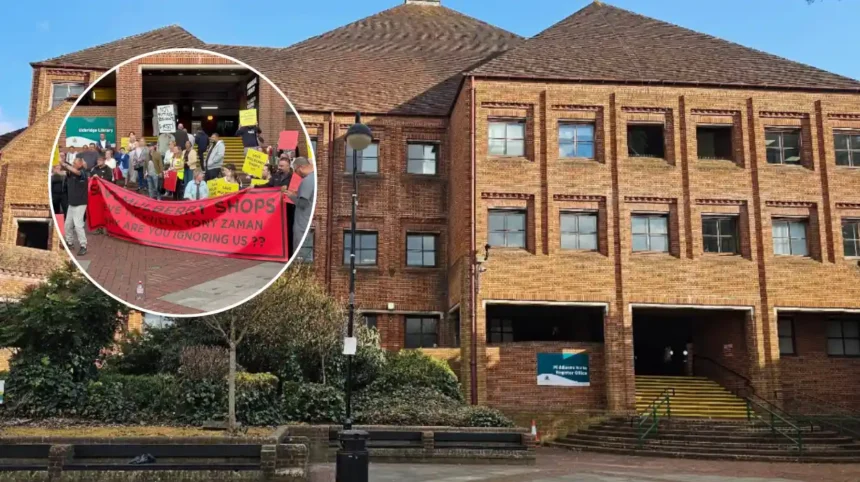
- Protest Action: A number of local people turned up outside the Civic Centre of Hillingdon Council on Thursday evening to protest against the proposals to increase rent charges by over 100 percent for the shops.
- Council Walk Out: Disappointed people walked out of the council meeting, yelling ‘shame on you’ to councillors after being disappointed with the answers given to them in the meeting.
- Backdating Controversy: The council was planning to backdate rent increases by a few years due to their delays in administration procedures.
- Impact of Local Action on Residents: It was pointed out by former Labour councillor Lou Griffin that any closing of the property will seriously affect the vulnerable residents including the old and disable people who depend on the facilities of the area like the nearby chemists.
- Concession Made by the Council: In response to the queries raised during the meeting, as reported by Philip James Lynch of My London, Cllr Nick Denys made the announcement that the council would consider starting market rents from a reasonable date rather than backdating them, along with looking for stepped increases.
- Concessions under Strict Conditions: As per Cllr Nick Denys, the concessions can only be given if the owners agree to pay the market rate and if not, they have to leave the site.
- Stand of the Council: Hillingdon Council argues that it is its fiduciary obligation towards its taxpayers to handle its commercial properties properly.
uk/local/hillingdon/uxbridge/">Uxbridge (West London Times) September 26, 2026 — Dozens of local residents and business owners staged a dramatic demonstration outside hillingdon/hillingdon-council/">Hillingdon Council’s offices on Thursday night, fiercely opposing controversial plans that would see local shop rents double.
As reported by Philip James Lynch of My London, protestors gathered outside the Civic Centre before heading into the public gallery to challenge authorities over the crippling financial pressures facing local parades. The tension in the chamber reached a boiling point when attendees walked out en masse, shouting “shame on you” at elected officials following answers that failed to satisfy the community’s demands.
Why Are Hillingdon Shop Owners Facing Devastating Rent Increases?
As reported by Philip James Lynch of My London, the crisis came to light in August when the Local Democracy Reporting Service (LDRS) revealed that Hillingdon Council was pushing forward with rent hikes exceeding 100 per cent for various local shops. These drastic increases were compounded by council administrative delays, which meant the rent reviews had been backdated several years, leaving small business owners staring down the barrel of sudden, unmanageable debt and potential closures.
Among the affected enterprises is Nessie and Normans, a one-year-old local café. As reported by Philip James Lynch of My London, cafe owner Louise McGinty explained the motivation behind the demonstration, stating:
“We want them to listen to us, we’ve come out tonight, the shops are important and they need to be saved – Hillingdon Council listen, please.”
How Will the Rent Hikes Impact Vulnerable Community Members?
The fallout from the proposed hikes extends far beyond business balance sheets, threatening critical community lifelines. As reported by Philip James Lynch of My London, former Labour councillor for Heathrow Villages Lou Griffin—who resides near the affected Mulberry Parade—warned of the severe collateral damage to elderly and disabled residents.
Emphasizing the vital nature of these neighborhood hubs, Lou Griffin told the LDRS, as reported by Philip James Lynch of My London:
“These shops are incredibly important for us and vital for many people, particularly those elderly people and those with disabilities who can’t travel very far very easily to get what they need.”
Providing a personal example regarding local healthcare access, Lou Griffin stated:
“For example, the chemist in those shops – all my medication comes through that shop. It’s literally 200 yards up the road from where I live. We can order medication from our doctor and it’s delivered there – sometimes the same afternoon – and then we’ve only got to go up road to get it… if these shops have to close because those people working can’t afford those horrific rent increases then we will have to travel two to three miles up the road to get our medication.”
Echoing these community anxieties, local resident Diane Faichney argued that public anger was less about inflation and more about the brutal execution of the policy. As reported by Philip James Lynch of My London, Diane Faichney stated: “I’m not saying that the rent shouldn’t go up because everybody’s rent has gone up. But actually, to ask for so much in one go is really unfair and it’s unjust. It’s very unjust to do that.”
Did Hillingdon Council Offer Any Compromises During the Meeting?
Facing intense scrutiny over the backdating of rents to the end of previous contracts at new market rates, the local authority shifted its stance during Thursday’s proceedings. Responding to five formal questions raised on the floor, Cllr Nick Denys, Cabinet Member for Planning, Housing and Property, announced a notable change in direction.
As reported by Philip James Lynch of My London, Cllr Nick Denys announced:
“The council will also consider agreeing to start when the new market rent is paid from a reasonable date, which means there will not be an automatic approach of insisting that any new rents are backdated to when the contract says it can be. Officers will also consider arranging a stepped increase in what is paid – which could mean increasing new rents incrementally during the beginning years of a contract to give shop owners a reasonable time to gain an income to pay the new market rate amount.”
However, this olive branch came with strict boundaries. As reported by Philip James Lynch of My London, Cllr Nick Denys clarified that these flexibilities are entirely dependent on shop owners agreeing to pay the full market rate eventually, warning that any tenant unwilling to accept the new baseline rent would be required to vacate the premises.
This ultimatum triggered an immediate backlash. Moments after Cllr Nick Denys sat down, disgruntled shop owners and supporters registered their fury by walking out of the meeting while shouting “shame on you,” prompting intervention from the Mayor to restore order in the chamber.
Explore more Hillingdon News:
Hillingdon Council Pays £1,950 Compensation to Pregnant Mother in Hillingdon 2026
Council Condemned After Housing Pregnant Mother in Hazardous Conditions, Hillingdon 2026
What is the Council’s Official Justification for the Policy?
Hillingdon Council has defended its actions by pointing to broader financial obligations toward the borough’s wider tax base. As reported by Philip James Lynch of My London, a council spokesperson previously maintained that commercial properties had remained below market value for numerous years. Consequently, current reviews and renewals are being evaluated strictly against market evidence and the parameters of leases originally agreed to by the tenants to ensure best value is achieved for Hillingdon taxpayers.
Background of the Particular Development
The tension between local authorities and commercial tenants in Hillingdon stems from structural challenges regarding municipal asset management and property portfolio reviews. Local authorities across the United Kingdom frequently own commercial parades, high street shops, and community units, using rental income to help fund public services and ease council tax burdens.
However, systemic delays in conducting regular, periodic rent reviews can lead to severe backlogs. When councils defer assessments past scheduled lease renewal dates, market values can appreciate significantly over several years. When authorities finally attempt to reconcile these discrepancies all at once—compounded by backdated lump sums—it creates a profound economic shock for independent retailers operating on tight profit margins. This dynamic has increasingly brought local councils into conflict with small business communities struggling against broader macroeconomic pressures, such as rising utility bills, inflation, and shifting consumer habits.
This ongoing dispute carries significant implications for local independent businesses, vulnerable residents, and the municipal administration itself. For small business owners and independent retailers in Hillingdon, the council’s insistence on enforcing market-rate benchmarks threatens long-term commercial viability; even with phased or stepped increases, many micro-enterprises may find absorbing higher fixed overheads impossible, leading to a wave of high street closures and vacant shopfronts.
For the local community—particularly elderly and disabled residents who depend on neighborhood parades for essential amenities like chemists and convenience stores—these closures risk creating localized service deserts, forcing residents to travel significantly further for basic necessities. Politically, the handling of the situation risks alienating local voters and damaging trust between the council and grassroots communities. If negotiations break down further, the local authority may face prolonged public friction, reputational damage, and a decline in high street vibrancy that ultimately undermines the long-term commercial value of the council’s own property portfolio.