


Key Points
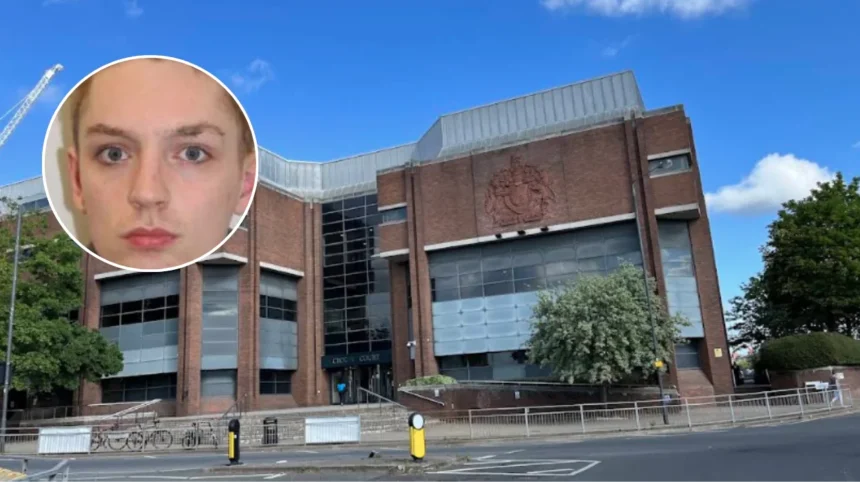
- Khloe Simmonds, an upcoming 26-year-old pre-operative transgender female, received a seven-and-a-half year jail term at the Harrow Crown Court.
- Her guilty plea was for eight counts of the perverting the course of public justice.
- According to the case report, she had made false accusations of rape and serious sexual assault against various innocent individuals from July 2018 to January 2026.
- At her peak period of offending, the prosecuting attorney, Ben Temple, and other court records revealed that Simmonds had made about 2.5% of all rapes and serious sexual assaults reported in the Harrow region.
- Wrongful arrests, police investigations, and imprisonments occurred for some falsely accused individuals who were later cleared of charges.
- His Honour Judge John Lodge criticized her consistent behavior by saying that she had diverted attention from the real victims of serious crime as her actions required lots of police attention.
- The defense counsel, Dominic Benthall, argued that Simmonds’ actions were caused by various problems such as autism, ADHD, and alcoholism.
uk/local/harrow/">Harrow (West London Times) September 8, 2026 – A 26-year-old pre-operative transgender woman has been handed a seven-and-a-half-year prison sentence at Harrow Crown Court after admitting to an extensive web of fabricated rape and sexual assault allegations targeting multiple innocent men over an eight-year period.
Why Was Khloe Simmonds Investigated and Prosecuted?
The legal proceedings concluded after a comprehensive police investigation into accusations spanning from July 2018 to January 2026. According to court reporting published on 7 September, Khloe Simmonds pleaded guilty to eight counts of tending and intending to pervert the course of public justice.
As detailed by prosecutor Ben Temple during the court hearings, Simmonds dedicated hundreds of hours of police time by bolstering false claims and consistently presenting herself as a vulnerable victim. Court disclosures revealed that at the height of the offending period, Simmonds’ false reports accounted for approximately 2.5% of all rape and serious sexual assault investigations handled by law enforcement in the Harrow borough.
What Specific False Allegations Were Presented in Court?
Prosecutor Ben Temple outlined multiple specific cases where innocent individuals were wrongfully targeted by Simmonds’ fabricated stories. In the summer of 2018, Simmonds claimed that an Afghan national had held a knife to her throat and subjected her to oral rape.
As reported by media outlets covering the case, the man was identified, arrested, and spent 88 days under active police investigation before being cleared. He consistently denied the accusation, maintaining that Simmonds had made unwanted advances toward him which he had rejected.
In another instance from February 2022, Simmonds connected with a chef via the dating application Grindr and invited him to her flat. After consuming alcohol, the man decided to leave because he felt uneasy. Following his departure, Simmonds dialled 999 to claim she had been raped, suggesting that the man had spiked her drink.
Further fabricated claims involved a taxi driver whom Simmonds accused of rape after calling emergency services upon arriving home. However, police retrieved telematics and movement data from the vehicle proving that the car had maintained a speed of over 25 miles per hour and had never stopped. Prosecutor Ben Temple stated that this vehicle data “annihilated the allegation”, leading directly to Simmonds’ arrest on suspicion of perverting the course of justice.
Additional fabrications included false reports involving an ex-partner in November of the previous year, claims of attacks by unknown males between December 2018 and February 2022, and an incident in January where Simmonds told a group of strangers she was in an abusive situation on a bench and had been raped. CCTV footage quickly exonerated the man implicated in that final instance.
What Was the Impact on the Victims?
Several men targeted by the fabrications experienced arrest, detention, and intense psychological distress. In victim impact statements read to the court, those affected described profound trauma and humiliation.
The taxi driver stated that he found the ordeal deeply traumatic. Another falsely accused man remarked, as presented in court records:
“I am an innocent man,”
adding in his statement that he found it deeply distressing that an individual could be subjected to such a severe process due to deliberate lies.
Explore more Harrow Crime News:
Eritrean Man Convicted of Raping Pensioner Outside Church: Harrow 2026
Man Arrested After Bar Assault in Harrow: GBH Case 2026
What Did the Judge and Defence State During Sentencing?
Sentencing Simmonds to seven and a half years behind bars, His Honour Judge John Lodge addressed the gravity of the offences directly. Judge Lodge stated:
“You repeatedly made false allegations of rape between July 2018 and January 2026. This was a sustained pattern of conduct, not isolated incidents.”
The judge further emphasised that Simmonds’ actions directly drained finite public resources that should have remained accessible to investigate cases involving genuine victims of serious crime.
During the sentencing hearing, which Simmonds initially attended via video link from HMP Wormwood Scrubs before retreating to a cell and refusing to watch further, defence counsel Dominic Benthall offered mitigation. As noted by Dominic Benthall, Simmonds had been diagnosed with autism, attention deficit hyperactivity disorder (ADHD), and suffered from long-standing issues with alcohol dependency. Benthall stated:
“There is plainly, or was plainly, at the time an underlying mental health difficulty.”
Background of the Particular Development
False allegations of sexual violence and the subsequent legal mechanisms designed to address them form a critical intersection within the British criminal justice framework. Perverting the course of justice is a serious common law offence in England and Wales, carrying maximum penalties of up to life imprisonment depending on the severity, scale, and institutional impact of the deception.
Over recent years, British courts and police forces have refined protocols to evaluate the integrity of complex multi-jurisdictional and repeat allegations. Cases involving high volumes of fabricated reports—such as Simmonds accounting for a measurable percentage of local sexual assault caseloads in Harrow over an extended period—highlight the systemic vulnerabilities police face when balancing support for purported victims with rigorous evidentiary verification, including digital forensics, vehicle tracking data, and CCTV corroboration.
This high-profile sentencing is expected to influence public discourse, legal strategies, and media reporting surrounding sexual offence investigations in the United Kingdom. For the general public, legal professionals, and advocacy groups, the case underscores the vital necessity of maintaining rigorous, evidence-based investigative standards that protect the presumption of innocence while safeguarding the credibility of services relied upon by genuine survivors of sexual violence.
For vulnerable individuals and those dealing with complex mental health conditions, autism, or substance dependencies, this development may prompt renewed calls within social policy and healthcare sectors for early institutional intervention, targeted psychiatric support, and robust supervision to prevent acute psychological distress from manifesting into harmful criminal behaviour. Furthermore, for law enforcement agencies, the precedent reinforces the critical importance of swift technological validation—such as telematics and forensic mapping—to protect wrongfully accused citizens rapidly and preserve public trust in the judicial process.